Book: Rebel English Academy
Author: Mohammed Hanif
Published by: Hamish Hamilton
Price: Rs 799
There are some novels that are difficult, if not impossible, to review. It is far easier to just savour them for their lyrical prose, their black humour, and their indictment of authoritarian power and the perpetuation of social violence stemming out of insecurity, inequity and degradation.
Rebel English Academy certainly falls under this category of novels. It is unputdownable but disturbing, and demands the reader’s attention with compelling impressions that are not lessons exactly but reminders of the world we live in, especially in South Asia. The novel, in many ways, resonates with lived experiences in South Asia notwithstanding the distinct Pakistani strain that dominates it — the strain of an authoritarian State, of repressed sexuality, and of theological dominance over society which its members try and confront in a myriad ways: learning English as a language of escape being one of them. It has a range of fascinating characters who make their appearances in unexpected moments and sustain the tension right through to the end. Power hungry and frustrated men of authority, a quixotic maulvi, a charming and defiant woman student, Noor Nabi, with a past that is revealed through a series of essays as part of school assignments, a lapsed lawyer and palm reader make up this delightful cast of characters who tell a story of individual courage and commitment, of the ugliness of power, and of human vulnerability and propensity that are easy prey for a ruthless State.
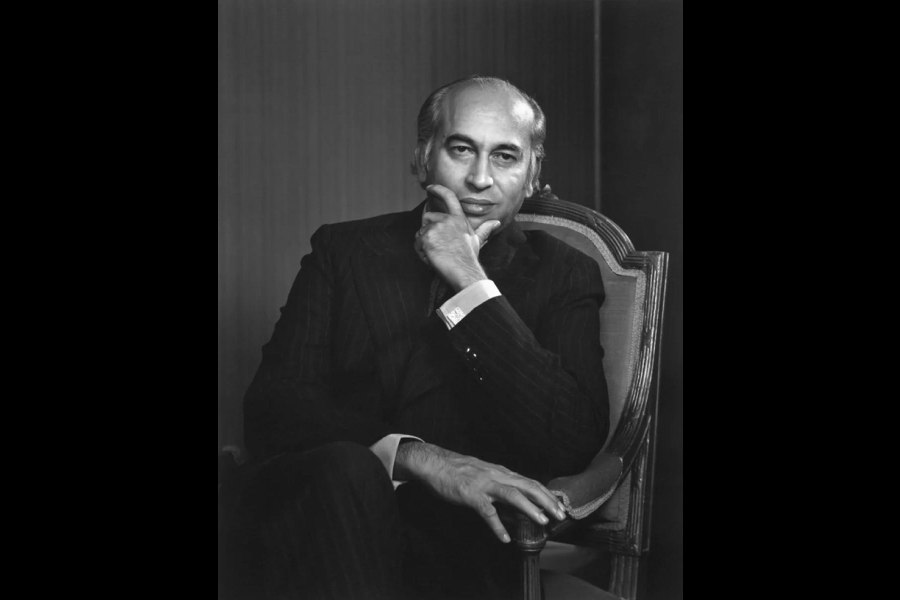
Set in the 1970s, the novel begins with the execution of Zulfiqar Ali Bhutto, rumours of the botched-up execution, and the shaming of the intelligence officer, Gul, who is then sent to OK Town to cook up something for his entertainment and his partial redemption. We have two other characters entering the plot: Sir Baghi, the driver at the English rebel academy, a tuition centre nested in a mosque with an obliging maulvi irreverently called Molly. Molly introduces Sabiha — her parents were Bhutto loyalists — to Baghi and requests him to give her temporary protection. The risks of sheltering a fugitive are not lost on Baghi, who has to reckon with the frustrated and the lascivious Gul. The plot thickens even as Sabiha is asked to behave like a student writing essays and assignments that structure the novel. These assignments range from the banal to the sublime: from homework on “Our Cow” to “Our Mother and Father” to “Our strike”, thereby revealing her past and her attitude that is fiercely questioning and subversive despite the trauma of rape and violence that she has been subjected to.
One of the running themes is the rumour about Bhutto being alive and how this apparatus of rumour-building and diffusion reveals the dynamics of social power predicated on piety and anxiety as well as institutional power. Rebel English Academy is bitingly satirical: the authoritarian excesses of Gul, the use of piety for manipulation, come under ruthless examination. There is an overdose of sex which is probably a way of dealing with a deeply repressed society. The story is grim; but because it is told with elegance and humour, the reader keeps wanting to turn the pages and find out what lies in store for brave Sabiha. It is her resilience that propels the novel along and provides that vital note of redemption and relief in a harrowing narrative of power and its brutality. Everything comes together in the final assignment that she submits: her athletic prowess, her no-nonsense understanding of the past, her rejection of nostalgia. Appropriately titled, “How I run”, it is a fitting end to a story of reckoning, of negotiating the bewildering mosaic of religion and politics in South Asia.