Book: The Bombay House Heist & Other Forgotten True Crime Stories of India
Author: Sunil Nair
Published by: Juggernaut
Price: Rs 499
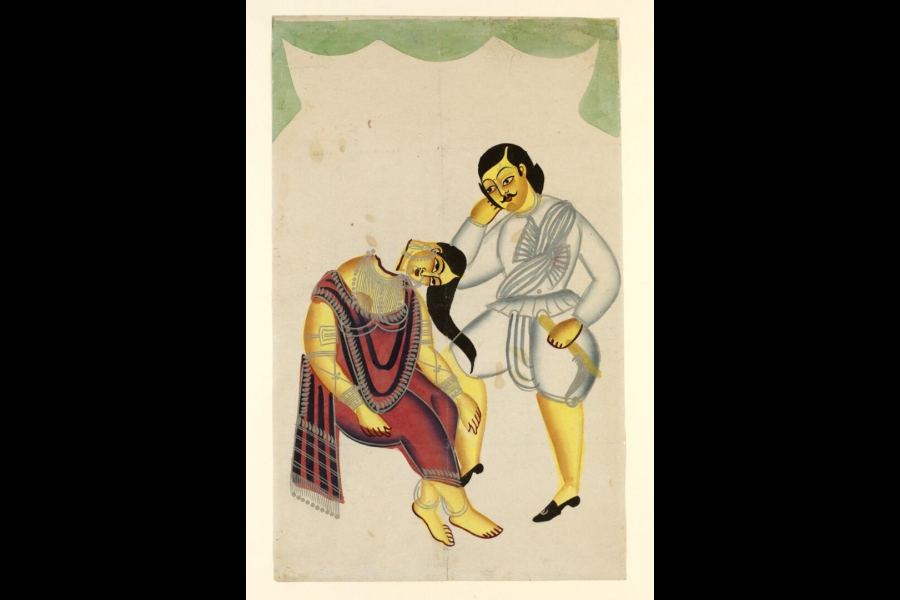
This book, the author informs us, was initially conceived of as a sequel to his earlier work, Tales of Crimes Past: A Casebook of Crime in Colonial India, but The Bombay House Heist’s principal focus was meant to be, as the title suggests, Bombay. Its present form, a random selection of bona fide crime cases from across India, may have been the publisher’s pound of flesh. Fortuitously, the wider scale serves the book well. This is because even though Sunil Nair digs up some scintillating cases from Bombay’s crime archive, the most engaging chronicles — “The de la Hey Murder” and the not quite unknown Elokeshi case — are from Madras and Calcutta’s hinterland, respectively.
But the scholarly crime historian or aficionado must be prepared for disappointments. Nair admits that he had a few cases “thrown in... from all across India”. But this is a largely truncated India in terms of geographical representation, with small-town India, save perhaps for the bit on Jambulingam — “South India’s Robinhood” — largely ignored. This could be the result of time constraint and gaps in research.
There are other puzzles. Nair writes he wanted to cover the time period between the 1870s and the 1970s since the internet, Nair reasons, has made crimes after the latter cut-off date accessible. But the internet, enslaved by algorithms, is not a reliable mnemonic crutch. So Nair’s book could have dug deeper for other stimulating cases that may be buried on the margins of police archives. At least, the selection should have been more rigorous — unsentimental — in terms of criterion. Nair confesses that “The Shakereh Murder Case” was included in this anthology to make sure that Bengaluru — Nair’s present home — does not go unrepresented. Yet, this case is not only from the 1990s but it is also a bit of a damp squib.
The chronological arrangement of chapters is as mysterious as some of the cases: why begin with a case in 1949, proceed to another crime in 1951 and then, abruptly, return to 1888 and 1919 in the next two instances?
To his credit, Nair shuns sensationalism. His reconstruction of the crimes is composed, rounded, and methodical. In some instances, he also provides snippets of the afterlives of the protagonists — even as he wrestles with the ethical dilemma of digging up the corpses in a manner of speaking. What is also discernible are the richly complex sociological undertones. In the instance of Elokeshi’s killing, or the fascinating case of an English schoolmaster felled by his wards during the raj, there are attempts, although limited in nature, to examine the illuminating intersections among crime, gender, social status, and the colonial justice system.
All things considered, The Bombay House Heist is an enjoyable addition to the growing genre of popular crime writing.