Book: The Indian Caliphate: Exiled Ottomans and the Billionaire Prince
Author: Imran Mulla
Published by: Harper Colins
Price: Rs 799
If you thought nothing more could possibly be written about the European colonisation of the Middle East, think again. Even as Palestine — with its controversial history as a British protectorate — continues to occupy our attention, here comes a narrative about the last days of the Ottoman empire, ruled continuously by the Osman dynasty since 1299 AD, and how it took its final few gasps in a desperate attempt to survive in the Indian subcontinent. The debut work from Imran Mulla’s pen documents these decades of upheaval and democratisation, adding another chapter to the burgeoning interest in a specific area in cultural studies: a deeper scrutiny of the history of the Islamic world.
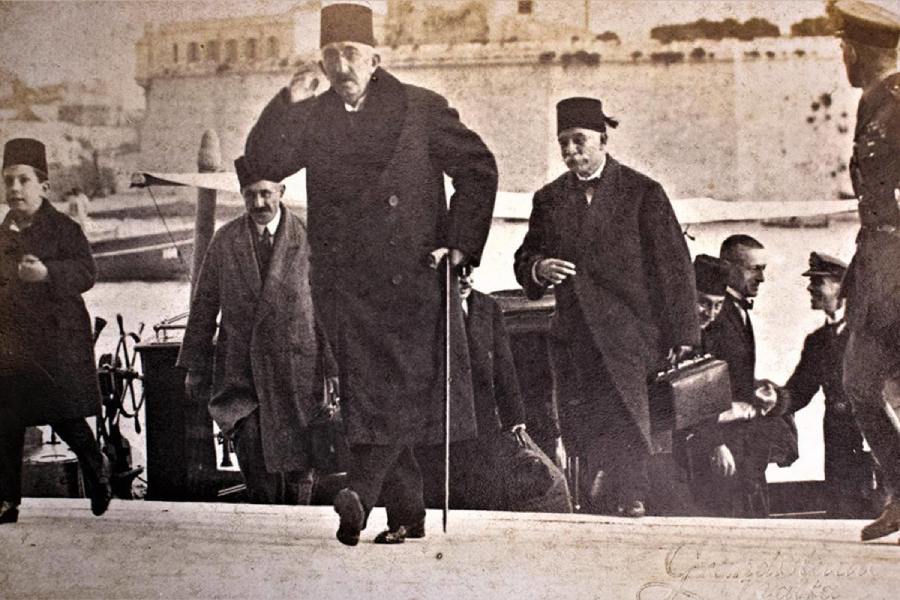
Following the victory of the Allied forces in the First World War, Mustafa Kemal Atatürk carried forward the legacy of opposition to absolutist monarchy inspired by the Young Turks and established the Republic of Turkey, by deposing the sultan, Mehmed VI, in November 1922 and, within 18 months, also getting rid of his successor, Abdulmejid II, thereby bringing to an end both the Sultanate and the Caliphate. Mulla masterfully documents the uproar this caused among Muslims across the world, including in India. After all, the Ottomans had “reinvented the Caliphate”, and the Caliph was considered “a mystical figure with deep spiritual and political power, a deputy or viceregent of God”. His exploration of the aftermath of the abolition is detailed, bringing together different strands from varied geographical areas. Thus, the “political earthquake” of the Khilafat Movement caused by the treaties of subjugation imposed upon Istanbul is discussed as thoroughly as the flight of Abdulmejid’s family across Europe.
Divided into two parts, The Indian Caliphate provides ample proof of the author’s methodical approach and logical bent of mind. Every relevant anecdote, every apposite factoid, is presented before the discerning reader, such that by the end of the book, we even know about the “ferocious marriage negotiations”, which preceded the matrimonial alliance
between Azam Jah, the son of the Nizam of Hyderabad, and Dürrüsehvar, the beloved
daughter of Abdulmejid II.
What is however disconcerting — disheartening — is the willy-nilly glossing over of uncomfortable details which might stain Mulla’s carefully-crafted portrayal of the Islamic world and its politics. While Hindu nationalism and the rightfully decried bigoted politics of V.D. Savarkar are analysed and criticised, the book finds no time to scrutinise the violent practices of the razakars in the run-up to Independence. Hyderabad is instead portrayed as a progressive kingdom whose ruler “patronised temples and churches as well as mosques”. Instead of repeatedly extolling the virtues of Shaukat Ali and Mohamed Ali, the supposed architects of Muslim opposition to British rule — M.K. Gandhi is relegated to being a side character — Mulla should have emphasised how unrealistic the idea of the Caliphate’s revival in India would be given that the Nizamate too had a Hindu-majority population.