Book: RIVER TRAVELLER: JOURNEYS ON THE TSANGPO-BRAHMAPUTRA FROM TIBET TO THE BAY OF BENGAL
Author: Sanjoy Hazarika
Published by: Speaking Tiger
Price: Rs 899
River Traveller opens as a quiet, almost apologetic, record of wanderings by someone trailing the Brahmaputra’s length for a documentary. What begins as travelogue soon falters, as though ashamed of its own optimism, and slips into something barer: a meditation on life and impermanence, a catalogue of what has already been lost, and a testament to the strange compulsion that drives the sensitive and the mournful to listen to a river, and in silence, imagine it as crying.
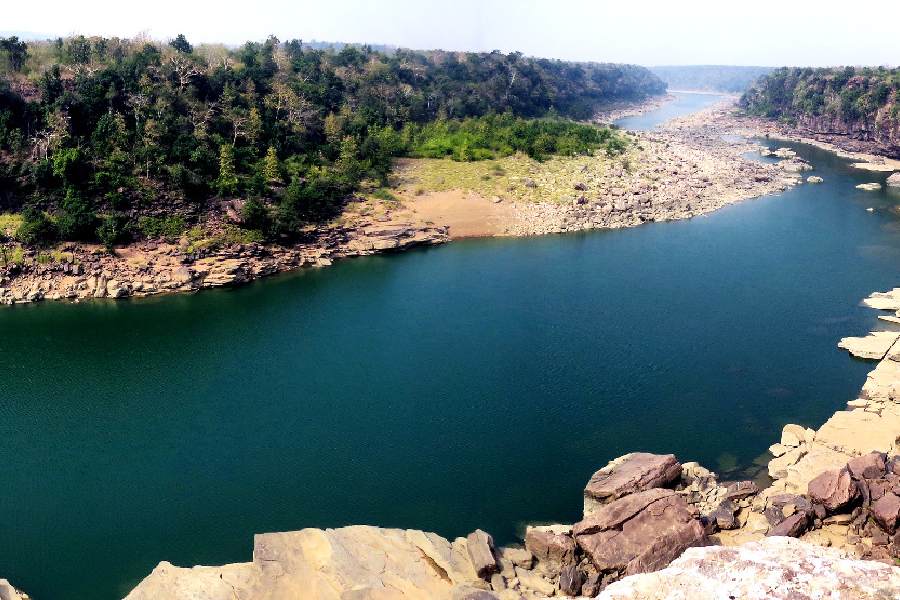
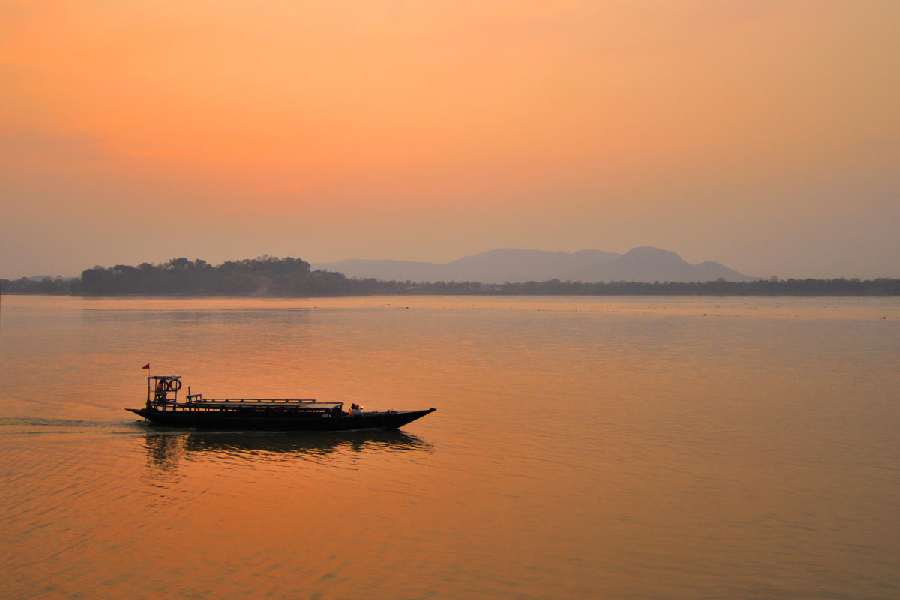
The book’s beauty lies in the conversational tone in which Sanjoy Hazarika weaves the river’s cultural histories into the fragile threads of his own journey. Where others would shout, he merely points: the river is never one thing. Beyond valleys guarded by gorges in upper Tibet, evading pundit-adventurers and colonial surveyors, the jade-green torrent called the Tsangpo emerges from a hidden waterfall. Tibetans imagine it as the life-force of Dorje Phagmo, the protector goddess-ogre, the forgotten Vajrajogini Daakini of a forgotten, syncretic culture that once connected Tibet to the Prakrit lands of Assam and Bengal. Then, as if through magic, the Tsangpo crosses invisible lines and consents to be called Siang, or Dibang, or Brahmaputra, or Jamuna — names remembering a pre-colonial diversity the post-colonial denies.
Hazarika’s gaze lingers on whatever is slipping: islands gnawed to nothing, dolphins that are fast disappearing, forests bartered for profit. From Tibet to the Bay of Bengal, the currents drag along whatever was: eroded kingdoms, drowned economies, communities whose very existence offends mapmakers — those poor, stubborn peoples who live close enough to the water to hear it weep, yet far enough from power to be forgotten twice over.
The book’s deepest cruelty is reserved for the moment it widens its lens and forces us to stand, insignificant as dust mites, beside the river’s true duration. When it first flowed through what would become Assam, there were no cities, no rice fields, no Homo sapiens. Thirty million years ago, this same river mingled with the Irrawaddy and spilled into what is now the Andaman Sea, eons before any Tai-Ahom prince crossed the Patkai hills with rice seedlings. Forty-five million years earlier, when the Indian plate crashed into the Eurasian plate and the Himalayas were merely seabed, the Brahmaputra was already flowing — older than the mountains, older than prayer, way older than the first entitled hominid who looked at moving water and decided to call it his own.
Hazarika sees what technocrats refuse to grasp: the ice reservoirs of Tibet and the Himalayas, long taken for granted, which have nourished ancient civilisations, are irrevocably vanishing. Five of Asia’s great rivers — the Yangtze, the Brahmaputra, the Mekong, the Salween, the Irrawaddy — draw their first breath from the same vault of ice on the Tibetan plateau, a reservoir we mistook for eternity. The Morag dam, planned by the Chinese, is singularly capable of warming the air around it, persuading glaciers to finish sooner the planetary suicide humans began. Downstream, Indian politicians plan hydro-electric projects and call the future secured.
The consequences are not merely local — floods, droughts, diseased rivers — but planetary, for this is among the most active earthquake zones on the planet where continental plates still jostle like angry, primordial gods. Human engineering here resembles insolence. “Our policy makers don’t seem to get it,” Hazarika writes. The Himalayas endured mostly because they remain aloof and inaccessible. He quotes, almost gently, the message the mountains keep hammering into our roads and towns: leave us alone.
It slowly sinks in that the ancient river remembers a planet that never needed us. Cowries and corals, those pale coins of a vanished sea, still turn up in Tibetan markets — relics of creatures its water has carried since the Tethys died. Water is patient: it has all the time in the world, and none of it is ours. It has watched continents couple and separate, seas boil away, species flicker and go out. Long after we have finished identifying outsiders, building walls, and clothing rivers in concrete, the current will still be moving seaward, carrying whatever is left of us toward the same oblivion it has granted every civilisation that mistook its possessions for permanence. The river, which has survived the death of seas, merely waits.