
Presenting an early budget will have certain advantages and the move is part of Prime Minister Narendra Modi's economic reforms after demonetisation, BJP leader Sushil Kumar Modi said today.
He was responding to the hue and cry over the Union budget that will be presented tomorrow instead of the last day of February, and the merger of the railway budget with the general budget.
Sushil, a former Bihar finance minister and ex-chairperson of the empowered committee on goods and services tax, also advocated a financial year starting from January like it happens in some western countries.
He made the following claims to buttress his arguments:
n Advantage of early budget: Previously, the general budget was presented in the last week of February and the government took a vote-on-account for three to four months and got the actual general budget passed in May and June.
The actual government expenditure would be from June. Now, the government will get the actual budget passed by March 31.
The government expenditure will start from April 1, which will lead to better monitoring and transparency of expenditure. The budget output will be better.
Incidentally, for a long time after Independence, the Union government followed the British tradition of presenting the budget in Parliament at 5pm because India's budget used to be presented first in the British parliament at 11.30am. It was Yashwant Sinha as finance minister who presented the budget at 11am.
n Doing away with railway budget: The railway budget was first presented in India in 1924 - separate from the general budget. During those days railways accounted for 85 per cent of the budget. Today, it is no longer relevant. There is no separate budget for defence despite the sector being bigger than the railways.
The railways will save around Rs 10,000 crore it pays as dividend for a separate budget. The railways will still have the autonomy to generate its own resources.
n Doing away with plan and non-plan expenditure: This year's budget will replace plan and non-plan expenditure with capital and revenue expenditures. The plan and non-plan expenditure lines had blurred and even payment of salaries and maintenance used to be given in the plan head as a result of which the plan size used to get bigger and bigger every year.
Now, capital expenditure will be for the assets created such as construction of roads, bridges, etc. Revenue expenditure will be for salary, pension and other committed payments to be made by the government. One can see how much money is actually spent on asset creation.
n Finance bill: The finance bill, which deals with taxes, was previously passed with the general budget and its implementation started from June. This year, it will be passed by March 31 so the new taxes will come into force from April 1.
n Doing away with Planning Commission and Finance Commission: The 14th five-year plan which starts in 2017 will be the last one. It's archaic and meaningless. Instead, the Union government has asked states to prepare a vision document for the next 15 years and a detailed plan for the next three years. The Union finance department will be the nodal agency for the vision documents and detailed plans.
Similarly, the Modi government has replaced the Planning Commission with Niti Aayog, which works as a think tank for the Union government.
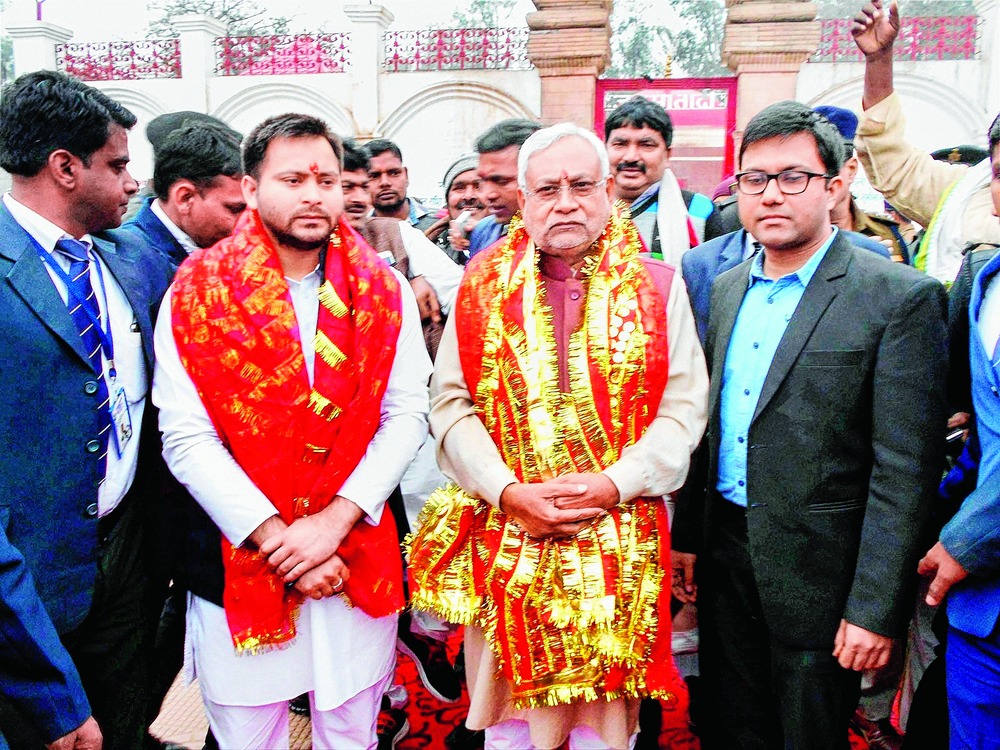
"During the Planning Commission days every chief minister used to visit Delhi with 50 officials to hold a meeting with the vice-chairman of the commission and had a two-day meeting. When I was the finance minister of Bihar, I used to accompany chief minister Nitish Kumar. Nitish ji used to say it was a waste of time. Now, no CM has to waste time," said Sushil.