
There's more reason to celebrate in the city as Patna Museum completes 100 years on April 1, 2017, and the government is planning to mark the occasion with year-long festivities.
Preparations are afoot to plan a celebration that would be apt for one of the richest museums in the country with 75,000 antiquities and the second largest collection of stone sculptures after the Indian Museum, Calcutta.
Among the rarest of its collections are original relics of Lord Buddha kept in a casket, the statue of Yakshini discovered in Didarganj, and a 53ft-long fossilised pine tree.
Director of museums Raj Kumar Jha said: "It is going to be an important occasion. We are planning national-level conferences, seminars and exhibitions among other things. The programme will be finalised in a couple of weeks."
Patna museum comes under the art, culture and youth department, and sources in the state government said its minister, Shiv Chandra Ram, and principal secretary Chaitanya Prasad will make the announcements for celebrations.
"A postage stamp on Patna Museum will also be released to mark the occasion," said a source in the directorate of museums.
Patna Museum curator Shankar Suman said the demand for a separate museum in Patna arose after Bihar and Odisha separated from the Bengal Presidency in 1912. It was the time when excavations were taking place in ancient Patliputra, the capital of the Mauryan empire, under the leadership of archaeologist D.B. Spooner.
"People of Bihar and Odisha did not want their antiquities and artefacts to be housed in the Calcutta-based museum. Lord Sachchidananda Sinha, then a member of the Imperial Legislative Council, who went on to become the first president of the constituent Assembly, and had been at the helm of the agitation for Bihar as a separate province, met then lieutenant-government Stuart Bailey and demanded a museum in Patna," Shankar said.
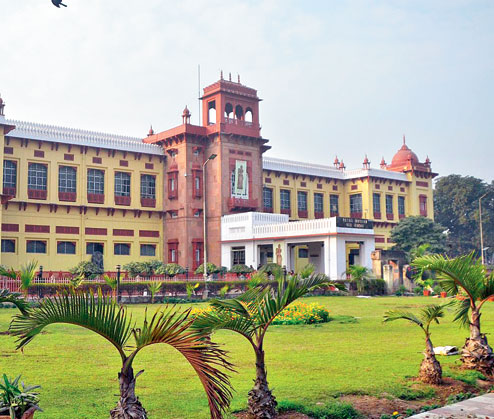
The demand was accepted and Patna Museum began from the space given on the premises of Patna High Court. It later shifted to its own building - the present one - built in the Indo-Saracenic style (with elements of Mughal, Rajput and colonial architecture).