Mansoor Ali (50), who runs a tailoring shop in Chuhari village of West Champaran district, avoids talking caste or religion-based topics in his house.
Even his 12-year-old daughter, Sabya Khatoon, raises a hue and cry urging her family members not to be parochial in their outlook whenever such topics prop up.
Grocery shop owner Ram Dayal Sah, a resident of the same village, around 220km north of Patna, feels the same way himself and thinks that instead of seeing things from the prism of caste or religion, people need to be made conscious of the more important issues which concern their overall well-being.
The examples of these two persons are not exceptions. One comes across several such souls at Chuhari village after travelling more than 200km north of the Ganga, crossing Vaishali, Muzaffarpur and East Champaran districts where one hardly comes across a town or village where caste and religion-based thinking is not at the forefront. With Bihar having gone into the Assembly election mode well before formal announcement of dates, such feelings have come to the forefront.


Chuhari, for a traveller, would appear like an island in the caste-ridden society of Bihar where people would either be found engaged in their work or discussing the future of their children.
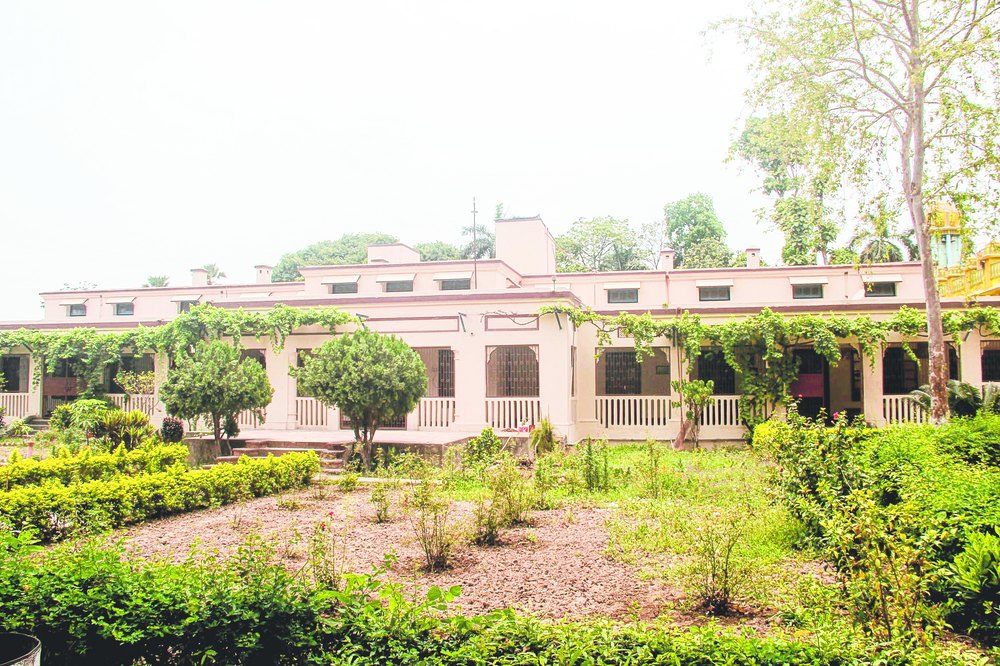
But it has not happened on its own. Rather, the presence of a Christian mission has played a big role in changing the orientation of people in this village, around 10km north of Bettiah, the headquarters of West Champaran district.
The this north Bihar village's tryst with Christianity began 246 years ago. David N Lorenzen, a professor of South Asian History at the Centre for Asian and African Studies at El Colegio De Mexico, has provided an account of the Christians coming to this village in his book, The Scourge of the Mission: Marco della Tomba in Hindustan.
According to the book, Christians took shelter in the village after being thrown out by then Nepal King Prithvi Narayan from Kathmandu in 1769. The Nepal King was angry with the Christians because the ousted king of the Himalayan country, Jaya Prakash, had sought British help to resist King Prithvi's ascent. The Christian converts in Kathmandu were asked to leave the country after which they had come to this place.
"Right from the beginning, our mission has been active in spreading education in this area. We also ensure that good values are instilled among our students," Chuhari mission head Finton Shah told The Telegraph.
As things stand now, the mission runs three schools - a girls' middle school, a girls' high school and a boys' middle school - in the village. Over 1,000 students are enrolled in these three schools. "Irrespective of religion and caste, we try to instil good values in all our students and if it is really helping them to broaden their outlook somewhere, we feel our efforts are delivering the desired results," the mission head said.
Agreed Ram Dayal, who himself did his schooling from the mission's boys' school and has enrolled his two daughters, Kajal (10) and Kamini (7), at the girls' school being run by the mission. "It is not only education but the good values which are of utmost importance for real development of any person. Else, how could a small trader like me have overcome feelings of caste and judged things on their merit," Ram Dayal said.
His friend Jai Ram Yadav agreed and added that but for the mission, they would have been inhabitants of just another caste-ridden village in Bihar. Even though Mansoor has not attended the mission school, he feels proud that his daughter Sabya was doing well and bringing back good values from school and helping the family overcome any parochial outlook.
Even people's representatives have a different kind of experience in the area, served by this over two-centuries-old mission. "Unlike other parts of my constituency, Chuhari has been like an island where people are more conscious of issues. One of their main demands was construction of a road and I got that done," Chanpatia MLA and senior BJP leader Chandra Mohan Rai said. Chuhari, which has a population of about 5,000, among them 400 Christians, falls under the Chanpatia Assembly area.
Chuhari Mukhiya Raj Kumar maintained: "Caste never plays any role in local elections in areas served by this mission. People here are more conscious of issues concerning their lives."
It is not that the interaction between the mission and residents has been a one-way traffic. Resident Christians, too, have been influenced by the local culture. Take the case of Amar, a Christian who happens to be a mathematics teacher at the mission's boys' school. Named Reginold at the time of his baptism, Amar's family is one of the few that settled in Chuhari after coming from Kathmandu in 1769. Amar, which in Hindi means one who does not die, got this name when he was in his mother's womb. While going to Bettiah by rickshaw for a routine check-up, Amar's mother met with an accident but somehow the child in the womb survived and influenced by local culture he was named Amar.
"Our association with this place is very old and it is natural that we too have been influenced by the local culture somehow," said the mathematics teacher.
Sharing details about the family, he said it was his great grandfather Peter, a carpenter, who had come to Chuhari from Kathmandu along with the mission people. Amar's grandfather Lawrence, who was a trained mechanic and driver, used to work for some British firm. His octogenarian father Dennis served in the local mission school as a mathematics teacher before retiring in 1997.
Terming Chuhari a pleasant exception in Bihar, sociologist Hetukar Jha said it must not be construed as an influence of good education alone. "Had it been the case, well-educated people would not have been influenced by caste factors in Bihar. More than education, it is the good values being spread by the mission that seems to have helped people in broadening their outlook," he said.