‘Corruption deep-rooted in distribution system’
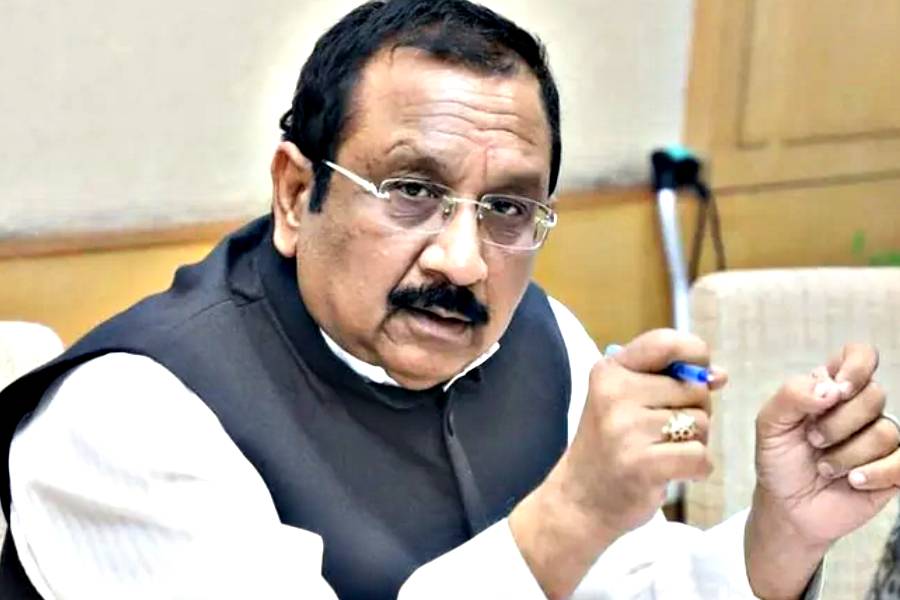
Minister for food and consumer protection Shyam Rajak has too much on his plate. The JD (U) leader is trying to streamline a department riddled with red tape and corruption. As chief minister Nitish Kumar charts the roadmap to boost agriculture production in the state, The Telegraph enquires his food minister how he plans to ensure even distribution among the beneficiaries
Leakage in food supply
Are you satisfied with the functioning of the public distribution system (PDS) in Bihar?
A lot needs to be done to make the PDS effective in the state. Corruption is deep-rooted in its functioning and a syndicate is active which takes advantage of the leakage in the system. Corrupt practices are adopted both at the time of procuring food products for PDS shops and while supplying them to the people. Blackmarketing of foodgrains meant for PDS is rampant. The PDS shop owners do not get timely delivery of food stock from godowns. The monitoring of PDS is not effective, allowing the leakage in the system to persist.
What steps have been taken by your ministry to address these issues?
We have introduced a transparent system of delivery of foodgrains to PDS shop owners and people. While the shop owner will get the food stock latest by the 20th of every month, they will have to distribute the items among the people between 20th and 30th of every month. Vigilance committees, consisting of residents, have been set up near every PDS shop. The committee members would be informed about the delivery of food stock to the PDS shops through text messages and they would further inform other residents. All sub-divisional officers (SDO) have been directed to organise special camps once every month where they would address people's complaints with regard to the PDS. The district officials have been directed to strengthen the monitoring system and the SDOs would be held responsible if any discrepancy is found in the functioning of the PDS.
Need for public participation
Any other steps?
We intend to ensure people's participation in effective functioning of the PDS. To meet this goal, we have decided to give new licences for running PDS shops to Primary Agricultural Credit Societies (PACS). Similarly, the self-help groups (SHGs) too would be encouraged to take licences of PDS shops. At present, there are about 4,000 PDS shops up for grabs and we would ensure that these go either to PACS or SHGs. We are encouraging this system as such groups would minimise the chances of corrupt practices in running PDS shops.
What steps have been taken to ensure regular supply of LPG cylinders to consumers?
There is a basic problem on this front. The number of gas agencies allotted to Bihar is less in comparison to other states when one takes into account the population factor. I am going to write to the Centre, drawing its attention towards this problem. I will also demand opening of more gas agencies in the state. As far as black marketing of LPG cylinders is concerned, regular raids are being conducted to check the menace and ensure the cylinders reach the genuine customers in time.
More godowns in villages
How are you planning to enhance the foodgrain storage facility in the state?
Lack of sufficient number of godowns is a big concern. At present, we have just 197 godowns and many of them are not in good shape. To address this problem, we have decided to set up godowns at the panchayat level with a capacity to store 5000 metric tonnes (MT) foodgrain. Those to be set up at the block level would have the capacity to store 10,000MT foodgrain.
Lack of proper procurement system forces the farmers to sell their food products to the middlemen. What steps are being taken to strengthen the foodgrain procurement system?
It is a very serious issue. I have directed the department officials to open more foodgrain procurement centres in districts. But this is just a short-term measure. Our long-term goal is to have such a system in place which can allow procurement of foodgrains direct from the fields. Some time would be required for such a system to work out but I can assure the farmers that it would be in place sooner than later.
Campaign for consumer rights
What steps are being taken to protect the rights of consumers?
Awareness level about consumer rights in very low in Bihar. Very soon we are going to launch an aggressive campaign to increase the awareness of common people on this front. Regarding the functioning of consumer courts is concerned, emphasis would be on conducting speedy trails. Very soon I would hold a meeting with members of consumer courts to address this issue and also to seek their suggestions about the steps needed to be taken to improve the functioning of consumer courts in the state.
About Shyam Rajak...
Born in a lower middle class family, which earned its livelihood by running a laundry, Rajak’s first brush with public life was in 1974 when he joined the movement launched by late Jaiprakash Narayan. There is an interesting story behind Rajak joining the movement. He was handed over a bundle of pamphlets by some students' leaders and asked to deliver them at a particular spot. Rajak, however, was intercepted midway by officials of Patna administration who put him in jail. Rajak was only 20-year-old at that time. After spending some time in jail with other participants of the movement, Rajak realised its importance and became a full-fledged political worker.
In 1984, Rajak marched on a padayatra from Amritsar to Delhi to protest Operation Blue Star. In 1988, he spent three months in Orissa’s Kalahandi district and helped the poverty-stricken people there. Rajak spent six months with leaders of Bodoland movement in 1992 to convince them to join the mainstream. After the formation of the Rashtriya Janata Dal, he joined Lalu Prasad and became a minister in his government. In 2009, he joined the Janata Dal (United).
What would you have been had you not been a politician?
I would have joined the Indian Army. When I was arrested during the JP Movement, I was actually preparing to take the National Defence Academy exam. Joining the armed forces was my dream since my school days and I used to take part in National Cadet Corps camps too. This allowed me to learn mountaineering and parajumping.
Lalu vs Nitish
Having worked under both Lalu Prasad and Nitish Kumar, what major difference do you find in the style of functioning of these two leaders?
Lalu’s style of functioning was more inclined towards looking into issues which were of interest to people close to him. Nitishji is a completely different person. He always puts people's concern first while making any suggestions. He also gives his ministers a lot of room to work freely and is always willing to lend a helping hand if someone is facing problems in the functioning of his department. Nitishji keeps tabs on the work being carried out and encourages his cabinet colleagues to do good work.