
Cellphone users will have to wait for at least six more months for uninterrupted conversations.
Experts feel at least 5,000 additional cellphone towers across the state are necessary to avoid frequent call drops in a state where cellphone usage is exploding. Bihar's cellphone user growth rate of 6 per cent is the highest in the country.
Ashok Sud, secretary-general, Association of Unified Telecom Service Providers of India (AUSPI), claimed that the call drop rate in the state would be fixed in the next six months if things go according to plan.
"With a population of 103 million and 72 million cellphone subscribers in Bihar, the growth rate is the highest in the country. The issue of call drops is being addressed by the department of telecommunications (DoT) in Delhi. In the past six months, 800 new cellphone towers have been set up in the state and the total number of towers in Bihar is more than 12,000 at present. With more cellphone towers coming up, the situation will improve in the next six months and the number of call drops will drop drastically. High number of customers and less towers are the basic reasons for the present problem," Sud said.
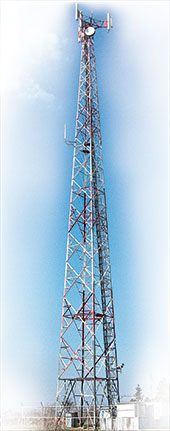
In mobile telecommunication, these towers hold antennas that are connected to base transceiver stations (BTS). Usually, the BTS is located on the ground in a shelter near the tower. A BTS enables exchange of voice calls and data between a device and the cell network.
Rajan S. Mathews, director-general, Cellular Operators Association of India (COAI), said besides setting up more towers, there are other factors that need to be addressed. "In the case of Bihar, the state needs around 5,000 additional cellphone towers in order to take care of the issue. The DoT has had talks with the state government and cellphone towers will come up atop government-owned buildings and on defence (army) land. The state governments, including that of Bihar, and the army are in talks with the DoT and this is a good sign," Mathews told The Telegraph.
Sources said a basic reason for call drops is that there is a growing notion among the people that cellphone towers result in serious health issues for people living near the towers. "For a few months now, a notion has taken shape that cellphone towers cause health issues related to radiation. Earlier, people were more than happy to get a cellphone tower in their land. But now, they are unwilling and fear ailments, which is not true. The radiation emitted from a tower is far less - even lesser than a television. This false notion of radiation harm is prevalent in Bihar as well, which has resulted in fewer towers and consequent network issues and call drops. However, with the DoT talking to state governments and the defence on using their lands and buildings for setting up of towers, things can improve," said an expert who works with a telecom company.

The DoT has come up with stringent rules for cellphone tower radiation safety. In a study by the DoT, available on its website ( www.dot.gov.in), it said electro magnetic field (EMF) exposure limits (base station emissions) are lowered to 1/10th of the existing ICNIRP exposure level effective from September 1, 2012. India now has one of the most stringent EMF exposure norms in the world.
As an independent organisation, the International Commission on Non-Ionising Radiation Protection (ICNIRP) provides scientific advice and guidance on the health and environmental effects of non-ionising radiation (NIR) to protect people and the environment from detrimental NIR exposure.
The DoT circular also added that its Telecom Enforcement Resource & Monitoring (TERM) cells have been entrusted with the job of conducting audits on the self-certification furnished by the service providers.
TERM cells, the DoT says, will audit up to 10 per cent of the BTS sites on a random basis and in all cases where there is a public complaint. The Telecom Engineering Centre (TEC) has revised the test procedure for measurement of EMF for verification of EMF compliance for BTS towers in accordance with new standards effective from September 1, 2012. For non-compliance of EMF standards, a penalty of Rs 5 lakh is liable to be levied per BTS per service provider.
The telecom expert added that low spectrum was another reason for call drops.
"With a huge number of customers, the bandwidth or spectrum has to be increased. The government provides spectrum to operators. The problem is that the government allocates the lowest number of spectrum for the telecom sector. In addition, with new technologies introduced, one needs higher spectrum bands. Any person these days has a smartphone, a laptop with an Internet dongle. With lower spectrums, it is like nine people eating two chappatis. The government has to increase the spectrum for the telecom service providers. They can release some from the defence and give it to the telecom service providers," the expert added.
The DoT conducts auctions of licences for electromagnetic spectrum.
In 2015, the spectrum auction concluded on March 25, after 19 days and 115 rounds of bidding. Spectrum in the 800 MHz, 900 MHz, 1800 MHz and 2100 MHz bands was auctioned.
The government accrued a total of Rs 1,09,874 crore from the auction. Approximately, 11 per cent of the spectrum available for auction remained unsold. The cost of setting up a cellphone tower is between Rs 10 lakh and 15 lakh.
Meanwhile, people continue to face problems. "In Patna, the situation has improved but it is definitely not normal. The call drop problem needs to be addressed fast," said Sunil Kumar Singh, a bank employee.
On August 25, Prime Minister Narendra Modi directed officials to address the problem of call drops urgently even as the government on Thursday promised help to telecom operators in optimising their networks.
Reviewing the status of mobile connectivity in the country, Modi expressed serious concern over the issue of call drops, which he observed, directly affected the common man, a PMO statement said about the meeting.
He asked officials what was being done to address the problem and directed them to take urgent steps to resolve the problem.
Modi also asked the officials to ensure that the problems in voice connectivity did not extend to data connectivity.