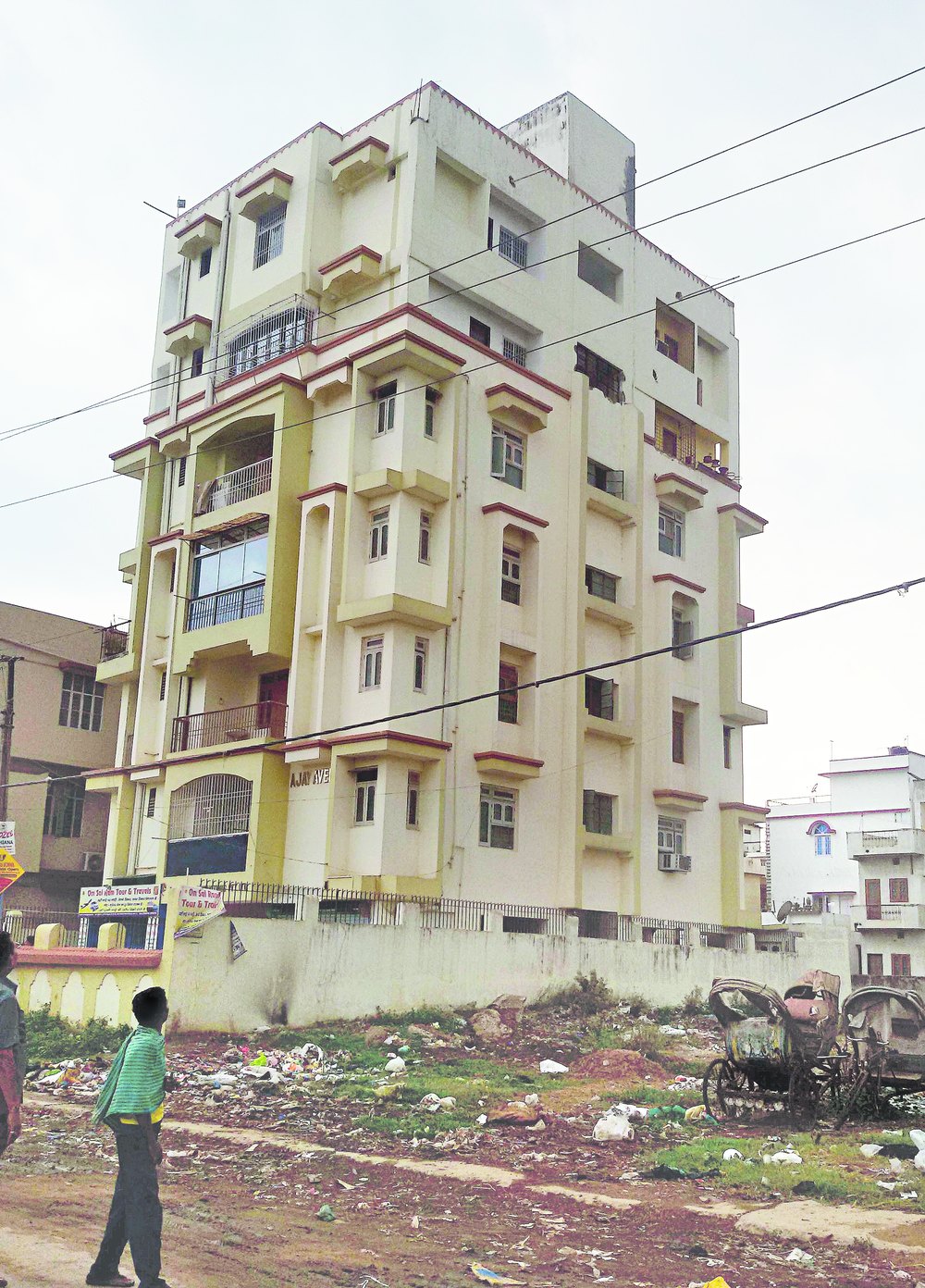

Most buildings in the city withstood the tremor of Saturday and aftershocks on Sunday but the reality is none of them is safe in times of earthquake.
The Bihar State Disaster Management Authority (BSDMA)'s vice-chairman, Anil Kumar Sinha, claimed on Sunday that none of the existing buildings in the city was retrofitted to be earthquake-resistant. "No house in Patna and elsewhere in the state is earthquake-resistant. While the highrises (15m and above) are at greater risk, none of the existing buildings of average height is retrofitted to sustain earthquakes," said Sinha.
Retrofitment is the process of strengthening the existing structure through appropriate structural design and construction for better safety against earthquake.
"The strength of the buildings in the city would be really tested in case of an earthquake more than 5 on the Richter scale with epicentre in Patna. The tremors being felt from yesterday (Saturday) are coming from the epicentre of the earthquake in Nepal, which is around 350km away from the city," said a structural expert of the city.
BSDMA has recently set up an earthquake safety clinic at National Institute of Technology (NIT)-Patna, which provides information on retrofitment among other aspects of withstanding quake impact. "People can come to our clinic and get all necessary information on retrofitting the existing buildings. Living in high-risk zone for earthquakes, people of Patna in central Bihar as well as of north Bihar should get their buildings retrofitted," said Sinha.
The unregulated mushrooming of buildings in the city over the past two decades has created narrow and chock-a-block neighbourhoods, which are an open invitation to disaster in case of earthquakes as the city is located in the high-risk seismic zone-IV. Chief minister Nitish Kumar said on several occasions in the past that if Patna would be the epicentre of a quake of the magnitude of 6.7-6.8, thousands of buildings would collapse.
The mega projects of the building construction department, including the under-construction Bihar Museum and Bihar Police Bhavan, are among the few earthquake-resistant buildings in the city. There is hardly any quake-resistant private building in the city though their cost of construction is not very high.
Experts claimed that constructing an earthquake-resistant building in seismic zone-5 (north Bihar) costs merely 5-6 per cent more than the traditional construction cost, just 4-5 per cent more in zone-4 (central Bihar) and 3-4 per cent extra cost is incurred in constructing such houses in zone-3 (south Bihar).
The state government has introduced various norms to ensure earthquake safety through its new development control regulations, including Bihar Building Bylaws and the proposed master plan for Patna. The new building bylaws have prescribed mandatory provision for the structures to be earthquake-resistant. All multi-storied builders have to procure certificates that their building plans and designs comply with the prescribed earthquake safety requirements before commencing construction.
The completion certificate would also mention that the norms have been followed in the design and the construction of buildings for making them earthquake-resistant.
To make sprawling and spacious neighbourhoods, the proposed master plan for Patna prescribes for provisions for open space according to plot size and zone regulations in the city. Around 40 per cent of the total area in the city has to be open space or green area.