India is set to receive its first consignment of Iranian crude oil since the US reimposed sanctions in 2019, forcing New Delhi to halt purchases from Tehran.
The development marks a tentative reopening of a once important supply line at a time when oil prices are rocketing.
“The Indo-Iranian oil trade has flickered back to life,” says Sumit Ritolia, senior analyst at Kpler, a data and analytics firm that tracks shipping.
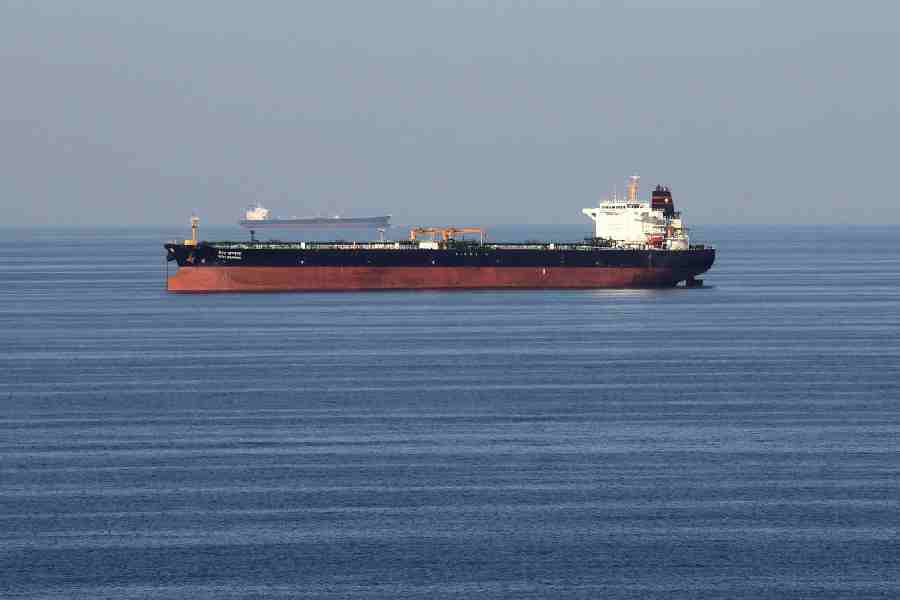
The oil tanker, the Ping Shun, which loaded its cargo at Kharg Island, Iran’s main crude export hub, has crossed the Strait of Hormuz and is expected to arrive on April 4, Ritolia says. It will deliver its cargo of about 600,000 barrels of crude to Vadinar port in Gujarat.
“This is the first such delivery since May 2019 and comes at a critical time for Indian refiners facing tightening inventories,” Ritolia says.
The sanctions on Iran were reimposed after Washington, during Donald Trump’s first term as US President, withdrew from the nuclear deal struck by Barack Obama, claiming that the accord failed to curb Tehran’s nuclear ambitions.
The shipment follows a temporary easing of restrictions by the US, which has been trying, unsuccessfully, to keep a lid on global oil prices.
Benchmark Brent crude settled at $118.35 on Tuesday, near its highest point since hostilities began, as traders scrambled to secure shipments amid worries about a lengthy disruption of traffic through the strait. Oil prices leapt 63 per cent in March, posting the biggest monthly jump in decades.
Washington has allowed the sale of Iranian oil that had already been loaded and held at sea since March 20, granting a narrow sanctions waiver that runs until April 19.
India is expected to be a key buyer under this window, alongside China, which has continued purchasing Iranian oil despite sanctions.
The crude shipment comes close on the heels of another Iranian energy delivery. Earlier this week, a tanker named Sea Bird docked at Mangalore port carrying liquefied petroleum gas (LPG), offering some relief as India scours global markets for supplies to contend with domestic shortages.
Military uncertainty is compounding market volatility, with US defence secretary Pete Hegseth saying, “the point is to be unpredictable”, and adding that the war could last “four to six to eight weeks, or any number.
After halting Iranian imports in 2019, India diversified its crude basket with Iraq emerging as a leading supplier while Saudi Arabia and the United Arab Emirates increased their shipments. In the wake of Russia’s invasion of Ukraine in 2023, Russia has become a key source of oil.
India’s urgency now reflects the sheer volume of its energy demand. The country consumes 5.6 million barrels of oil a day, making it the world’s third-largest consumer after the US and China.
To meet that demand, refiners have been aggressively locking in supplies, including deals to purchase around 2 million barrels per day from Russia for April, slightly below volumes last year.
However, competition for those barrels is stepping up. More Asian economies, including the Philippines, Singapore, Malaysia and Indonesia, are turning to discounted Russian crude, reducing availability and pushing India to step up further its efforts to increase its sourcing options.
Industry experts say that it’s too early to say whether Iran will consistently allow a larger number of Indian tankers safe passage through the waterway.
Even so, some movement is underway. Two Indian LPG tankers, the BW Tyr and the BW Elm, have already crossed the strait en route to Indian ports, where they are expected to discharge much-needed cargoes.
Regional dynamics further complicate the picture. Iran has reportedly allowed up to 20 Pakistani ships a week to transit through Hormuz, according to Bloomberg. Pakistan, however, has no stranded vessels in the Gulf and is exploring options such as reflagging ships from other regions to transport essential goods like fertilisers.
For India, the need is far greater. The country imports between 1.7 billion and 1.8 billion barrels of crude annually, equivalent to 900 very large crude carriers (VLCCs) a year, or about 75 shipments a month. By comparison, Pakistan requires only around two VLCCs monthly.
The imminent arrival of Iranian crude has fanned cautious hopes more shipments could follow. But it’s uncertain whether this marks the start of a sustained trade reopening or just a brief window.
Meanwhile, Iranian President Masoud Pezeshkian said late Tuesday that Tehran has the "necessary will" to end the war. But Iran needs “guarantees that essential conditions are met, especially the guarantees required to prevent repetition of the aggression," Pezeshkian told the president of the European Council.