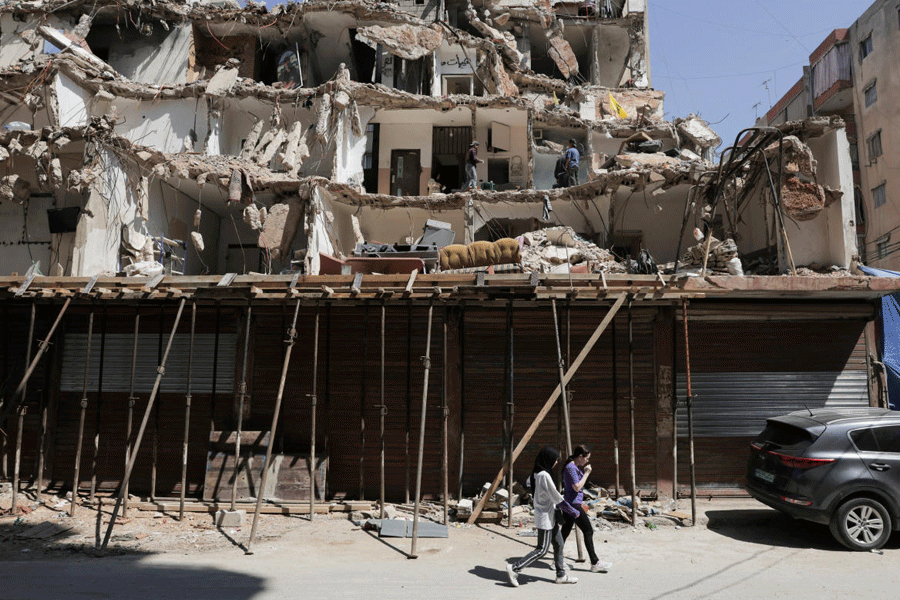
US President Donald Trump on Wednesday evening said Washington would consider a ceasefire when the Strait of Hormuz is open, free and clear, and until then America will continue blasting Iran ”back to the Stone Ages”.
Trump is not the first. America has threatened to bomb a few countries back to the Stone Ages before as well. He is just the first one to say it to the world’s face.
After 9/11 the US allegedly threatened to bomb Pakistan “back to the stone age” unless it joined the war on terror against the Taliban and al-Qaeda in Afghanistan.
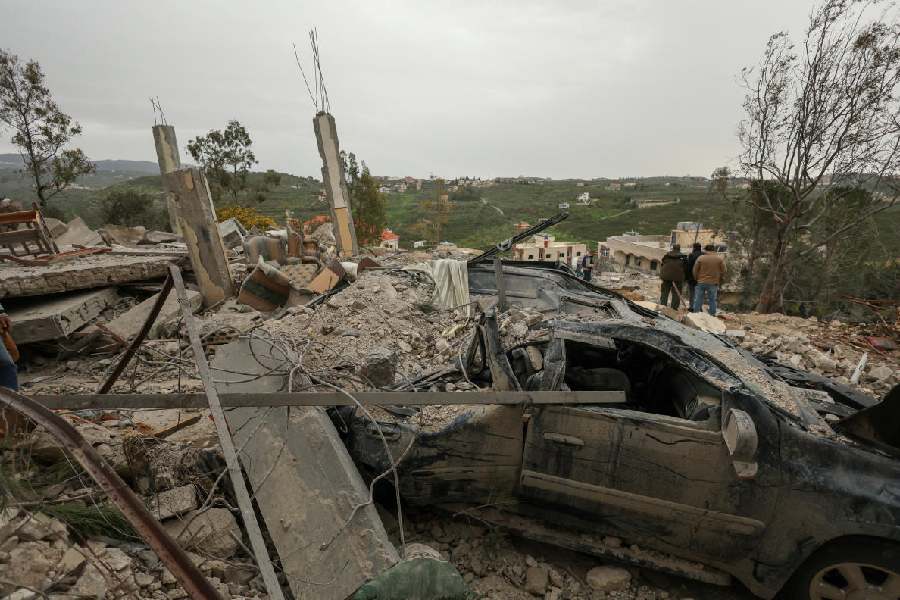
That is what former Pakistani President Pervez Musharraf wrote in his memoir, In the Line of Fire, of then US deputy secretary of state Richard Armitage.
"In what has to be most undiplomatic statement ever made, Armitage added to what Colin Powell had said to me and told the (ISI) director general not only that we had to decide whether we were with America or with the terrorists, but that if we chose the terrorists, then we should be prepared to be bombed back to the Stone Age," Musharraf wrote.
He repeated it in an interview with CBS: "The director of intelligence told me that he said, 'Be prepared to be bombed. Be prepared to go back to the Stone Age’.”
Armitage, a US Navy officer who could pass off as an American professional wrestler, disputed the exact language, but didn’t deny that the message to Pakistan was strong.
In 2008, speaking at a Brookings Institution discussion on 'The US-Pakistan Strategic Relationship', Armitage said: "I have gone my whole career desperately wanting to tell somebody that I would bomb them into the Stone Age and I have never been able to do it because I have never been authorised to do it."
He admitted that calling it a “straightforward, candid conversation would be an understatement,” but insisted that “there were no threats in any way."
According to several historical sources, the “bomb back to Stone Age” expression was first used by Curtis LeMay, a US Air Force officer who supervised the destruction of Japan’s major cities in World War II.
LeMay was apparently disappointed when US President J.F. Kennedy wouldn’t let him do the same to Cuba.
In his 1968 memoir, he also suggested that rather than negotiating with Hanoi, the United States should “bomb them back to the Stone Age,” by taking out factories, harbours, and bridges until America had destroyed every work of man in North Vietnam.
What were the Stone Ages like?
The Stone Age refers to a roughly 3.4-million-year period of prehistory when human beings primarily used stone for tool-making. It represents about 99 per cent of human technological history, ending only with the advent of metalworking (the Bronze Age) between 3300 BCE and 2000 BCE, depending on the region.
Archaeologists divide this era into three distinct stages based on technological and social evolution, Paleolithic, Mesolithic and Neolithic.
The first and longest phase was the evolutionary journey from early hominins to modern Homo sapiens. Humans were hunter-gatherers. In the Merolithic era (after the Ice Age) settlements became semi-permanent, humans began domesticating the dog and experimented with managing wild plants.
The final Stone Age marked the most profound shift in human life: the transition from food gathering to food production, large-scale domestication of animals, settlements to the first villages. The invention of pottery allowed for the storage of surplus grain and the development of weaving and the wheel followed.