|
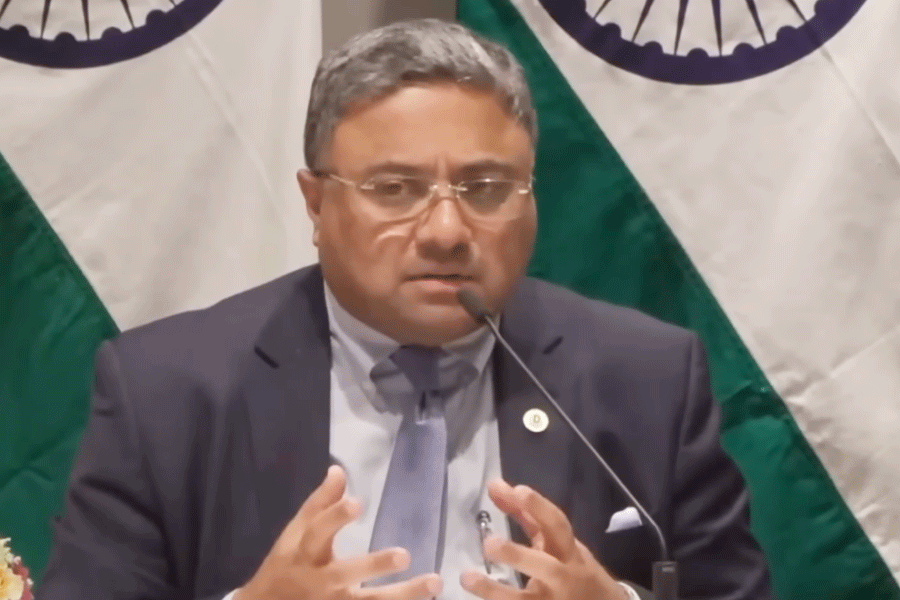
| Sher Bahadur Deuba. (AFP) |
Kathmandu, June 2 (Reuters): Nepal’s King Gyanendra reappointed Sher Bahadur Deuba Prime Minister today, the same man he sacked in 2002 provoking a political crisis in a country already reeling from a bloody Maoist revolt.
Deuba’s appointment is expected to ease political tension after months of street protests, but is unlikely to stop rebel violence that has wrecked the impoverished kingdom since 1996, analysts said.
Deuba, who will be sworn in tomorrow, said he was trying to put together an all-party cabinet to end a political stalemate and give him a strong hand in possible negotiations with the Maoist guerrillas who control vast swathes of the countryside.
The appointment came more than three weeks after a royalist Prime Minister resigned in the face of daily protests in Kathmandu organised by political parties calling for a return to multi-party democracy.
“The king had sacked me. I am reappointed,” Deuba said after meeting the king at the sprawling Narayanhity royal palace.
Deuba said he would seek the cooperation of all parties to form a government, would work for peace and would aim to hold a general election by April next year, as requested by the king.
Analysts say Deuba’s appointment could end the street campaign by the political parties because he is seen as less of an ardent royalist than his two predecessors.
Nevertheless, he would have to convince the main parties, which have been insisting they be allowed to name the new Prime Minister, that he is his own man, independent of the king. But analysts saw little hope of an end to the Maoist insurgency under Deuba.
Few expect him to be able to bring the rebels back to negotiations because he has in the past rejected their demand for a new constitution. “He has already been tested and failed in peace efforts with the Maoists,” said Rajendra Dahal, editor of the widely read Nepali weekly Himal.
Deuba, who has been Prime Minister twice before, said it was a big responsibility to lead the country to peace and elections.
“I will seek the support of all parties to form a cabinet as far as possible, make efforts to maintain peace and hold elections,” said the new Prime Minister, dressed in a traditional knee-length white shirt, tight trousers and black cap. The king sacked Deuba in October 2002 when he sought to postpone elections for a year, sparking a constitutional crisis in the impoverished Himalayan kingdom. Two royalist Prime Ministers have since come and gone, neither proving able to build bridges with main political parties or make peace with the Maoists.
The guerrillas have in the meantime stepped up attacks across the rugged nation and in Kathmandu raising fears that Nepal, sandwiched between India and China, could descend into chaos.
The alliance of five political parties organising the protests was guarded in its response to Deuba’s appointment.
The biggest party, the Nepali Congress, said it would read the fine print of his appointment before announcing its stand or deciding whether to call off the daily protests — which continued today with about 5,000 people on the streets. The royal palace said Deuba would exercise all executive powers vested by the constitution.
“The king has asked him to recommend a cabinet by including all political parties to the extent possible and maintain law and order to begin elections to parliament by mid-April 2005,” the palace said in a statement.
The appointment came in the midst of a three-day transport strike called by the rebels, and a day after the third anniversary of a palace massacre that accelerated Nepal’s slide into chaos.