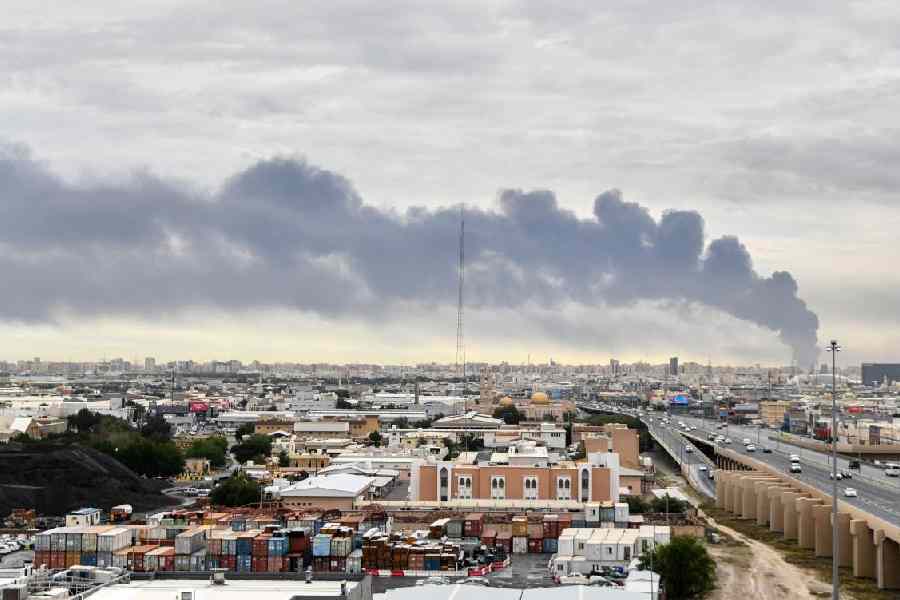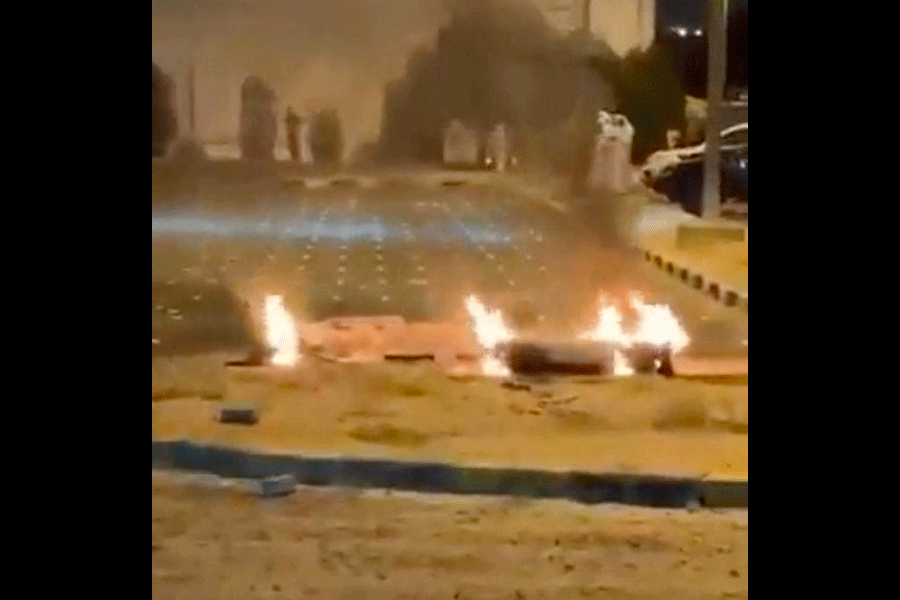
Kuwait partially reopened its main airport on Wednesday after an Iranian drone attack damaged the passenger terminal, killed at least one person and injured several others, authorities said, with Kuwait Airways resuming flights from an alternate terminal while commercial operations remained restricted.
Kuwaiti civil aviation authorities said Kuwait Airways flights had resumed from a different terminal than the one struck in the attack. No other flights would be operating. State media earlier reported that the airline had suspended operations following the strike.
Defence ministry spokesperson Brig. Gen. Saud Abdulaziz Al-Otaibi said that "a number of hostile drones" had targeted Kuwait International Airport's passenger building, severely damaging the structure and injuring "a number of individuals." Kuwait's foreign ministry later confirmed that at least one person had been killed.
The airport had only reopened on Monday after being shut during the conflict involving Iran, the United States and Israel.
The attack came hours after the US military said it had launched strikes on an Iranian military ground control station on Qeshm Island in the Strait of Hormuz in response to Iranian attacks targeting Kuwait and Bahrain.
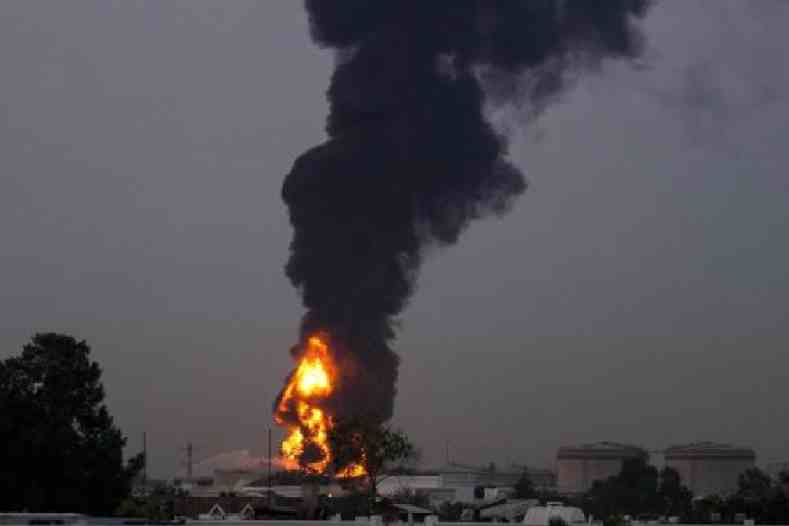
According to the US military, Iran fired two missiles at Kuwait that broke apart before reaching their target, while US forces also "downed multiple drones" aimed at American personnel in the country. It added that US and Bahraini forces intercepted missiles targeting Bahrain, home to the US Navy's 5th Fleet. Bahrain's Defence Ministry said its military destroyed three missiles and several drones launched by Iran.
Iran's paramilitary Revolutionary Guard acknowledged targeting the headquarters of the 5th Fleet and US military facilities in another country, though it did not name Kuwait. The Guard said the strikes were retaliation for attacks on Qeshm Island.
"We had previously warned that in case of aggression, the response would be different and more severe, and we acted accordingly," the Guard said in its statement.
Iran's foreign ministry condemned the US strikes on Qeshm Island and other earlier attacks, calling them "acts of aggression" that it said violated the ceasefire.
The latest escalation also cast doubt on efforts to extend a ceasefire in the conflict. Semiofficial Iranian news agencies Fars and Tasnim reported that Tehran had stopped communicating with mediators.
A regional official involved in the mediation, speaking on condition of anonymity, said Iran had halted communications after insisting that a ceasefire in Lebanon be enforced before negotiations could continue.
US President Donald Trump rejected reports that talks had broken down.
"The conversations between us have been going on continuously, including four days ago, three days ago, two days ago, one day ago and today," Trump said in a social media post. "Where they lead, one never knows, but as I told Iran, 'It's time, one way or another, for you to make a Deal."
US Secretary of State Marco Rubio, testifying before Congress, did not address the reported communication freeze but expressed cautious optimism about negotiations, while warning there was no guarantee of reaching "a deal that's acceptable".
The attacks also drew concern across the Gulf region. Senior Emirati diplomat Anwar Gargash called for "a firm, unified, and cohesive Gulf position" against Iran.
"This aggression does not target a specific state, but rather all of us," Gargash wrote on X.