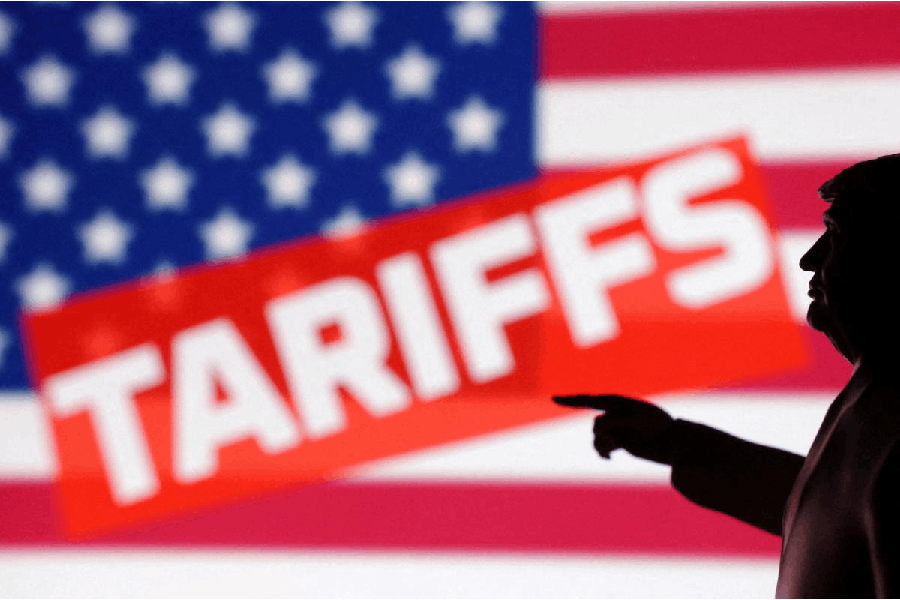
The United States has proposed imposing an additional 12.5 per cent tariff on imports from India, along with goods from 53 other countries, alleging that they have failed to prohibit the import of products made with forced labour. New Delhi has rejected the allegations and urged Washington to address the issue through ongoing bilateral trade negotiations.
The proposal, announced by the Office of the US Trade Representative (USTR), stems from a Section 301 investigation into 60 economies over what Washington described as failures to curb trade in goods produced with forced labour.
"The failure of our most important trading partners to address the importation of goods made with forced labour is unacceptable. This creates a dynamic where American workers are forced to compete globally on an unlevel playing field,” US Trade Representative Ambassador Jamieson Greer said in a statement.
"We will no longer tolerate this disparity," he said.
India has denied the allegations under the forced labour clause and asked the US to end the investigations, arguing that such matters should be addressed within the framework of ongoing bilateral trade negotiations.
According to the USTR, 54 countries, including India, China, Japan, Brazil, Australia, the UK and Saudi Arabia, have failed to impose and effectively enforce a prohibition on the importation of goods produced with forced labour. These countries would face an additional duty of 12.5 per cent.
Six economies — Canada, Ecuador, the European Union, Indonesia, Mexico and Pakistan — were found to have existing prohibitions but were accused of failing to enforce them effectively. The USTR has proposed an additional duty of 10 per cent for such economies, along with several others that have committed to introducing and enforcing similar restrictions.
Greer said that while some trading partners had taken initial steps to prevent imports linked to forced labour, including commitments under trade agreements, "each of our trading partners must do more to ensure that trade does not perversely encourage and entrench forced labour globally".
The proposed tariffs are part of a broader effort by the Trump administration to rebuild trade measures after a US Supreme Court ruling in February struck down tariffs imposed under the International Emergency Economic Powers Act.
The USTR has also proposed a textile mechanism that would allow a specified volume of apparel and textile imports from certain economies to enter the US at reduced tariff rates, although details of the tariff concessions and import quotas have not yet been disclosed.
The agency said several products would be exempt from the proposed tariffs, including energy products, rare earths and certain other metals, beef, coffee, selected fruits and vegetables, pharmaceuticals, organic chemicals and aircraft parts.
Interested parties have been invited to submit requests to appear at public hearings, along with summaries of testimony, by June 22. Written comments can be submitted until July 6.
"USTR will hold hearings about the proposed actions in these investigations on July 7," the statement said.