|
| A woman shows her ink-stained finger after voting in Benghazi on Saturday. (AFP) |
Benghazi (Libya), July 7: Libyans voted today in their first election in more than 40 years, in some places braving sporadic gunfire and threats of violence in their determination to conceive a new nation after the overthrow of Col Muammar Gaddafi.
“We will vote for the fatherland whether there is shooting or not,” said Naema el Gheryiene, 55, fixing a designer veil over her hair as she walked to a polling station in an upscale neighbourhood shortly after a gunman in a passing car had sprayed bullets into the air. “Whoever dies for their country is a martyr, and even if there are explosions, we are going to vote.”
The shooting here in the capital of the country’s eastern region came mostly from protesters worried that the more populous west around Tripoli would dominate the new national congress and the writing of a constitution. In recent days, protesters have attacked polling stations and burned ballots here and in other eastern cities.
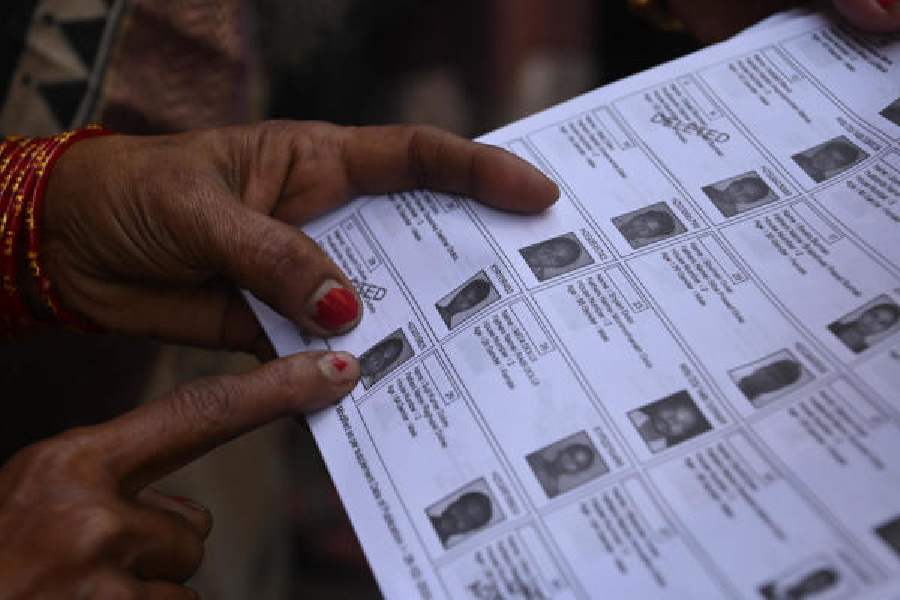
Last night, they downed a Libyan Air Force helicopter carrying voting supplies, killing an election official. By mid-morning today, about a hundred men armed with rifles, machetes and rocket-propelled grenades had stormed at least one polling place here, emerging with at least seven red-topped translucent ballot boxes and stacks of voter rolls that they brandished as trophies.
“It is still early — this is after just one hour,” a triumphant attacker declared as they began to debate which polling place to go to next.
But the interim authorities of the self-appointed Transitional National Council had vowed to push ahead with the vote despite concerns about violence. The officials hope that even a flawed and incomplete election will give a new government the legitimacy needed to impose the rule of law on the militias of former rebels dominating the country.
Indeed, after a two-week campaign dominated by tribal loyalties and all but devoid of policy debate, the real contest today was not so much between candidates as over the credibility of the vote. By midday today polls had opened as promised in most precincts around the country, and voters in the major coastal cities of Tripoli, Misrata and Benghazi paraded their cars through the streets honking and flashing victory signs in celebration.
“The situation is beyond description,” said Hamza el Shaybani, a militia leader in a working-class Tripoli neighbourhood, Abu Salim, that was a stronghold of support for Gaddafi. His fears of armed attacks on the polling places had not materialised, the only fight that broke out was unrelated to the elections, and in one polling station 1,115 Libyan had voted in the first two hours, he said.