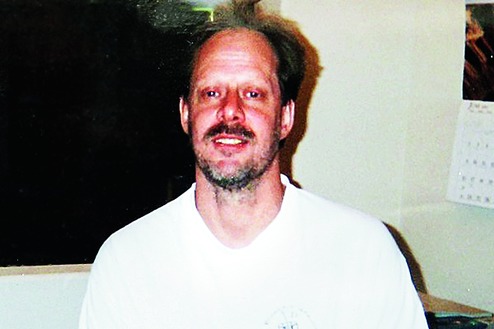

New York: The Las Vegas gunman Stephen Paddock stands out among American mass killers because of his wealth. He became a millionaire, according to his family, through the buying and selling of real estate and through skilful high-stakes gambling.
His fortune is not big enough - perhaps $5 million, according to some estimates - to make a significant dent in the likely payouts from lawsuits and claims against Paddock's estate. But it is enough to prompt an unusual legal strategy by lawyers for some of Paddock's victims, who want to make sure the money is not depleted by legal expenses.
The lawyers have asked a Nevada court to set up the estate so that the money can be distributed, without lawsuits, to families of the dead and those who were wounded in the attack. One idea being discussed is folding Paddock's assets into a fund already set up for victims, which has raised about $22 million.
More than 500 people were injured and 58 others died after Paddock opened fire from an upper floor of the Mandalay Bay Resort and Casino at an outdoor country music festival in October.
The lawyers also want the court to ensure that Paddock's heirs do not benefit from the estate and that they have no role in how it is managed. No will has been discovered and relatives do not believe he prepared one.
Under Nevada law, the mother, Irene Hudson, 89, is entitled to the estate. But one of Paddock's three brothers, Eric Paddock, who lives in Orlando, said in an interview that the family supported the idea of disbursing the assets to victims.
So far, several hundred victims have filed more than two dozen lawsuits, and a $45-million creditor's claim, against Paddock's estate; MGM Resorts International, which owns the Mandalay Bay; and Live Nation, the promoter of the festival. Should plaintiffs agree not to pursue their lawsuits against the Paddock estate, a complicated and potentially contentious issue will involve establishing criteria for who is eligible for payouts from the estate and how much.
While payouts to victims of mass shootings have become standard practice, turning a dead perpetrator's estate into a fund for such a large number of victims is new territory.
"There is no precedent here," said Alice Denton, a Nevada lawyer who is leading the effort to have Paddock's estate apportioned among victims to help cover expenses like medical bills.
Denton, who represents five victims, added: "Most mass killers have been indigent or had modest assets or none to speak of."
That was the case, for instance, with Omar Mateen, who fatally shot 49 people and wounded dozens of others at the Pulse nightclub in Orlando, Florida, in June of last year. A victims fund for that shooting handed out $32 million.
In 2011, the federal government auctioned off some of the belongings of Theodore J. Kaczynski, known as the Unabomber, to provide some restitution to his victims and their families. He killed three people and wounded 28 others in a mail-bomb campaign that spanned 17 years before he was arrested in 1996.
Paddock's estate is being sued for assault, battery, intentional infliction of emotional distress, personal financial losses, and medical bills, among other things.
New York Times News Service