 |
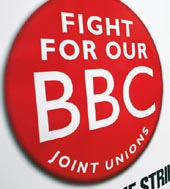
| An anti-management poster at the strike in London. (Reuters) |
London, May 23 (Reuters): Britain’s revered public broadcaster, the BBC, suffered its most serious strike in over a decade today as staff walked out to protest plans to cut 20 per cent of its workforce.
The 24-hour strike forced the BBC to cancel or curtail most of its live radio and TV news programming, including the BBC World Service. Unions have threatened three more strikes if their demands ? including a 90-day moratorium on job cuts and a guarantee that all redundancies will be voluntary ? are not met.
Instead of the agenda-setting Today programme on BBC Radio 4, listeners woke up to a selection of jazz records and a documentary on engineering marvels.
Gone too were flashy graphics and special effects as technicians walked out, sometimes leaving newsreaders with just little more than a single camera and a desk.
The corporation’s 24-hour television news channel, BBC News 24, and World Service radio were running large blocks of pre-recorded programming this morning. Some regional radio programmes were presented by managers, and staff for the foreign language service of the World Service also joined picket lines.
The National Union of Journalists (NUJ) and two other unions were striking to protest against plans by BBC director general Mark Thompson to eliminate about 4,000 jobs.
Thompson’s “value for money” drive came in the lead-up to the renewal of the broadcaster’s 10-year governing charter, at a time when the BBC was still nursing wounds from a bruising fight with the British government over the Iraq war. NUJ general secretary Jeremy Dear said he expects about 11,000 BBC employees to be involved in the strike.
Wilfred Darlington, who has worked for 36 years as a BBC sound engineer, was manning the picket line in Manchester today.
“We’re concerned that 80 per cent of the workforce will be required to do 100 per cent of the current work. I can only guess at what kind of stress levels will result,” he said.
The BBC said it regretted the strike action and would do everything it could to produce the best possible service. “We are keen to get back around the table with the unions and continue negotiations,” a spokesman said.
The NUJ along with the other unions voted on May 12 to authorise four strike days.