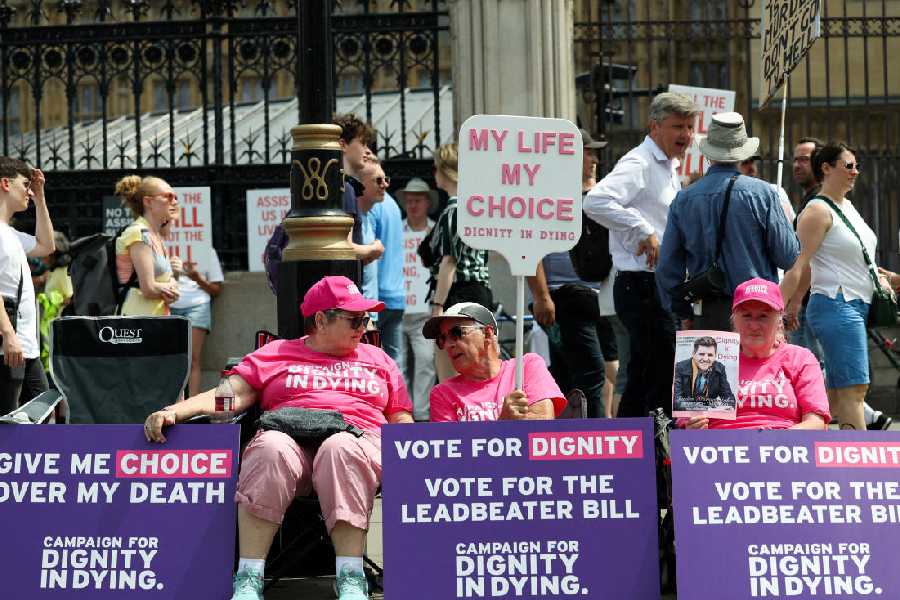
The debate over assisted dying has returned to the forefront of British politics after an attempt to change the law failed in the House of Lords earlier this year, renewing scrutiny of whether terminally ill patients should be allowed to choose the timing of their deaths.
A Labour MP, Lauren Edwards, has said she will reintroduce assisted dying legislation in the new parliamentary session through a private member’s bill, reviving a proposal that the House of Commons earlier passed by 314–291 but failed to pass in the upper chamber.
The earlier bill stalled in the House of Lords amid extensive amendments and concerns over safeguards, particularly around protecting vulnerable patients from coercion.
Edwards said she was bringing the legislation back to ensure terminally ill people are not denied “choice at the end of their lives,” arguing that repeated delays were undermining public confidence in the democratic process.
“We cannot allow an unelected minority to frustrate the democratic process for a second time,” she said, adding that the proposed framework would be “the safest and most robust” assisted dying law internationally.
Under the draft legislation, mentally competent adults in England and Wales with six months or less to live would be eligible to seek medical assistance to end their lives, subject to approval by a panel of professionals.
Assisted dying remains illegal in England and Wales, where assisting suicide can carry a prison sentence of up to 14 years. The issue has long been divisive, with supporters citing dignity and autonomy in end-of-life care, while opponents warn of risks to vulnerable people and the possibility of abuse.
Assisted dying or medically assisted death is legal in countries including Australia, Canada, Spain, the Netherlands and parts of the United States, while several European and Latin American nations permit it under frameworks ranging from terminal-illness eligibility to broader provisions for unbearable suffering, with differing levels of medical oversight and legal safeguards.
French filmmaker Jean-Luc Godard died in 2022 in Switzerland through legally assisted suicide at the age of 91, with his family confirming he chose to end his life amid multiple debilitating medical conditions, though not a single terminal diagnosis.
In 2018, British-Australian scientist David Goodall, aged 104, travelled to Switzerland to end his life at a clinic, citing declining quality of life despite not being terminally ill.
Such cases, alongside others involving individuals seeking assisted death in Switzerland under its permissive framework, have continued to fuel ethical and legal debate across Europe over how end-of-life choices should be regulated.
Public opinion in Britain has shown strong support for reform, with polls suggesting around 80 per cent of Britons back assisted dying in principle.