Despite being swatted about like a tetherball by ever-shifting trade wars, shortages of critical minerals and tense standoffs between the United States and China, the global economy has turned out to be more resilient than predicted.
But don’t think that it’s time to take a breath. The whirligig shows no sign of stopping.
“We are living through a singularly turbulent time,” said Daron Acemoglu, an economist at the Massachusetts Institute of Technology who won the Nobel in economic science last year.
Transformational changes continue to rattle the global economy, including the revolution in artificial intelligence, rapidly aging populations, climate change, and a worldwide turn against liberal democracy and a rules-based international order.
All of which are poised to remake jobs, politics and lives.
The transition has been complicated by chaotic economic policymaking around the world this year.
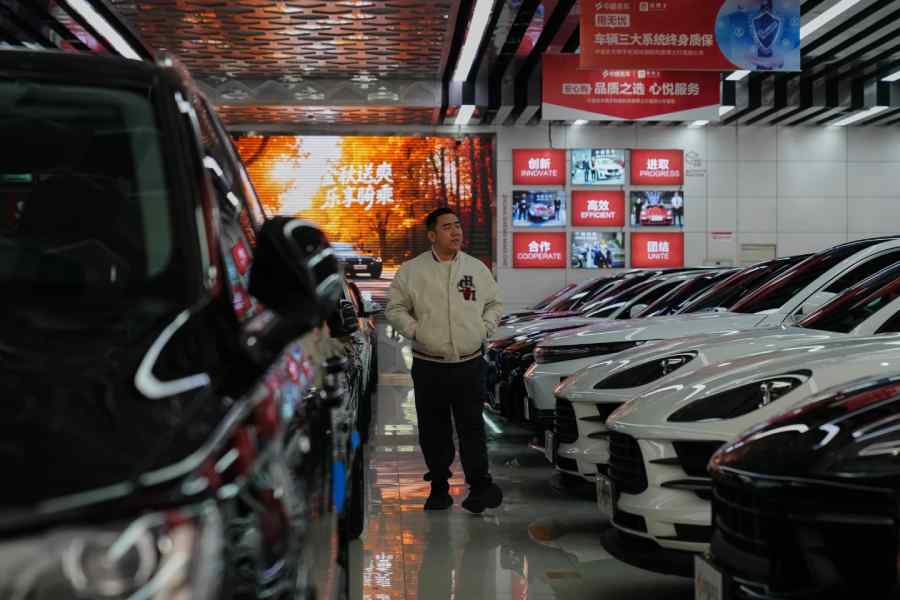
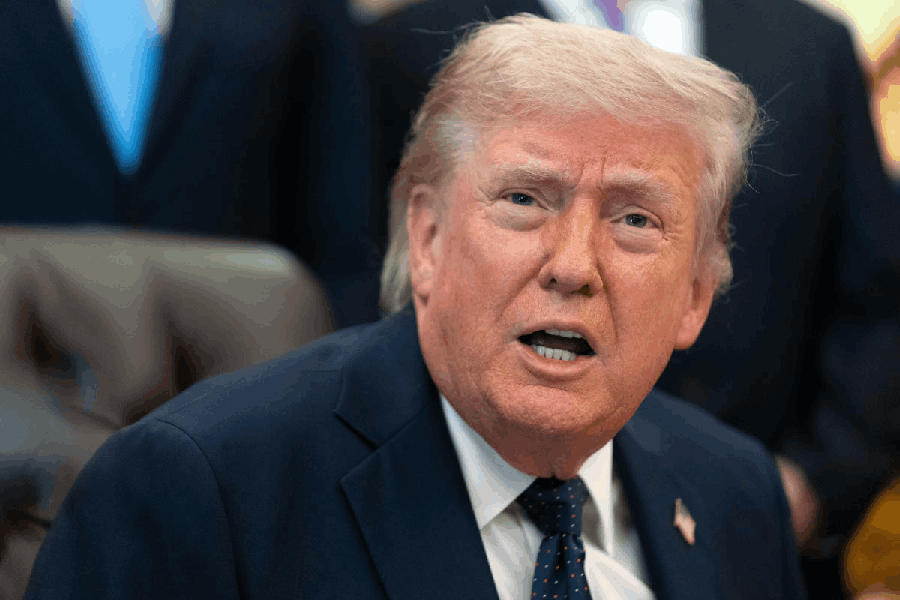
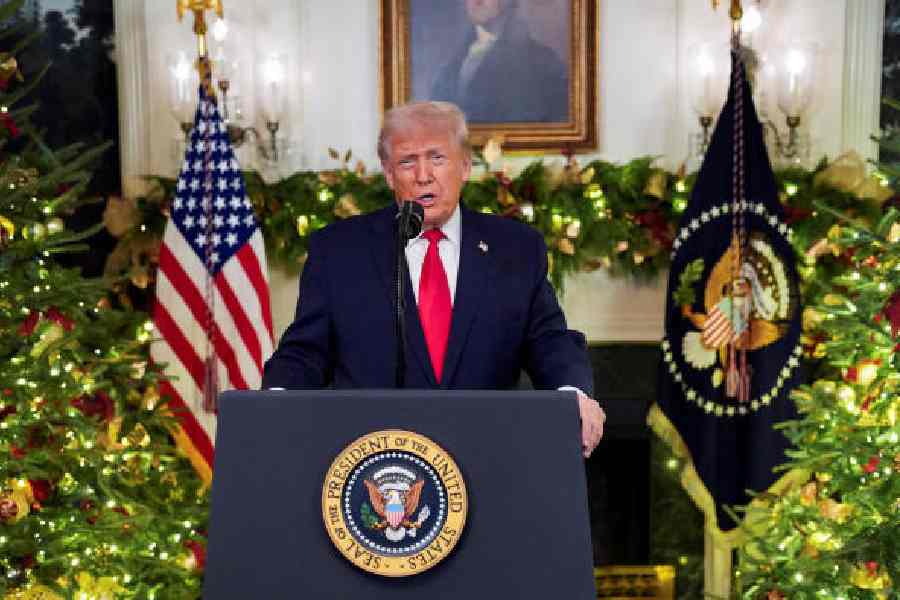
In the United States, contradictory pronouncements are regularly issued from the Oval Office, as tariffs are enacted and retracted without warning. Last month, for instance, President Donald Trump lifted tariffs on beef, tomatoes, bananas, coffee and other groceries, while last week, he threatened to raise them on rice from India and China.
Delayed price increases from tariffs are still working their way through the US economy like a mouse being digested by a snake. At the same time, the future of a large chunk of the president’s tariff policies remains unclear until the Supreme Court rules on their constitutionality.
On the spending side, Trump has vowed to use a $250 billion pot of money generated by tariffs to pay out trillions of dollars to farmers, taxpayers and creditors. Public debt has shot up to record levels, reaching 125 per cent of the country’s total output.
And the dizzying rise in the stock market, pumped by artificial intelligence companies, is fueling both fortunes and fears of a future crash.
In Europe, most countries continue to be plagued by slower growth more than other advanced economies. For several years now, the European Union’s share of the global economy has been shrinking amid sharper competition from the United States and China.
Investment in artificial intelligence has also fallen far behind.
“Europe has a huge innovation problem in the tech sector,” said Acemoglu, who won his Nobel for research on how institutions shape national prosperity.
With 27 members that have varying priorities and domestic pressures, the European Union has enormous difficulty carrying out critical policy recommendations like strengthening its single market for trade and capital, streamlining regulations and signing on to new trade pacts. This week, for example, the EU delayed a vote on whether to approve a trade deal with Argentina, Brazil, Paraguay and Uruguay that has been in the works for decades.
Producers and manufacturers are held back by high energy prices and face growing competition from cheap Chinese exports that before Trump’s tariffs would have been directed to the United States.
Security threats are pushing European governments to further strain budgets and dig deeper into debt as they devote substantially more resources to military spending.
The war in Ukraine grinds on, and President Vladimir Putin of Russia has shown little sign of curbing his aggressive stance. Trump continues to enfeeble America’s commitment to the Atlantic alliance. A recent Danish intelligence analysis warned that the United States “no longer rules out the use of military force, even against allies.”
On the other side of the globe, China is still suffering from a collapse in its real estate market and a pullback in property, infrastructure and manufacturing investments.
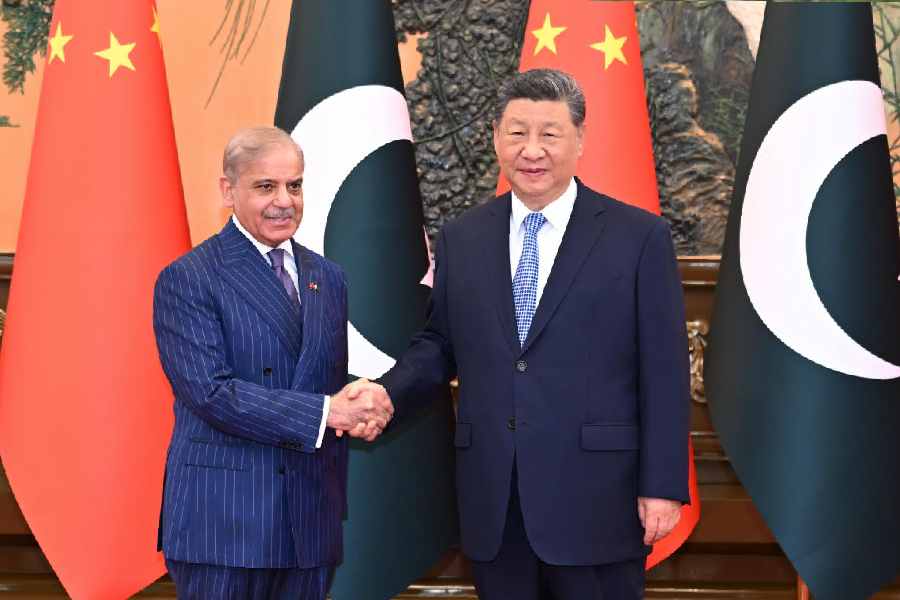
China’s economic influence, though, is building. A record $1 trillion global trade surplus shows that Trump’s tariffs have done little to dampen the country’s trade domination or its reliance on exports to propel its economy. The International Monetary Fund recently revised the country’s annual growth forecast up to 5 per cent.
“These imbalances are becoming unbearable,” President Emmanuel Macron of France said during a visit to China this month.
Europe is not the only destination for the growing flood of Chinese exports. Southeast Asia is among the regions that have seen the sharpest increases.
Dani Rodrik, an economist at Harvard University, said the West’s “response to China’s manufacturing onslaught has been misguided and ineffective.” Chinese innovation has produced significant climate and energy-related advancements, which benefit the entire globe, he said, adding that “instead of blanket condemnation of Chinese mercantilism, the West needs a more differentiated strategy.”
He suggested focusing on the next generation of technology rather than trying to ape what China had already done.
In terms of artificial intelligence, China offers the United States significant competition. Acemoglu at MIT said China had an advantage over the United States when it came to the number of well-trained engineers.
The unseating of the long-standing trading order, with the United States clearly on top and leading the way, is also creating new uncertainties and costs for the world economy.
“We’re certainly in this limbo where there’s no hegemon, and countries are feeling more entitled to go their own way,” said Maurice Obstfeld, a senior fellow at the Peterson Institute for International Economics.
As ad hoc bilateral trade deals proliferate, businesses also have to worry more about the source of their materials and rising compliance costs with added demands for documentation. “It’s a much creakier trade system than the one we’ve been used to,” Obstfeld said.
Diane Coyle, an economist at the University of Cambridge, noted how the COVID-19 pandemic and its aftermath had revealed unforeseen vulnerabilities in the global supply chain. “I think we still don’t have a detailed insight into global and national production networks and where those bottlenecks are,” or where they will show up when a new crisis hits, she said.
Political currents could bring further instability to the world economy. “A lot of people in a lot of countries feel that their lives are going backward,” Coyle said, and distrust in government is increasing.
Elections in several nations next year could shift policy. Midterm congressional elections in the United States, which may serve as a referendum on Trump’s economic agenda, are likely to prompt the administration to pump up government spending — and the deficit — to spur the economy.
Sweden’s general elections will show how some of Europe’s far-right populist parties are faring and test the electoral system’s susceptibility to foreign disinformation campaigns. In Latin America’s largest economy, Brazil, where Trump has used tariffs to try to influence domestic politics and judicial rulings, the president, Luiz Inácio Lula da Silva, will face off against a far-right populist challenger.
The twin stewards of the global financial system, the World Bank and the International Monetary Fund, captured this sense of dislocation — and perhaps even dread — in a new analysis of the future of the world economy and the institutions’ roles in it.
They introduced the report with a quote based on the 1929 writings of political philosopher Antonio Gramsci: “The old world is dying, and the new world struggles to be born; now is the time of monsters.”
The New York Times