The post-poll turmoil inside the Trinamool Congress deepened on Sunday after senior MP Kakoli Ghosh Dastidar resigned as the party’s Barasat organisational district president, taking “moral responsibility” for the TMC’s poor performance in the assembly elections while also launching a sharp critique of the party’s campaign style and internal functioning.
The resignation of the four-time Barasat MP came just days after she was removed as the TMC’s chief whip in the Lok Sabha and replaced by senior MP Kalyan Banerjee following the party’s electoral setback.
In her resignation letter to state TMC president Subrata Bakshi, Ghosh Dastidar formally accepted responsibility for the party’s weak showing in Barasat and parts of North 24 Parganas. However, her remarks were widely seen as a broader message directed at the party leadership and its evolving political structure.
In a pointed observation interpreted as criticism of election strategist I-PAC and the growing influence of a newer political ecosystem around the leadership, she urged TMC supremo Mamata Banerjee to revive the party’s earlier model of grassroots politics.
"Leader Mamata Banerjee, if you work with honest, old and dedicated workers as in earlier days, the party's image will brighten again. Difficult tasks cannot be achieved through fly-by-night organisations," she wrote.
Political observers viewed the “fly-by-night organisations” remark as an indirect attack on I-PAC, the consultancy group closely associated with the TMC’s campaign strategy under party national general secretary Abhishek Banerjee.
Her resignation has reignited discussions within political circles over whether the TMC’s assembly poll debacle has exposed deeper tensions between the party’s old organisational structure and its increasingly strategy-driven political machinery.
Ghosh Dastidar also flagged concerns over allegations of corruption and criminalisation, issues aggressively targeted by opposition parties during the campaign.
"Recent incidents of crime and corruption in West Bengal have naturally created concern and apprehension among people. To strengthen democracy further, greater importance should be given to transparency, accountability, responsibility, decorum and values in politics," she wrote.
The remarks assumed significance as they echoed criticism repeatedly raised by the opposition and hinted at internal unease within the party over its public image after the electoral setback.
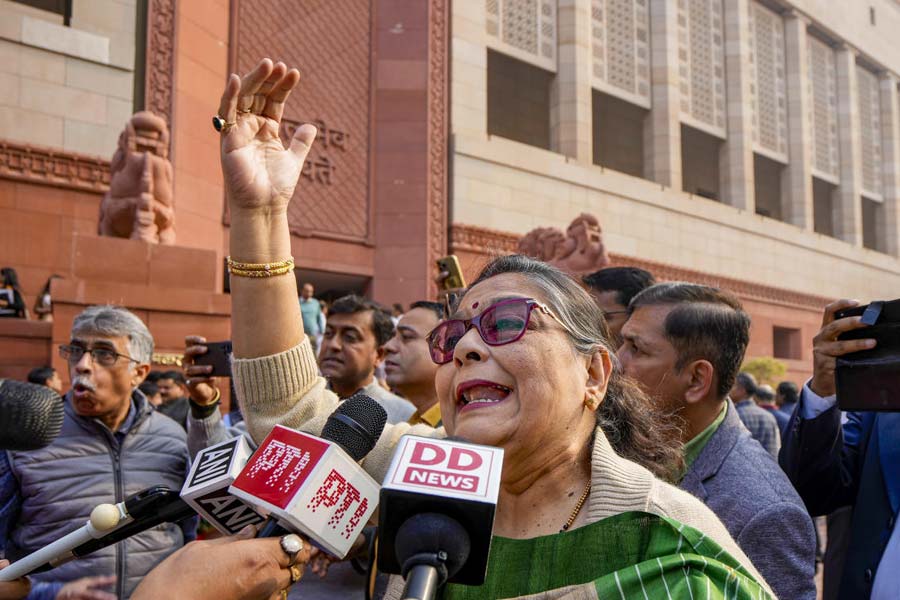
Later, speaking to reporters, the MP intensified her criticism of I-PAC and the treatment of senior party workers.
"I did not appoint I-PAC. But I saw how these young boys and girls behaved with full-time party workers like us. I have been a public representative here for 17 years. My office remained open round the clock for people," she said.
Ghosh Dastidar said she had worked extensively across all seven assembly segments under her Lok Sabha constituency and believed public support for her remained strong.
"But the results made it clear that people did not accept us. There has been criminalisation at every level in the party. I cannot accept the fact that the TMC's tally has dropped to 80. I will continue as an ordinary worker," she said.
In another politically significant remark, the MP said she found it difficult to communicate her concerns to the leadership because Mamata Banerjee had remained too occupied over the past decade and had become difficult to reach over the phone.
Amid speculation over her political future, Ghosh Dastidar struck a conciliatory note before addressing the media by reposting Mamata Banerjee’s live message on X with the caption: "Take charge, leader."
A doctor-turned-politician, Ghosh Dastidar has long been associated with Mamata Banerjee’s political journey and participated actively in several of the party’s early political struggles. Apart from serving four terms as MP from Barasat, she also headed the organisational district unit and the party’s women’s wing.
Her recent removal as chief whip had already fuelled speculation about growing discomfort within the party. Soon after being replaced, she posted on social media that after four decades of loyalty to the TMC, she had finally received her “reward”.
Political observers said the resignation and the tone of her remarks suggested that the TMC’s post-defeat introspection may increasingly spill into the public domain, potentially making it harder for the leadership to restore organisational unity after one of the party’s worst electoral performances.
The TMC had not officially reacted to her resignation till late Sunday.