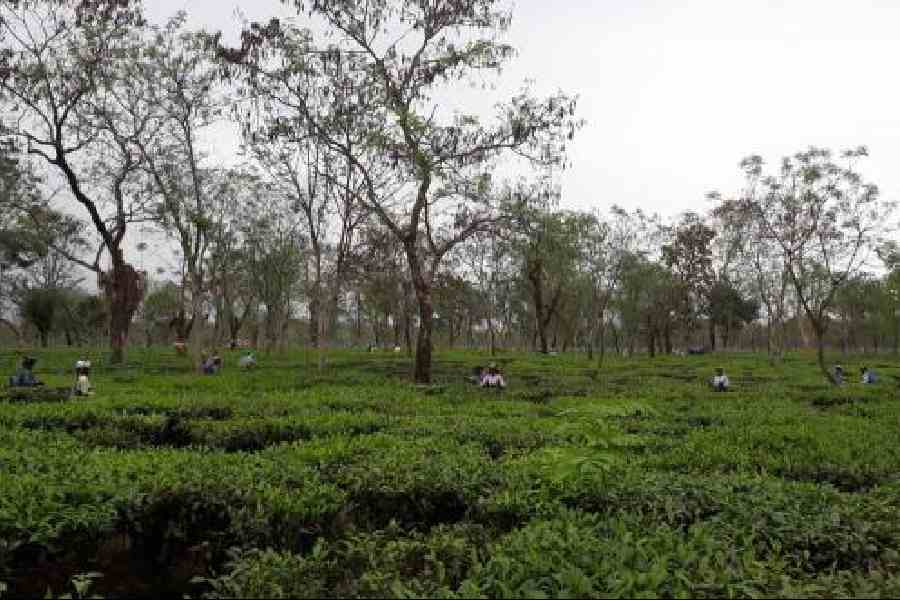
The BJP government on Monday announced a series of welfare and infrastructure initiatives for tea garden workers and the tea industry of north Bengal in its maiden budget in the state.
The focus was on improving the workers' living conditions, protecting the ecology of tea gardens and revitalising the tea economy.
The announcements follow consistent support by the tea population for the saffron party during recent elections.
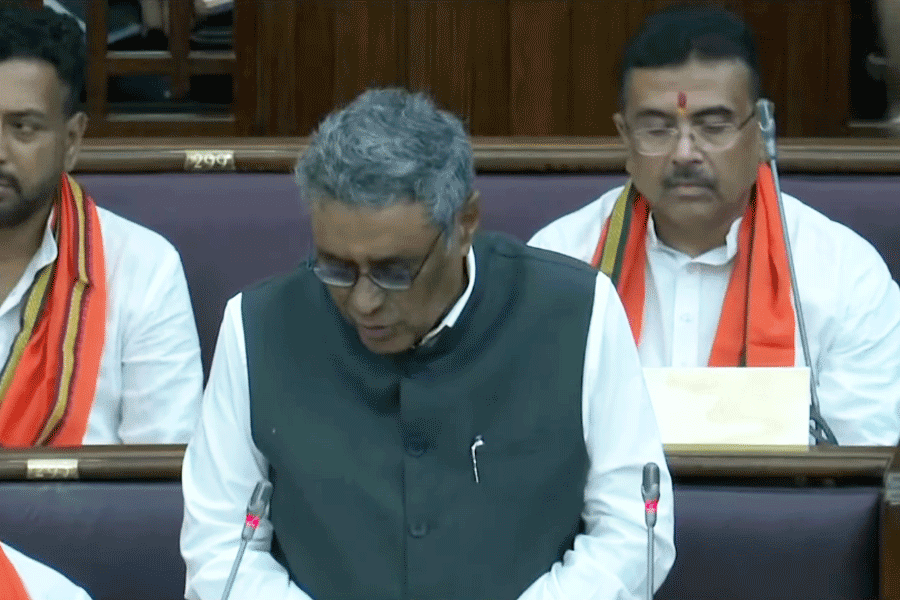
State finance minister Swapan Dasgupta, who placed the budget on Monday, acknowledged the longstanding challenges faced by tea garden workers, including poor healthcare, food insecurity and delayed wage payments. He announced that the state proposed forming a Tea Workers’ Development Board to ensure the holistic welfare of workers and their families.
“The board will oversee the implementation of various welfare schemes for the tea garden workers, including health facilities, modern housing, and distribution of other social welfare benefits,” he said.
The state government, he said, would also implement the PM Cha Shramik Protsahan Yojana in collaboration with the Centre. The initiative aims to improve the socio-economic conditions of tea workers and provide greater support to their families.
“A sum of over ₹300 crore is lying with the central government under this scheme. If properly planned and utilised, it can largely help the tea workers,” said a senior tea trade union leader based in Siliguri.
The government also announced a reduction of the permissible commercial utilisation of tea estate land under the West Bengal Tea Tourism Policy from 30 per cent to 15 per cent.
“The move comes in response to concerns raised by tea garden workers and marginalised communities over environmental degradation and the possible erosion of the cultural heritage of tea garden areas due to excessive commercialisation,” said an administrative official.
Dasgupta said that to improve roads and infrastructure of tea gardens and to set up a common tea processing centre in Siliguri, a sum of ₹100 crore had been allocated.
“The tea processing zone will be established in collaboration with Syama Prasad Mookerjee Port and the proposed facility will house specialised infrastructure for tea trade, processing centres, auction houses and packaging units,” he said.
The announcements evoked largely praise, but a few questions were also raised.
Ajoy Edwards, who heads the Indian Gorkha Janshakti Front, appreciated the budget and the announcement on the reduced ceiling for alternative use of tea garden land.
“However, there has been no clear announcement on minimum wages for tea workers and also no clear roadmap for revival of the cinchona plantations,” he said in a statement.
Prabir Bhattacharjee, secretary general of the Tea Association of India, said the combined impact of all the measures should augur well for the tea industry.
Bijoygopal Chakraborty, president of the Confederation of Indian Small Tea Growers Associations, welcomed the budget, especially its "specific allocations".
Additional reporting by Vivek Chhetri in Darjeeling