The coming financial year holds much hope for block markets. The Corporation budget allocated to repair and maintenance of markets has been doubled from Rs 1 crore to Rs 2 crore.
The figures were made public by Bidhanagar Municipal Corporation mayor Krishna Chakraborty during her budget speech on February 13.
Salt Lake has 16 markets under Bidhannagar Municipal Corporation — those in AA, AB-AC, AG (at Baisakhi Island), AE, BD, BJ, CA, CE, CK, EC, FB (near Falguni Abasan), FD, GD, IA and IB blocks along with one more inside Karunamoyee housing complex. Maintenance work, such as repairing and re-plastering roofs and exterior walls, repairing and installing paver tiles, upgrading electrical lines, refurbishment of toilets, painting etc, has been ongoing in some markets, but there is a long queue of other markets too.
New revenue sources
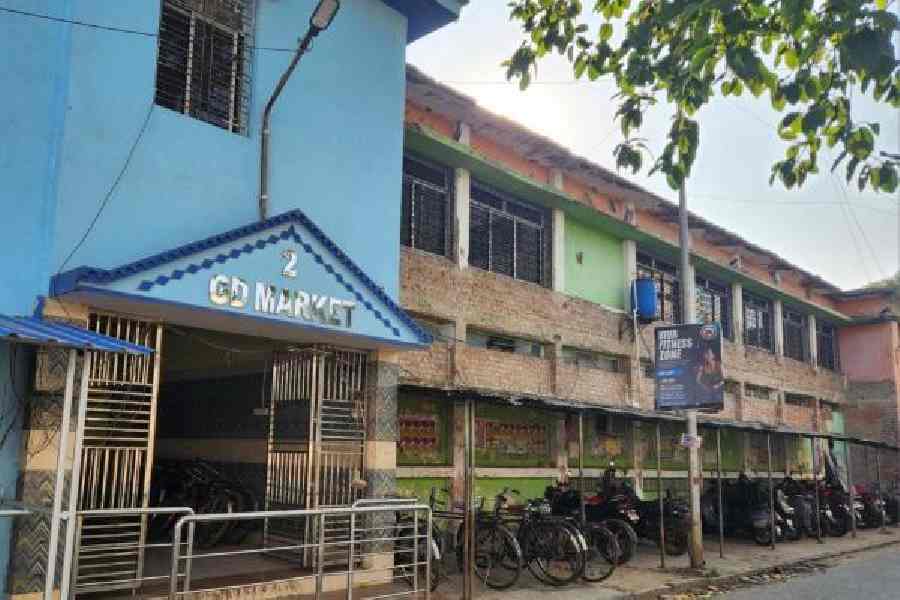
“Some markets had not been repaired for decades, so we had to prioritise those in the most urgent need,” said Rajesh Chirimar, mayoral council member in charge of markets. GD Market, for instance, has undergone repairs worth Rs 1.32 crore in the first phase, with additional work pending. AB-AC Market has been renovated at a cost of Rs 15 lakh, BD Market at Rs 35 lakh, EC Market at Rs 33 lakh and Karunamoyee Market at Rs 15 lakh. “Funds are limited. Karunamoyee Market has fewer shops compared to the others, and we have to justify the expenditure and use the money judiciously,” he explained.
Further work is planned in 2026-27, such as at CK Market. “Work is also needed in AG and AA Markets. We floated tenders for AG Market six times but received no response. We will revise costs and float a tender again,” he added.
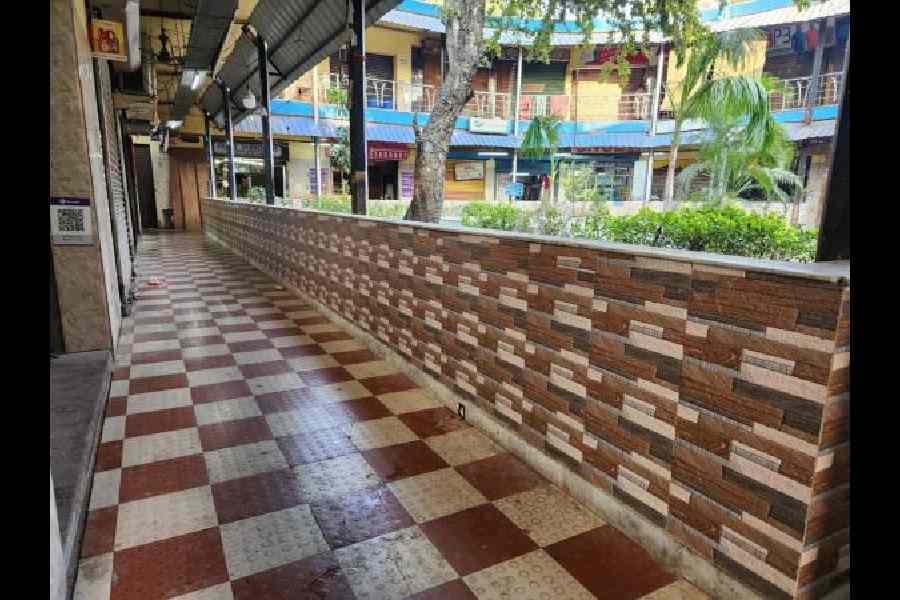
The renovated parts of EC Market look swanky
The board is expected to meet today to discuss and pass the budget, and Chirimar plans to propose measures to generate revenue over and above the sanctioned funds.
“When I took charge of markets in 2022, the annual rent raised from markets was Rs 50 lakh, of which only Rs 35 lakh was realised. We have now increased this revenue to Rs 1.7 crore. This was achieved through regularisation,” Chirimar explained. I spoke to shopkeepers and persuaded them to complete formalities in cases where shops had changed hands or changed their nature of trade (for instance, if a shop originally leased as a grocery is now a salon). “We simplified the process and made it time-bound. Any application in my department now gets cleared within two months.”
This drive generated funds over and above rent. A change of trade is charged at Rs 250 per square foot, while a change in ownership name is charged at Rs 500 per square foot. “These formalities are important. If the original lessee passes away, transferring the lease can become complicated as it requires the signatures of both the previous and the new lessee,” he said.
Chirimar also noted that shop valuations have risen significantly over the years. “The rent we charge is Rs 3 per sq ft, which is ridiculously low. Commercial rent in Salt Lake ranges between Rs 70 and Rs 100 per sq ft — even garages are let out at these rates. Raising shop rents so steeply will face resistance, but we can still use this to our advantage,” Chirimar said. “Shops in markets are currently changing hands at between Rs 15 lakh and Rs 40 lakh, depending on the market. We have 21 vacant shops across our 16 markets, so if we lease these out at current rates, we could generate Rs 4 crore.”
He also wants to explore corporate sponsorship. “In Delhi, brands can adopt entire Metro stations, so why can’t they adopt our markets for a fee that would contribute to their upkeep? We can also rent out space within markets for ATMs.
Beyond conventional beautification, Chirimar believes markets need a central attraction. “We can develop the space around gates, terraces or central empty space such that visitors walk through the market and browse shops before reaching this attraction,” he said. “These initiatives are needed to protect traditional retail markets from the onslaught of online and quick commerce options. Cloth bag dispensers and trolleys have already been introduced in some markets. Now I want to a centralised delivery system for every market. To reinforce consumer confidence, we will also calibrate all electronic weighing machines.”
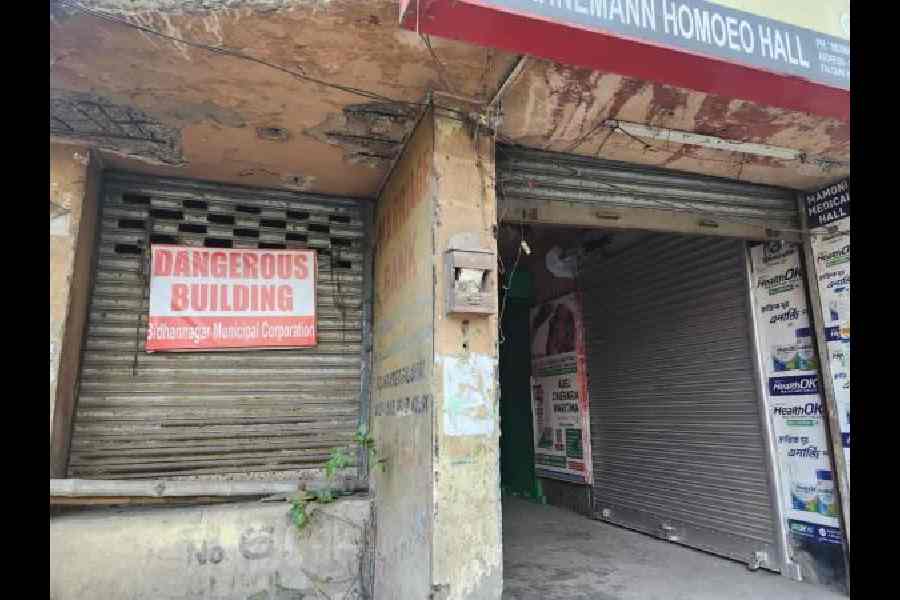
A flex at the FB Market gate warns visitors about its dangerous condition
Waiting list
News of the hike in budget for markets has been well-received by shopkeepers. “Small markets like AG, AA and FB have been neglected for years and are indeed in miserable state. We hope they are tended to but other markets need attention too,” says Shyamal Kanti Roy, secretary of Bidhannagar Kendriya Bajar Byabsayee Samity that comprises all 16 block markets.
At CK Market, for instance, apart from damaged pathways and encroachment in the parking lots, there is no staircase leading to the terrace. “Rainwater accumulates up there and cannot be drained because there’s no access. Then the water seeps through the ceiling,” he says. “Think of the shops that have installed ACs and needed the outdoor units fixed on the terrace. Technicians have had to climb the terrace of a neighbouring building and jump across to CK Market’s terrace. It is extremely dangerous.”
Shopkeepers of AG Market are so frustrated that they went on strike for three days two years ago. “Our electric system was so ancient that the electricity board threatened to snap our lines unless it was upgraded. We shopkeepers, raised Rs 4 lakh from our pockets for this,” said market secretary Tapan Kumar Dutta.
Just this week, three or four shops repaired their ceilings at their own expense. “Customers have tripped and fallen on our broken walkways too,” says one such vendor, Bijoy Kumar Roy, who is also vice president of their association.
At CE Market too, the electric system needs attention. “Our distribution box was installed when we had a handful of shops. Now we have three times the vendors and the same system is overloaded,” says Anandamohan Jati, secretary of the market, who himself runs an electric shop.
FB Market is in such dire straits that the corporation has even put up a flex at the entrance declaring it to be a dangerous building. “Part of the wall in the staircase has fallen off, chunks are hanging off the ceilings and the toilets are beyond use,” says market secretary, Palash Taru Purkait. “Shops are shutting down and leaving.”
Himadri Chatterjee, secretary of AA Market, has a long list of demands too but specifically asks for the corporation to consult them before starting repairs. “Once some 10 to 15 years ago, they had sent contractors, but they did whatever they felt like without addressing our most pressing needs. It was a waste of money,” he says.
Work in progress
Some markets, like GD, EC and CA, have been partially repaired last year but are hoping for more. Work is on at AB-AC Market as this paper goes to print. “But work is slow. There are only two labourers working for some six months at the section that would sell poultry. Our toilets are clogged and need repair, too,” said president of the association Apu Kundu.
AE Market has a bank on the first floor, water from whose toilet leaks to the shop underneath. “A neem tree’s roots have intertwined with our reservoir, and the water is leaking and creating shortage. Chunks have fallen from the ceiling and missed shoppers by inches,” said secretary Babu Saha.
A unique case is BD Market where renovation is on since 2016. “The renovation work has not finished – the fourth phase is still awaited and, ironically, even these renovated portions are leaking now and need repair!” says joint secretary Sushovan Roy. “We are happy with our new ferule and drainage lines, but don’t have a boundary wall or gate. Without locking gates, our wares are not safe at night, and premises are dens of unsocial activities. We hope our works complete in the coming year.