The chairman of the council of the Indian Statistical Institute (ISI), Calcutta, has convened a meeting of the institute’s highest administrative body on January 24 to “discuss the ISI bill”.
The bill seeks to replace the council with a board of governors vested with extensive powers. The meeting will be the first time the bill is discussed at a council meeting since it was uploaded on the Union ministry of statistics and programme implementation’s website last year.
The agenda of the meeting states that the members of the “ISI governing council are the pertinent stakeholders as regards to the proposed ISI Bill, 2025” and that “the council may deliberate on the draft ISI bill and present a collective opinion”.
The ministry had earlier sought individual opinions from the 33 council members between January 9 and 16 as part of its pre-legislative consultation process.
In addition to the bill, the agenda notes that the appointment of a full-term director will also be taken up. ISI has been headed by an officiating director since July 2025.
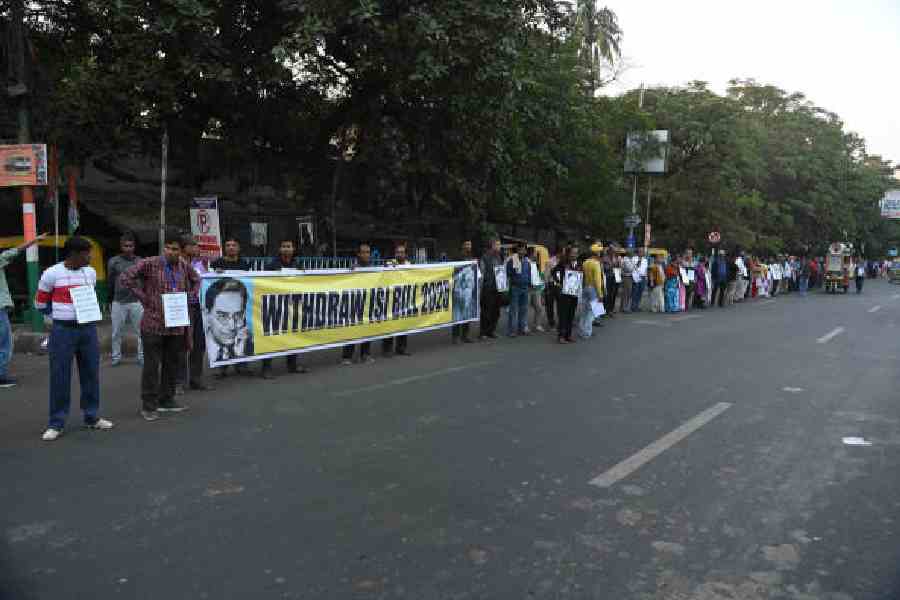
A senior professor who is a council member said that during the previous council meeting, held online on September 12, representatives of the ministry had declined to discuss the bill. In the intervening months, teachers and researchers at ISI have repeatedly protested, alleging that the bill seeks to undermine the institute’s existing governance structure without consultation with its principal stakeholders.
The council is mandated to meet once every four months.
A council member said on Saturday: “This consultation exercise with the apex administrative decision-making body should have been held before putting the bill out in the public domain.”
“We will take up the loopholes in the bill at the council meeting,” the member added.
Teachers and researchers have opposed the repeal of the ISI Act of 1959, arguing that the law ensured an autonomous governance structure for the institute. Under the existing framework, a society sits at the top, followed by the council and the academic council, which is the apex decision-making body on academic affairs.
Another council member said they intended to raise the issue of the director’s appointment at the meeting, alleging that the council had not been allowed to choose the search-and-selection committee. “A panel was thrust on us,” the member said.
In a petition submitted to the ministry in December, teachers and researchers expressed concern over provisions in the bill related to the director’s tenure and review. “According to the bill, the director will be subjected to periodical reviews. All this will essentially turn the director into a nominee of the central government and will be in complete contravention to the notion of autonomy,” the petition stated.
On Saturday, a council member alleged that the appointment of a full-term director was being delayed deliberately. “We suspect that the director’s appointment is being deferred so the board of governors can pick the new director once the bill is passed in Parliament. If the full-term director is to be appointed now, it has to be with the council’s approval. So the appointment has been put on hold,” the member said.
The agenda for the January 24 meeting also refers to a set of frequently asked
questions (FAQs) uploaded by the ministry on December 26 in support of the bill. Under the agenda item “Discussion on ISI Bill, 2025,” it states: “Frequently Asked Questions-Answers on revised draft bill have also been placed in the public domain to extend clarity on the proposed legislation.”
In the FAQs, the ministry responded to concerns over the repeal of the ISI Act of 1959 — enacted when Jawaharlal Nehru was Prime Minister — by arguing that the size and composition of the existing council impede effective decision-making.
The large size of the ISI council, excessive internal representation and a high number of elected members “hinders decision-making, as even a small group of dissenters can effectively block important decisions,” the Union ministry said.