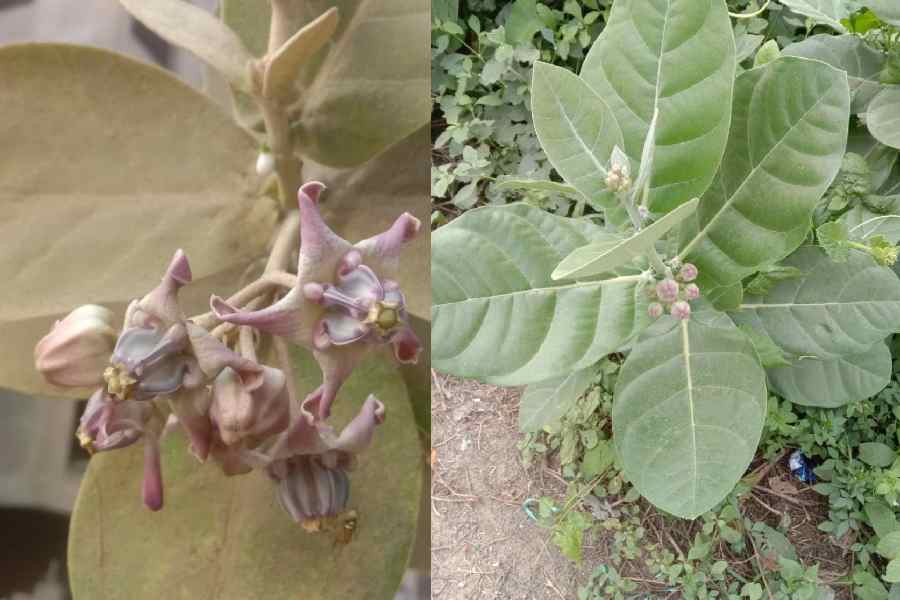
The Akanda is a large shrub known for its crown-like flowers and milky sap. This is why it is known as Crown Flower or Giant Milkweed.
The perennial shrub can grow up to 14ft high with white or lavender, waxy flowers that has five pointed petals and a small crown-like centre that holds the stamens. Leaves are oval in shape, light green in colour. The stem has a milky sap, which contains cardiac glycosides (a class of organic compounds that increase the output force of the heart and decrease its rate of contractions), fatty acids, and calcium oxalate.
The plant is native to a wide area, spanning from tropical Africa to Indo-Malaysia, including countries such as India, Pakistan, Nepal, China, Thailand, Cambodia, Malaysia, the Philippines and Indonesia. Scientifically, it is known as Calotropis gigantea.
Akanda is often used in Hindu religious offerings, particularly to lord Shiva and Ganesha. It is also extensively used in making garlands for worship. It is considered one of the sacred plants in the nine astrological trees (Navagraha tree).
The plant has both traditional medicinal uses for ailments like skin and digestive disorders and cultural significance, where its presence is believed to ward off evil. Akanda has been used to treat a wide range of conditions, including respiratory, skin, circulatory, digestive, and neurological disorders. It has also been used for nausea, diarrhoea fevers and vomiting.
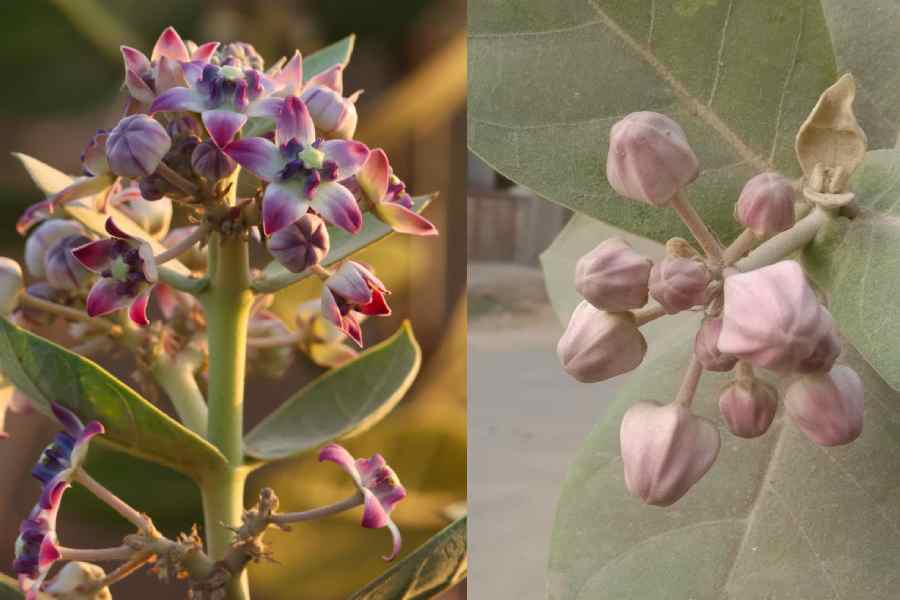
It serves as a host plant for the painted grasshopper and plain tiger butterfly.
Sunlight: The Akanda thrives in full sunlight. It needs at least six to eight hours of direct sunlight daily for optimal growth and flowering. While it can tolerate some partial shade, a lack of adequate light can reduce flowering and overall growth.
Soil: The plant prefers well-draining soil and can tolerate a variety of soil types. Sandy soil mixed with compost (50 per cent garden soil, 30 per cent sand, 20 per cent compost) works well for good drainage. One can use perlite instead of sand, to ensure water doesn’t pool. Pooling is the accumulation of excess water that cannot drain away, causing it to sit in the soil or on the surface like a puddle.
Water: The plant is drought-tolerant once established, but for the first three years water it more frequently, even daily, to help establish a strong root system. Thereafter water sparingly; only water during prolonged dry periods. Akanda hates over-watering and will suffer from root rot if the soil stays soggy. Water when the top two-three inches of soil feel dry to the touch.
Fertiliser: Fertilisation is not always necessary for this plant but can be beneficial. Fertilide once a month during the growing season, but avoid fertilising in the winter. A balanced liquid fertiliser like fermented mustard cake water/ fish emulsion or a balanced, all-purpose fertiliser like 10-10-10 NPK during growing season helps for prolific flowering.
Gently loosen the topsoil around the plant before applying fertiliser. Always water the plant well immediately after applying fertiliser to help nutrients reach the roots.
Pests and disease: The Akanda is notably resilient and generally has no serious insect or disease problems. Its natural chemical compounds (toxic milky sap) actually provide it with strong natural defences against many common pests. Watch for pests like aphids and mealy bugs and treat them with insecticidal soap or neem oil, as needed.
Propagation: The plant can be propagated easily by both seeds and stem cuttings. Collect the seed pods around May-June before they pop open to ensure you don’t lose the seeds.
Sow the seeds about quarter inch deep in well-draining, sandy soil. Place the pot in a location with full sun and keep the soil slightly moist. Germination usually occurs within two to seven weeks.
Growing akanda from cuttings is also easy and often does not require rooting hormones. The cuttings can be planted directly in the soil. Place the planted cutting in direct sunlight and water only when the soil feels dry to the touch. New growth usually appears within two weeks.
Pruning: Regular pruning helps maintain its shape and encourages new growth. Remove any dead, damaged, or diseased parts of the plant.