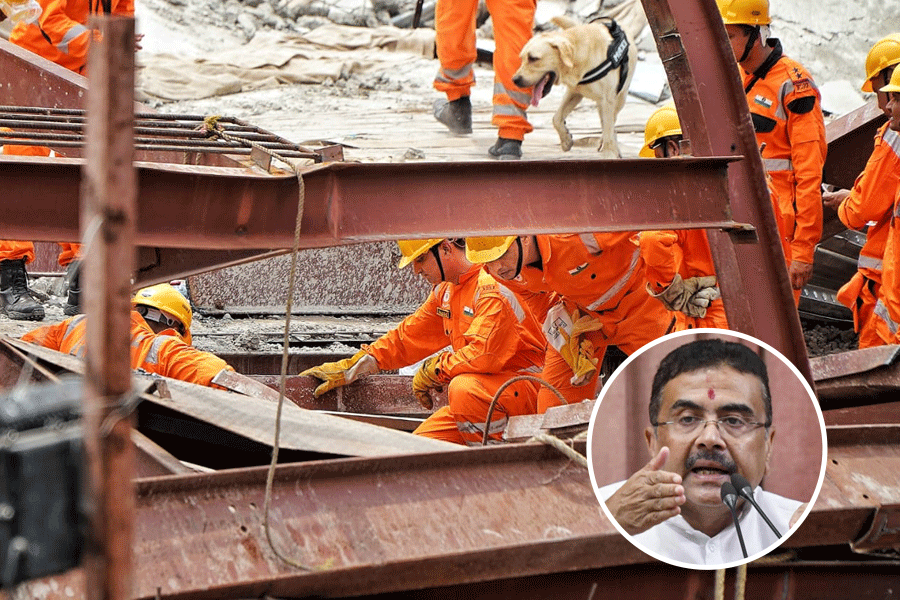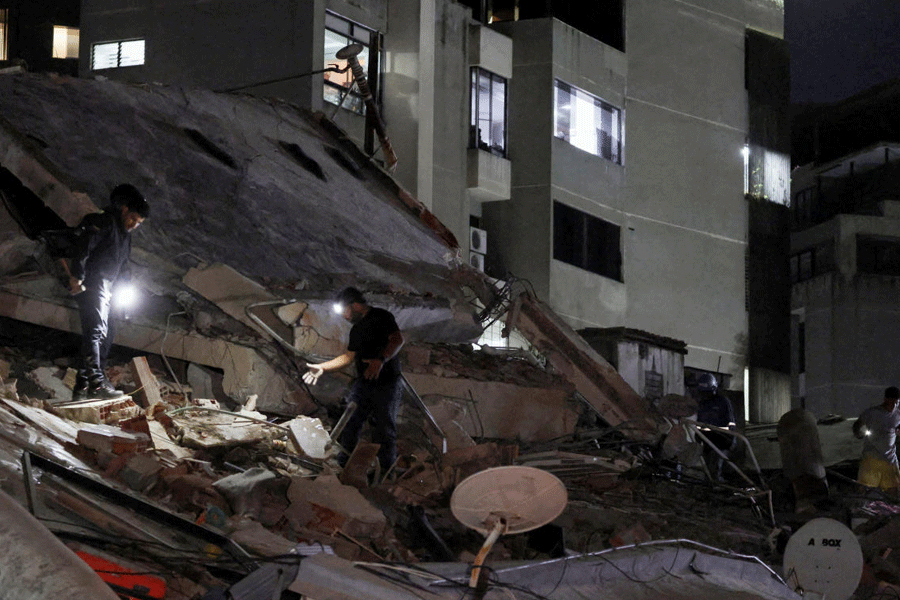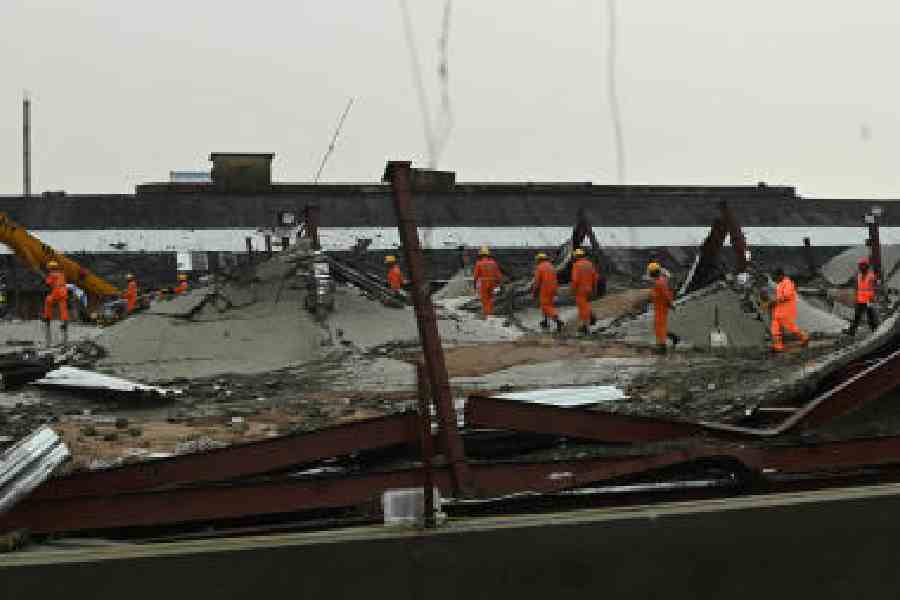
The promoters of the collapsed warehouse at Garden Reach had deviated from the approved building plan and went ahead with construction without a mandatory nod from the Kolkata Municipal Corporation, a senior civic body official told Metro.
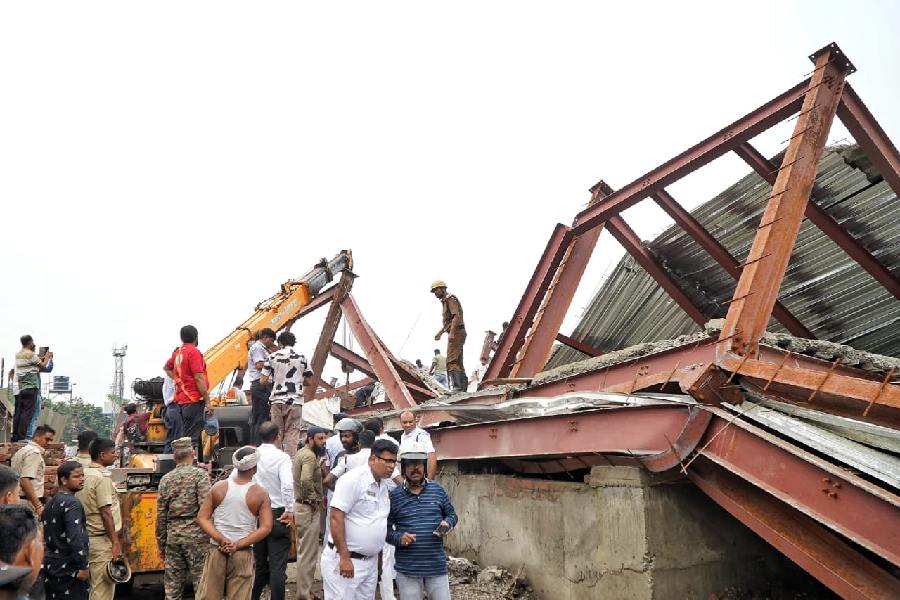
An internal probe by senior KMC engineers suggests that the structure collapsed after failing to bear the load of three floors whose casting had been completed. Engineers pointed out that this happened because the gap between two steel columns was wider than what was specified in the approved plan.
The internal probe has also found that the quality of concrete did not meet expected standards. It contained excess sand, which compromised its strength.
“The owner or builder is supposed to inform the KMC after construction up to the plinth level is complete. They did not inform us. This is a failure to comply with a statutory obligation. Ideally, our engineers should have kept a check too,” a senior KMC official said.

Five persons, including Sambhunath Behera, the owner of the company that took the warehouse on lease and was constructing the structure, were arrested on Thursday.
Gulzar Hossain, supervisor of Ayan Traders — the company engaged by Behera for construction work — and Kamal Samanta, the iron structure fabricator, were also arrested. Abdul Hamid, whose name was not mentioned in the FIR but who was arrested, was the broker engaged by Behera to handle KMC-related permissions.
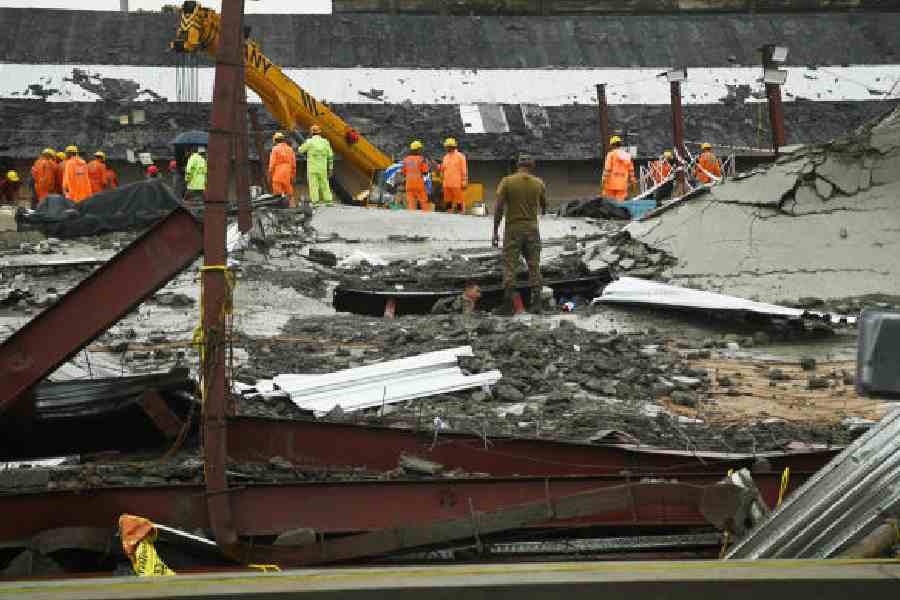
Rules framed by KMC state that builders can begin construction of a structure’s foundation only after obtaining an approved plan from the civic body. They are required to inform KMC once construction reaches the plinth level. At this stage, KMC engineers are supposed to inspect and verify that construction has been carried out as per the approved plan.
“We also found that the spacing between two steel columns was more than what had been approved in the building plan. This is possibly one of the reasons why the structure collapsed. The steel columns were unable to bear the load of the cast floors,” the official said.
The warehouse was coming up on land owned by the Calcutta Port authorities. The Syama Prasad Mookerjee Port Trust had leased the land on a 30-year lease to Behera Brothers, a company providing warehousing services. A banner outside the 6,689 sq m plot states that Ayan Traders is the developer of the structure.

A civil engineer not associated with KMC said the steel columns were designed to transfer the load vertically to the foundation. The engineer, who has seen photographs of the collapsed structure, said the load on the columns exceeded their designed capacity.
“A column is designed for a certain load-bearing capacity. If the spacing between two columns is increased, the load on each column also goes beyond its capacity. This is what has happened in this case,” the engineer said.
“This is a bending failure. The steel columns have buckled under excessive load,” he added.
KMC had approved the plan for the structure in January. Sources in the civic body said the collapse can be attributed to lack of supervision and poor construction quality.
“The primary findings also show that the quality of concrete was compromised. It had more sand content than it should have,” the KMC official said.
The strength of concrete — a mix of sand, cement, and aggregate — depends on whether its ingredients are proportioned correctly. If the ratio is altered, the quality is compromised. “The load-bearing capacity of concrete decreases if its ingredients are not mixed in the right ratio. This too can lead to a failure,” said the civil engineer.