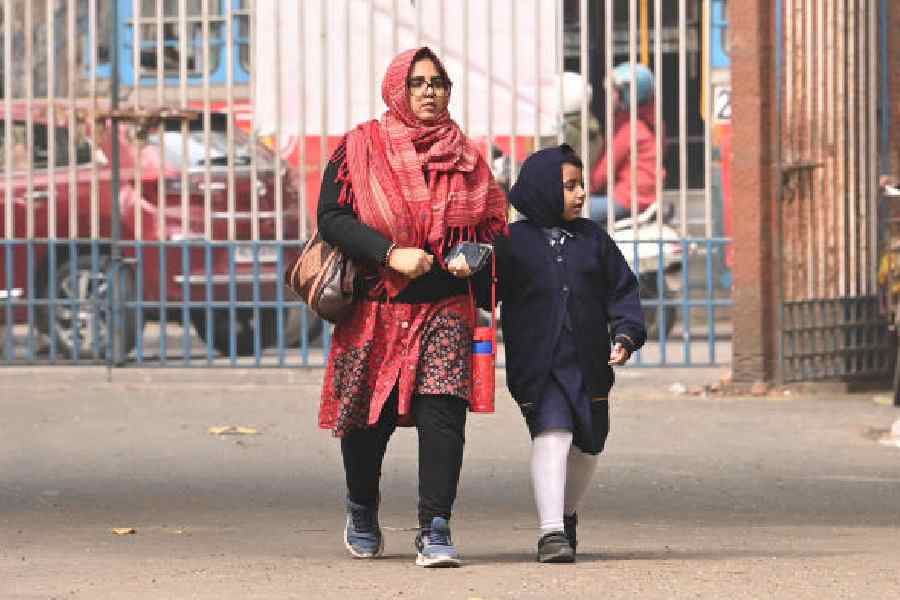
Geriatricians are recommending that the elderly population of the city avoid outdoor activities in the early morning and late evening. It is also suggested that they perform free-hand exercises to prevent muscle stiffness and remain vigilant to avoid falling in the cold.
With age, the skin becomes thinner, and the elderly become intolerant to cold. They should take steps that minimise exposure to the cold and chilly wind, said a geriatrician.
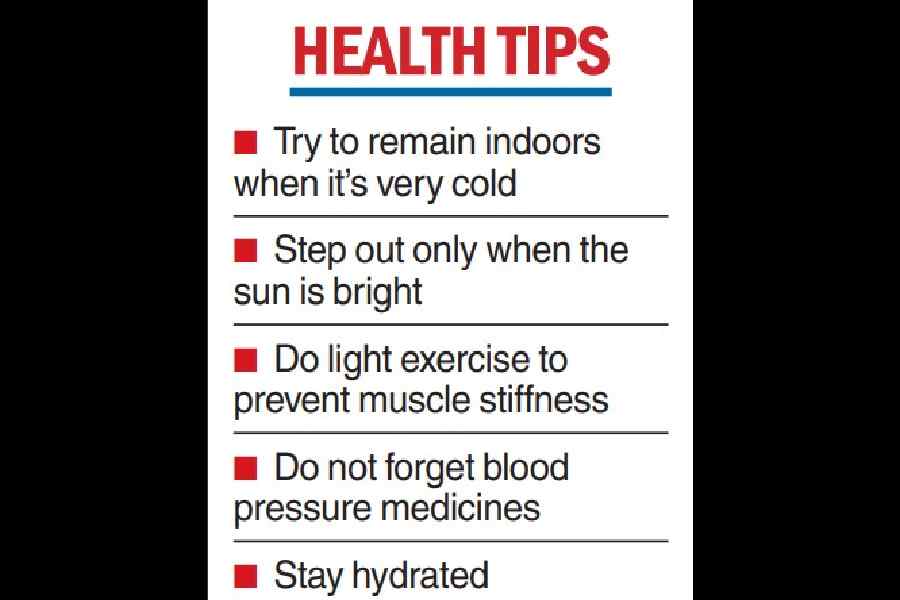
Intense cold can cause muscle spasms and heighten the risk of falling. Light exercises can help keep muscles flexible and reduce the chances of a fall.
Extreme cold can also push up blood pressure, and it increases the risk of heart failure or stroke. Those on blood pressure medication should be extremely careful not to miss taking medicines.
A cardiologist said nearly 70 per cent of patients at the emergency department in his hospital were elderly people, and most of them came with heart failure or respiratory distress.
“Extreme cold is very difficult for the elderly. Our clinics are flooded with people complaining about upper respiratory tract infections and breathing difficulty. The cold can also lead to a rise in blood pressure,” said Arunansu Talukdar, head of geriatric medicine at Medical College Kolkata.
High blood pressure has a direct correlation with and increases the possibility of heart failure or stroke, said doctors. “Make sure you do not miss your pressure-regulating medicines,” said a doctor.
Talukdar said that with old age, the skin gets thinner. The volume of fat in the human body also starts to reduce with old age. Both these conditions make the elderly more vulnerable in winter. They feel colder than others.
“It is better that they do not step out early in the morning or remain outdoors till late evening. It is best to go outdoors only at those hours when the sun is bright,” Talukdar added.
“I ask my patients to cover their heads. By the time one reaches old age, a lot of hair has already fallen. This exposes the head and increases the vulnerability of elderly people. Keeping the head covered will keep them warm,” he said.
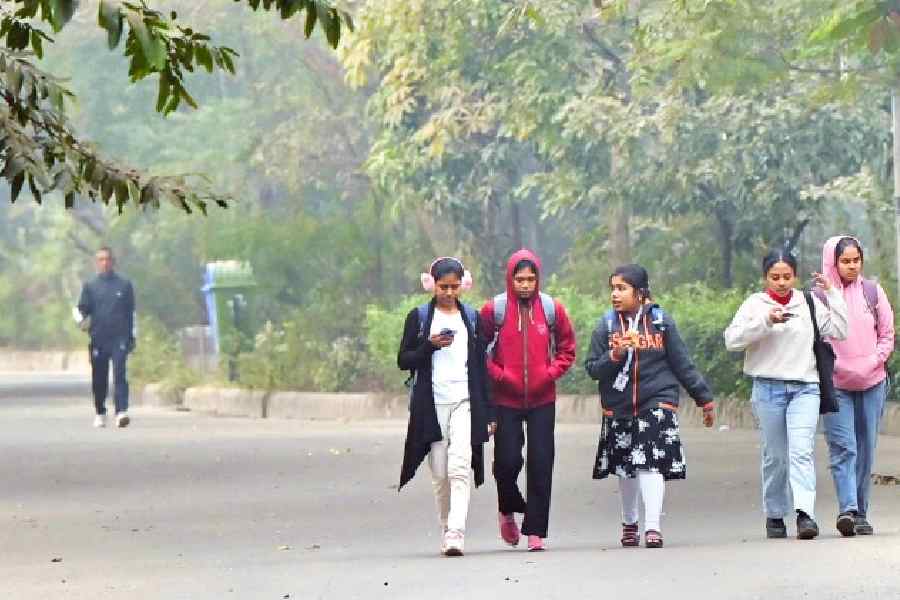
Debdatta Bhattacharyya, consultant cardiologist at RN Tagore International Institute of Cardiac Sciences, said nearly 70 per cent of patients in the hospital’s wards were elderly people. “They have come with complaints of respiratory issues or heart failure or pneumonia,” he said.
The foul air during winter also increases the risks of respiratory infections. Bhattacharyya suggested that older people wear masks when they step out.
Geriatrician Dhires Chowdhury, who also runs an elderly care platform with over 550 members, said the number of emergency calls to the caregivers has nearly doubled in the last few days. “If we used to get two or three calls earlier, we are now getting six calls or more in a day,” he said.
Chowdhury mentioned that he has advised his patients to engage in some light “free-hand exercises”. “During winter, muscles tend to become stiff. The elderly often spend excessive time in bed, leading to feelings of sluggishness and reluctance to move. This can exacerbate the situation,” he stated.
Chowdhury said walking and some free-hand exercises will keep the muscles flexible and ensure good blood circulation. “If the muscles remain stiff, it increases the possibility of a fall. In this winter that can hurt and have long-term consequences,” he said.