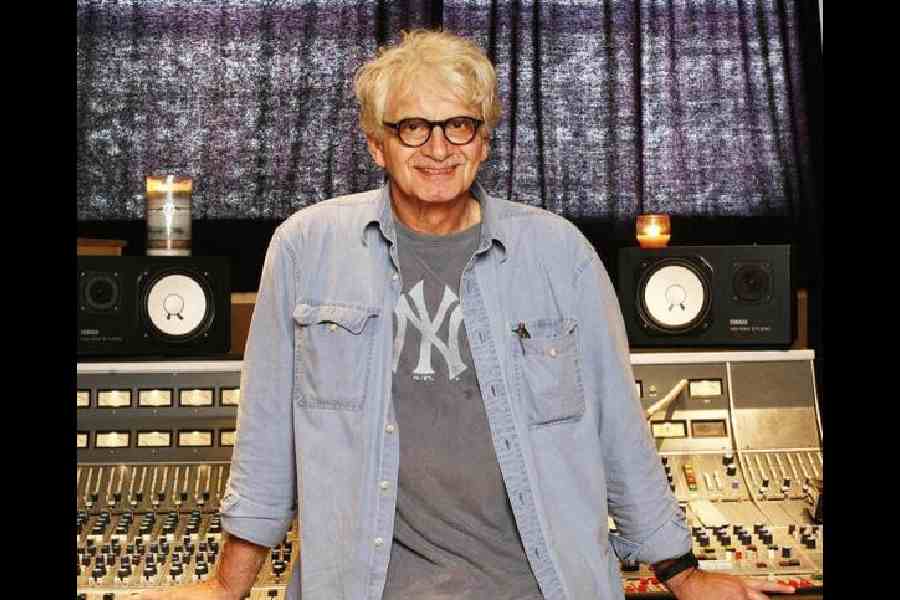
Jack Douglas, the celebrated music producer behind some of the most enduring albums of the rock era, died on May 11 at the age of 80. From John Lennon and Aerosmith to Patti Smith and Cheap Trick, the 1970s and 80s belonged to him in ways that few producers can claim.
Douglas grew up in the Bronx at a time when the Beatles had just released Love Me Do and made their landmark appearance on The Ed Sullivan Show. Like countless young Americans, he was swept up in the sound. But where others merely listened, Douglas acted.
He and some Beatles-obsessed friends had already formed a handful of teenage bands when Douglas hatched an idea: some of them would travel to Liverpool, where, as far as they were concerned, all the action was. In the mid-1960s, tickets were bought for a cargo ship ride crossing the North Atlantic. Arriving without visas, they faced an immediate standoff with British immigration officials. Undeterred, Douglas slipped off the ship, picked up a copy of Rubber Soul at a local record shop, and then tipped off the Liverpool Echo, telling them that young American musicians were being held captive on a vessel in the harbour. The stunt worked. They were let in.
After a few weeks living it up in Britain, the group were shipped back to the US. Almost immediately, Douglas enrolled at the Institute of Audio Research and, after graduating, landed a job at Record Plant Studios in New York. He worked his way up to engineer's assistant, and it was there that he first encountered rock royalty.
"One of my jobs was to transfer two-tracks that John Lennon had cut in England onto multi-tracks so he could do overdubs in New York," he told MusicRadar in 2012. "I was hearing a lot of the songs before anybody else was, which was a thrill. I was a massive fan of his."
When he eventually met Lennon, Douglas mentioned his Liverpool escapade. The former Beatle immediately recognised him as one of the "crazy Yanks" he'd read about in the papers. "He got really excited to meet me," Douglas recalled. "He invited me into the tracking rooms, he gave me a ride home in his limo. Pretty soon, I was working on the record as an assistant. We became friends." He was credited on Lennon's landmark 1971 album, Imagine.
Douglas continued working with both Lennon and Yoko Ono, while also contributing to sessions for the Who's Lifehouse project. Then, while engineering the New York Dolls' self-titled debut in 1973, he caught the attention of producer Bob Ezrin, who encouraged him to try his hand at producing. The band Ezrin pointed him towards was an upstart group – Aerosmith.
He connected immediately with their raw energy. Get Your Wings, released in 1974, was a productive learning curve for both Douglas and the band, helping Steven Tyler bring out his rhythm and blues instincts. On the follow-up, Toys in the Attic, Douglas was fully in the driving seat and the results were explosive.
The rest of the decade kept him equally busy. He produced Patti Smith's Radio Ethiopia in 1976, and his partnership with Cheap Trick yielded their celebrated 1977 self-titled debut. The 1980s brought The Knack's Round Trip and, most poignantly, Lennon's final studio album.
John Lennon's return to music in 1980 remains one of rock history's most bittersweet chapters. The making of Double Fantasy was shrouded in secrecy. "I got these instructions: John wants to talk to me about making a record. 'Don't say anything to anyone. Just go to Thirty-fourth Street, get on a seaplane, and come out,'" Douglas recalled, as captured in Ken Sharp's book Starting Over. "I got flown to the big house out in Glen Cove. The seaplane landed right on the beach. It was hush-hush. Yoko handed me an envelope marked 'For Jack's ears only.' Inside was a cassette of all of John's demos."
Weeks after the album's release, Lennon was killed. Double Fantasy went on to win the Grammy for Album of the Year.
Douglas never stopped working. In the decades that followed, he collaborated with Zebra and Supertramp, contributed to projects with Slash's Snakepit, and worked with newer acts including Local H and Clutch. He remained, to the last, a producer who understood that great records are built on trust, instinct, and a willingness to take the occasional one-way trip into the unknown.