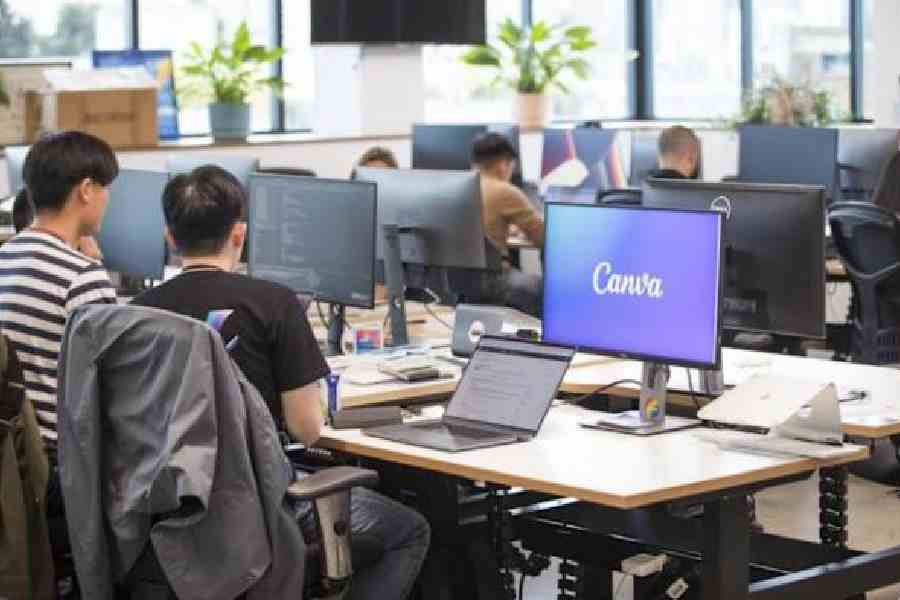
Canva has unveiled what it describes as its most significant update since launching in 2013, introducing Canva AI 2.0 as it moves towards becoming a central workspace for creative and professional tasks.
Announced at the Canva Create event in Los Angeles, the update signals a shift from a design tool to a broader, AI-powered platform where users can move from idea to execution within a single environment. The company, which now serves more than 250 million monthly users, is positioning the upgrade as the next phase in its evolution.
At the core of Canva AI 2.0 is a conversational interface that allows users to generate designs through natural language prompts or dictation. Rather than starting from a blank page or template, users can describe an idea and receive a structured, editable output that evolves as they refine it.
A key feature, described as “agentic orchestration”, enables the platform to interpret user intent and coordinate multiple tools to produce complete outputs. For instance, a single prompt can generate a multi-channel campaign, with assets tailored for different formats.
The update also introduces object-based editing, allowing users to modify specific elements—such as images, text or fonts—without affecting the rest of a design. Meanwhile, a “living memory” system learns user preferences over time, applying brand styles and past behaviours automatically across projects.
These capabilities are powered by Canva’s in-house AI research division, which is developing multimodal models tailored for design tasks. The company says advances in infrastructure and training have significantly accelerated development cycles, reducing model deployment times from years to weeks.
Canva claims its proprietary models are faster and more cost-efficient than comparable systems, supporting applications such as image generation, style transfer and image-to-video conversion, as it builds a vertically integrated AI stack to support its growing user base.
Mathures Paul