A nation is more than a map or place bound by borders. It’s our home, our collective unconscious. Our stories and our songs.
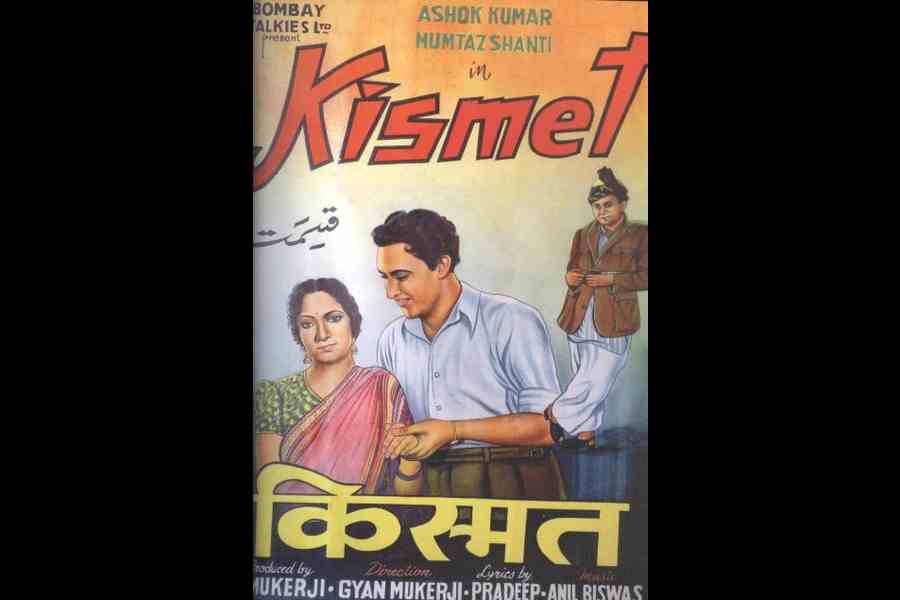
Released four years before India became independent and seven years before it became a Republic, the 1943 blockbuster Kismet (Fate), directed by Gyan Mukerjee, had a song that tricked the British censors and became a part of our freedom struggle.
With lyrics by Kavi Pradeep (born Ramchandra Narayanji Dwivedi) and music by Anil Biswas, the song Dur hato ae duniyawalon, Hindustan hamara hai was a smash hit. In a bold film about an anti-hero and an unwed pregnant woman, it was this song that was the boldest.
The cleverness lay in its lyrics. At a time when the Second World War was on, with the Allies (the UK, the US, the USSR and China) pitted against the Axis forces (Germany, Italy and Japan), the Quit India movement was also raging in India.
Pradeep’s lyrics were purportedly against the Axis forces — India being a British colony. But they fooled no one.
Aaj Himalay ki choti se fir humne lalkara hai/ Dur hato ae duniyawalon Hindustan humara hai/ Jahan humara Taj Mahal hai, aur Qutub Minara hai/ Jahan humare mandir masjid Sikhon ka gurdwara hai/ Iss dharti par qadam badhana atyachar tumhara hai/ Shuru hua hai jang tumhara jaag utho Hindustani/ Tum na kisi ke aagey jhukna German ho ya Japani...
The censor board was taken in by the token mention of not bowing to the Germans and the Japanese. But soon, reports of the song becoming a rallying cry against the British spread like wildfire. The bureaucrats must have realised that they’d made a colossal blunder.
As songwriter, Pradeep was forced to go underground for years to evade arrest. But the Kismet juggernaut was unstoppable. In fact, it ran for three years at Roxy in Calcutta. To their credit, the British didn’t ban the film. Maybe they knew it had become too big of a deal.
Sadly, the song didn’t change the kismet of its singers Amirbai Karnataki or H. Khan Mastana. They faded into oblivion, although Amirbai had a popular duet with then rising superstar Lata Mangeshkar in Gore gore, o banke chhore (Samadhi, 1950), where she sings for the lady in drag.
In Independent India, Pradeep wrote patriotic film songs that became very popular, especially Aao bachho tumhe dikhayein jhanki Hindustan ki from Jagriti (1954). He also sang the song, becoming, much before Anand Bakshi, a songwriter-singer. Such was its popularity that Pakistan copied Jagriti, almost frame by frame, to make a film named Bedari (1956), with a similar song, Aao bachho sair karayein tumko Pakistan ki.
Pradeep’s most famous song was Ae mere watan ke logon, written after the Sino-Indian war of 1962, as a tribute to the slain soldiers. Sung live by Lata Mangeshkar, it moved then Prime Minister Jawaharlal Nehru to tears.
On Republic Day, here’s to the songs that capture a nation’s elusive soul.