The traditional No 9 could be poised for a revival at the 2026 World Cup as national-team coaches increasingly turn towards physical centre-forwards and more direct attacking football in a tournament that has historically rewarded simplicity over tactical complexity.
For much of the past decade, elite club football has moved in the opposite direction. Under the influence of coaches such as Pep Guardiola, the game has become increasingly structured, with forwards expected to contribute far more than goals alone.
Strikers were no longer judged simply on their finishing. They were asked to drop into midfield as false nines, create overloads between the lines and help orchestrate intricate passing patterns designed to manipulate opposition defences.
Yet the World Cup has often proved resistant to football's latest tactical fashions.
International football operates under very different constraints to the club game.
Managers do not have the luxury of months on the training ground refining complex positional systems. Instead, they are handed only a handful of training sessions before being expected to navigate the most demanding tournament in the sport.
When preparation time is limited and knockout matches become tense, attritional affairs, coaches often revert to football's most reliable formula: get the ball into dangerous areas and allow elite forwards to decide the outcome.
Here are the new generation traditional centre-forwards, who could leave their mark in North America.
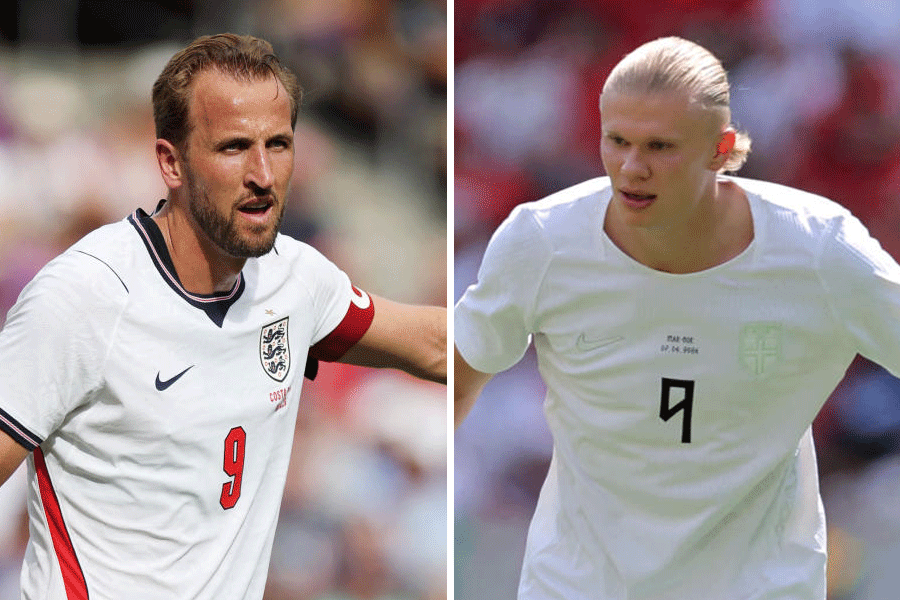
Norway's Erling Haaland will finally have the opportunity to perform on the World Cup stage after helping his country qualify for the finals for the first time in nearly three decades. Few forwards embody direct attacking football more completely. Haaland thrives on occupying defenders, attacking space behind back lines and converting chances with ruthless efficiency.

Erling Haaland. Reuters picture
England's Harry Kane remains one of the tournament's most dependable goalscorers. While England possess an abundance of creative talent, tournament football has a habit of reducing complicated plans to their simplest form. Kane's ability to score under pressure remains one of the side's greatest assets.
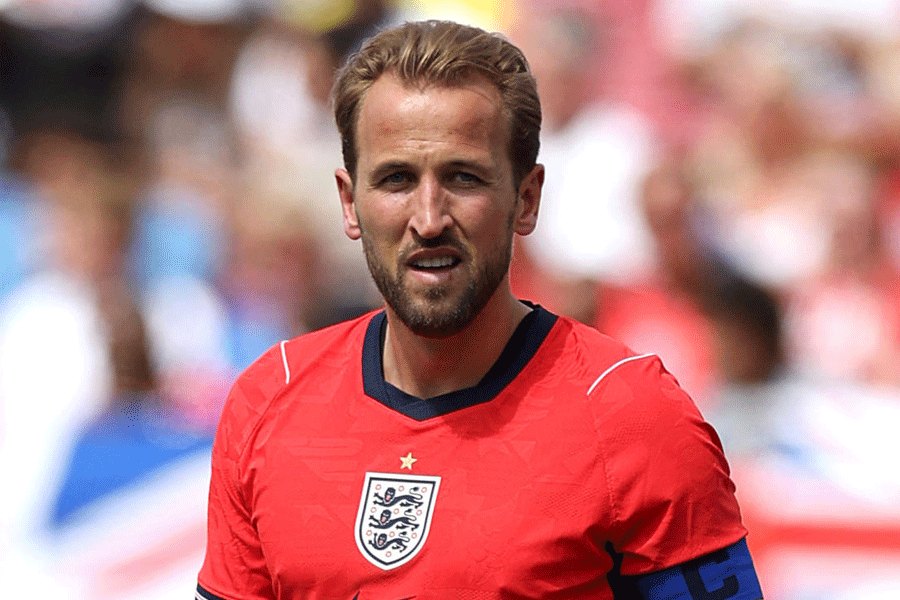
Harry Kane. Reuters picture
Argentina's Lautaro Martínez offers a different interpretation of the modern No 9. Aggressive, relentless and tactically intelligent, he combines physical presence with mobility and pressing intensity.
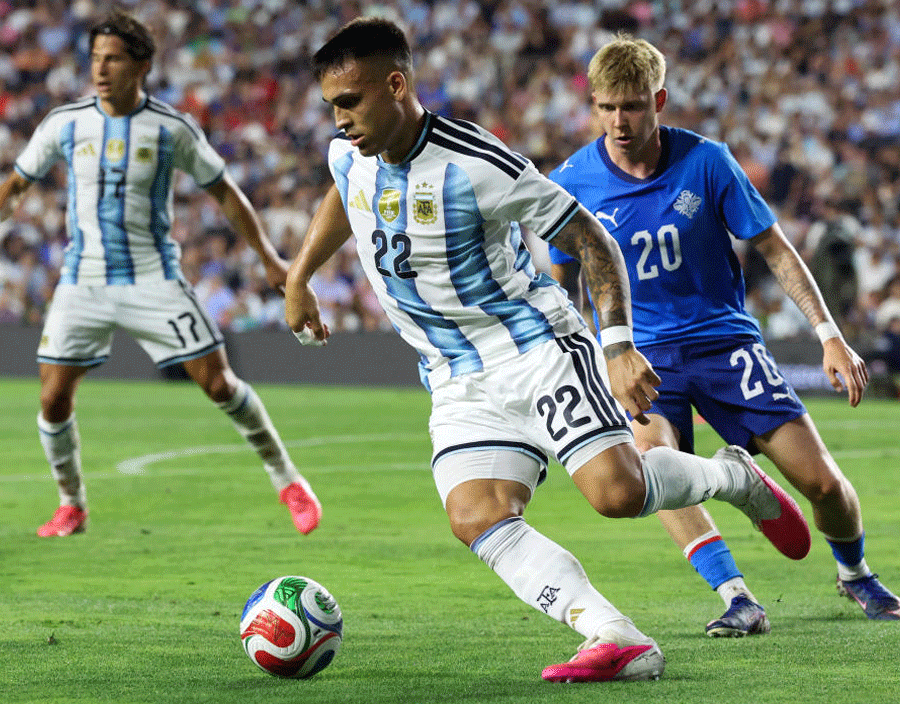
Lautaro Martínez. Reuters picture
Sweden's Alexander Isak and Viktor Gyökeres could form one of the most formidable strike partnerships at the tournament. Both possess the physical attributes associated with traditional centre-forwards, yet their movement and technical quality reflect the modern evolution of the role.
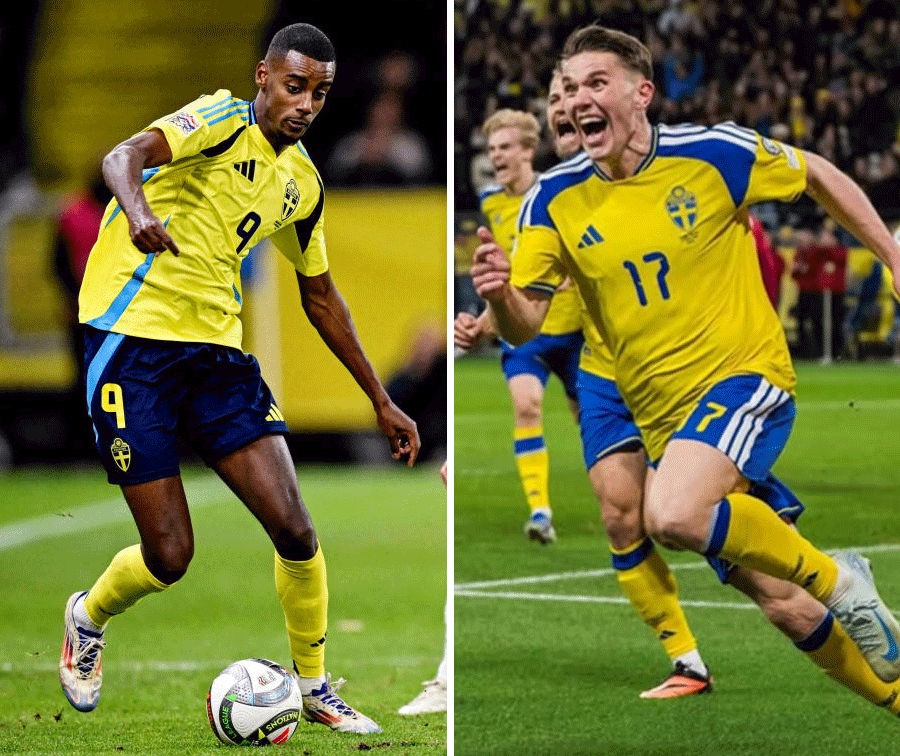
Alexander Isak and Viktor Gyökeres. Reuters and Instagram pictures
Uruguay's Darwin Núñez may also benefit from the direct approach favoured by coach Marcelo Bielsa. His combination of pace, power and aerial ability makes him particularly dangerous in transition and from crosses into the penalty area.
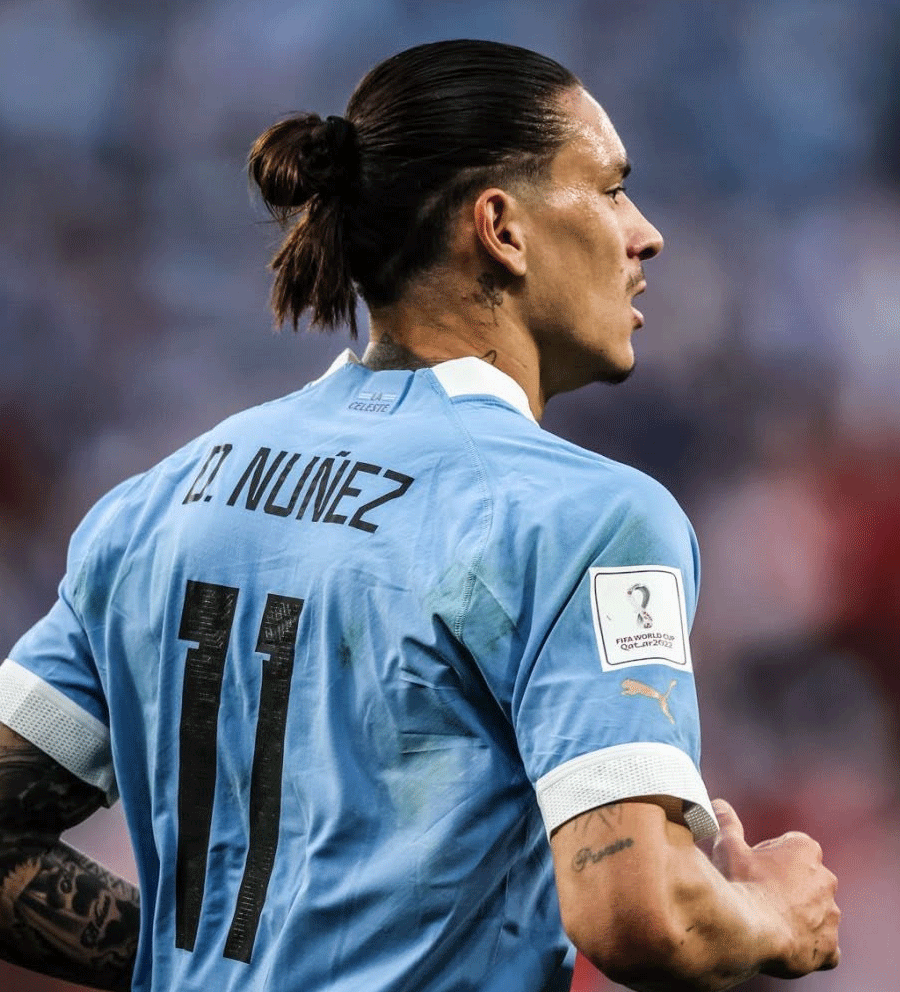
Darwin Núñez. Facebook picture
Mexico's Santiago Giménez remains one of the game's most instinctive penalty-box forwards, excelling in the chaotic situations that often decide knockout football.
That does not mean possession football is disappearing. Many of the tournament favourites will continue to rely on sophisticated structures, coordinated pressing and carefully rehearsed build-up play.
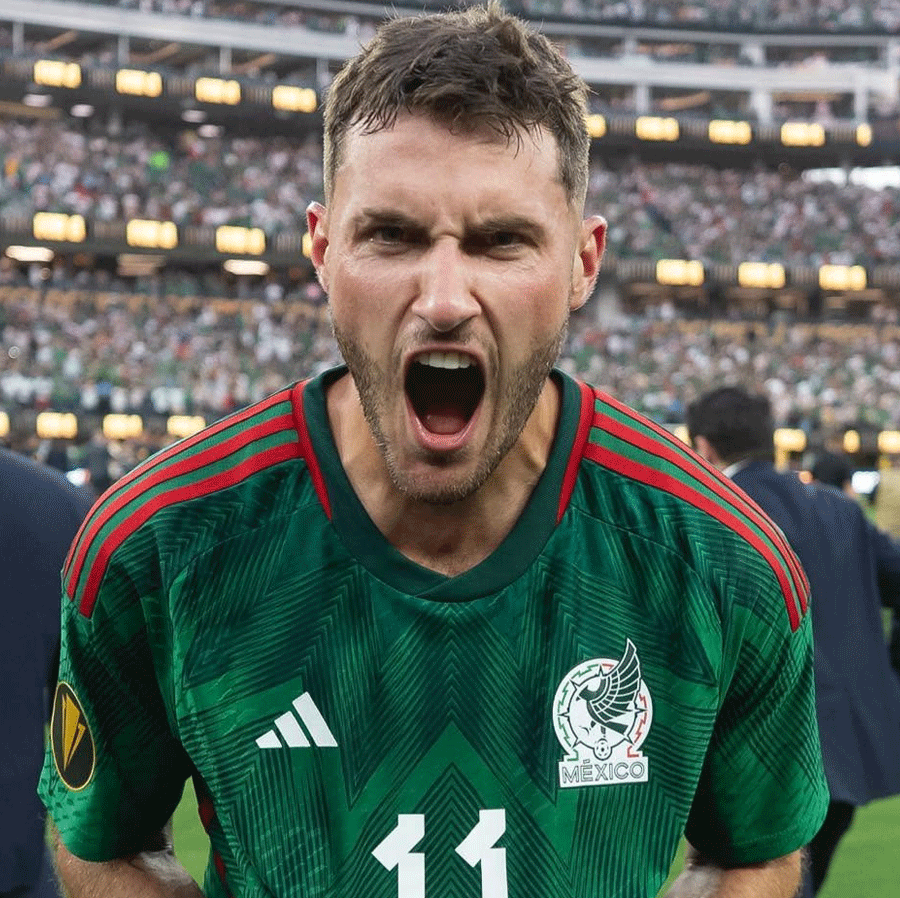
Santiago Giménez. Facebook picture
Yet World Cups have demonstrated that tactical complexity alone rarely guarantees success.
The demands of travel, limited preparation time and the unforgiving nature of single-elimination football often place a premium on efficiency rather than elegance. In such circumstances, the value of a centre-forward capable of converting half-chances and unsettling defenders can increase dramatically.
Football's tactical trends may continue to evolve, but the World Cup has a habit of reminding the sport of its oldest truth. When a quarter-final hangs in the balance and the margins become vanishingly small, there remains no substitute for a striker who can put the ball in the net.