Was it a wake-up call or a reality check for Team India in their T20 World Cup opener at the Wankhede on Saturday evening?
India's much-vaunted batting line-up was reduced to 46/4, and then 77/6, before Suryakumar Yadav showed the perfect technique to survive on a wicket where the ball gripped and stopped enough to make stroke-making difficult.
Gautam Gambhir has been stressing the need for a resilient and flexible batting order, and his worst fears came true on the day.
India could consider themselves lucky on two counts. The collapse didn't happen in a knockout fixture where the pressure would have gone up several notches, and they didn't get bowled out for 125-135, which could have made things worse.
Hardik Pandya's exit in the 13th over set the alarm bells ringing, but Surya showed the poise and temperament to pull it through on his home turf with a classy 84 not out off 49 balls. Having played most of his cricket at the Wankhede, Surya knew how to tackle the proverbial demon in the wicket.
Mohammed Siraj later revealed that there was no panic in the dressing room till the captain was there at the crease. "He was very calm and told us, 'I'm here, we'll move forward. Don't worry,'" Siraj said.
It was the moisture beneath the surface which had made strokeplay difficult. “We were surprised because we thought that this is a flat wicket, which generally Mumbai is,” Axar Patel said later.
The Indians, though, were looking at the positives arising out of it and are willing to learn from their mistakes.
"Obviously, you feel that because in the last (so many) tournaments there has not been such an early collapse. Cricket is like this, (but then) it’s good that it happened in the first match,” the left-arm spinning all-rounder said.
“It is important to understand the nature of the wicket and the type of cricket we have been playing, we were not able to execute the shots. If it happens again, we will have the experience to take it to 160-170.
“You have to change your style looking at the wicket, but we were playing attacking cricket only and not just playing defensively or taking singles or doubles. You have to hit the way the wicket is behaving,” Axar said.
Ravichandran Ashwin was surprised by the way the Indians failed to read the conditions.
“It was surprsing that, after the first 2-3 wickets fell, India didn’t adapt the right way and didn’t read the pitch well. If India had predicted that this wicket is tacky and not the usual Wankhede pitch, India could have been conservative, held up wickets and eventually captialised at the end, the way SKY batted at the end. India could have ended up with 20-30 runs more,” he said on his YouTube channel.
“I think from the moment this ICC T20 World Cup started, everyone expected it to be a high-scoring tournament. Those expectations have been broken already. We must credit the ICC for the kind of wickets they’ve prepared.”
India play their semi-final at the Wankhede and will look not to repeat such mistakes. The red soil pitch has often proved to be tricky and nearly ended up sacrificing the 2023 ODI World Cup semi-final until Mohammed Shami ran through the New Zealand innings.
Daryl Mitchell and Kane Williamson gave Rohit Sharma's team a tough time in their chase of 398 until Shami used the seam and swing movement to rock New Zealand.
Washington joins
Washington Sundar has recovered from his side strain and joined the team in New Delhi after getting the clearance from the Centre of Excellence in Bengaluru.
The all-rounder will be available for the next match against Namibia on February 12.
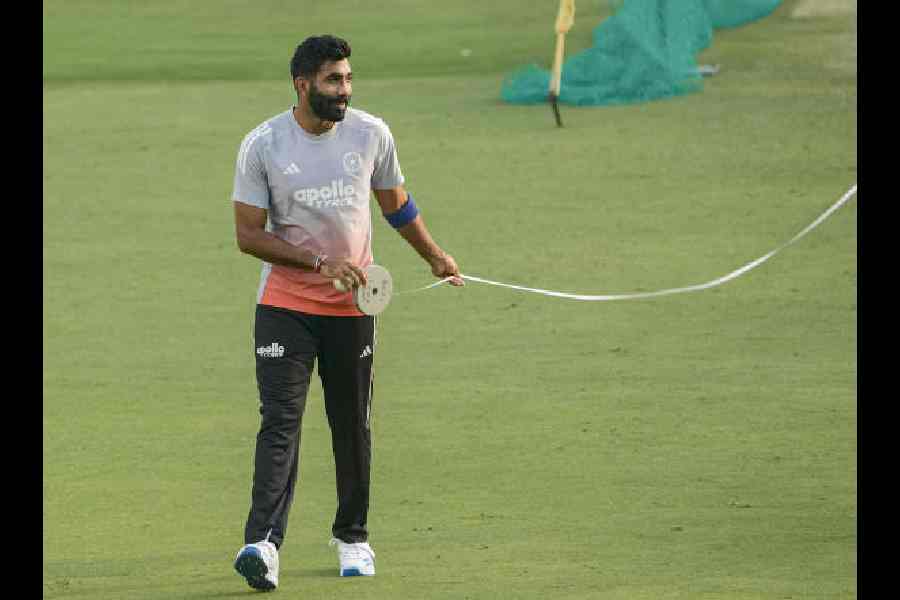
There is hope that both Jasprit Bumrah and Abhishek Sharma will recover quickly. Bumrah was rested for the opener against the USA.
The fast bowler is down with fever "because of the weather" and Abhishek is nursing a stomach bug.
"Everything is fine. His stomach was a little upset, so he didn’t come out to the field. He’ll be back in the next match and show his magic with the bat," assured Siraj.