The BJP hailed the removal of Edwin Lutyens’ bust from Rashtrapati Bhavan as a step towards shedding colonial baggage, while Opposition leaders invoked “ghulami”, questioning the government’s engagement with Donald Trump.
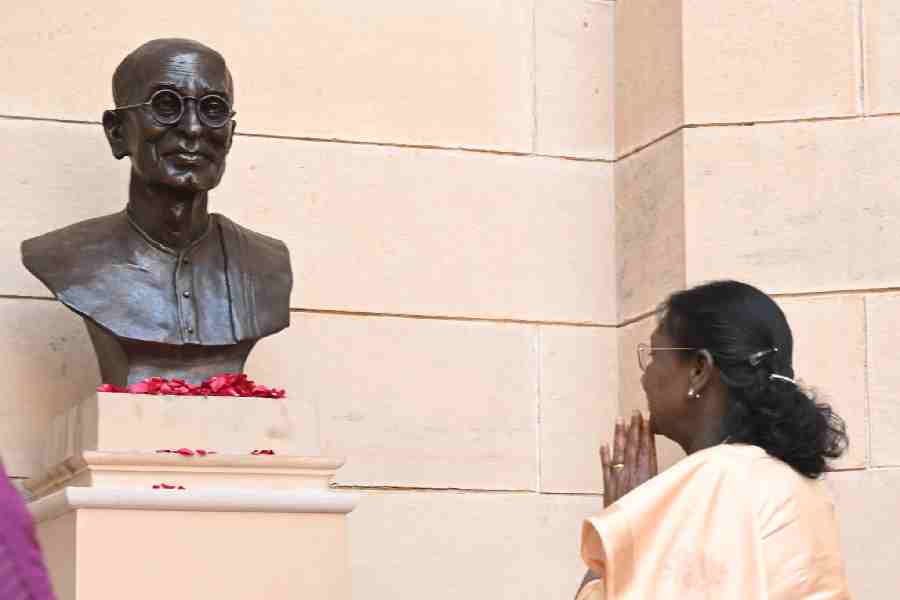
In a ceremony attended by Prime Minister Narendra Modi, Lutyens' bust was replaced by that of Chakravarti Rajagopalachari, the last governor-general of India.
Lutyens’ designed several buildings in the capital, including the Viceroy’s House, now Rashtrapati Bhavan, and, along with Herbert Baker, key government structures in the imperial capital.
The area known as "Lutyens’ Delhi" bears his name in recognition of his architectural imprint.
Murmu called the move to replace Lutyens' bust with Rajaji's as part of steps being taken to shed the remnants of colonial mindset and to honour figures who contributed to India’s independence.
"This initiative is part of series of steps being taken towards shedding the vestiges colonial mindset and embracing, with pride, the richness of India's culture, heritage, timeless traditions and honouring those who served Bharat Mata with their extraordinary contributions," read a statement by the Rashtrapati Bhavan.
BJP national spokesperson C.R. Kesavan, the great grandson of Rajaji, told Indian Express: "Previous governments celebrated symbols of slavery. Modi is dismantling these colonial vestiges. Rajaji would have been proud of the way Modi is ushering in a new India, breaking the Macaulay mindset and ushering in an Atmanirbhar Bharat on the basis of a Swadeshi or self-reliant India."
While the BJP portrayed it as breaking free from "colonial baggage," opposition has argued against the systematic removal of history.
Shiv Sena (UBT) MP Sanjay Raut questioned the Centre’s stance on "ghulami" (slavery).
Raut took aim at India's foreign policy decisions, asking why the government engages with the United States and US President Donald Trump if it opposes "ghulami."
"If you talk about 'ghulami' then, why did you become 'ghulam' of Trump? If you hate 'ghulami' so much, then you should cancel the India-US trade deal...Why did you buy Rafael from France?...Many people, including Lutyen's, contributed to the building of New Delhi," he said.
PDP leader Iltija Mufti also questioned the rationale behind the decision.
“How does it help India to continue with this warped misplaced sense of anger towards its history? This constant obsession of wiping off the ‘colonial hangover’? Lutyens makes Delhi what it is. You cannot efface heritage or history by removing busts & plaques. Most of India’s architectural marvels are British & Mughal. Big deal," Iltija wrote on X.
Congress MP Shashi Tharoor praised the effort.
“I’m truly pleased to see Rajaji honoured by a statue at Rashtrapati Bhavan. It is sad that there are so few left to follow him today," said Tharoor.
The BJP used Tharoor's admiration to jab his party Congress, claiming that the party was against the move.
“Sad that some in Congress put Lutyens above Rajaji Videshi above Swadeshi Colonial above Bharatiya,” a part of BJP spokesperson Shehzad Poonawalla's post on X read.
In the monthly radio broadcast Mann Ki Baat on Sunday (22 February), Modi had called the Lutyens bust a "symbol of slavery" and stressed the need to embrace Indian culture.
"During the Azadi Ka Amrit Mahotsav, I spoke of the 'Panch-Pran' from the Red Fort. One of them is freedom from the mentality of slavery. Today, the country is leaving behind the symbols of slavery and has begun to value symbols related to Indian culture," he said.
In 2022, Modi renamed the Rajpath or Kingsway, also designed by Lutyens, to Kartavya Path. Earlier this month, the PMO was relocated to a new complex named 'Seva Teeth' from the South Block, which was built in the colonial era.
British author Matt Ridley, great-grandson of Edwin Lutyens, the architect of New Delhi, expressed his sadness on Monday over the removal of Lutyens' bust from Rashtrapati Bhavan.
"Sad to read that the bust of Lutyens (my great-grandfather) is to be removed from the presidential palace he designed in Delhi. Here I am with it last year. I wondered at the time why his name had been removed from the plinth," Ridley wrote on X.
Ridley’s comments came hours after President Droupadi Murmu unveiled a bust of Rajaji, as he was known, at Rashtrapati Bhavan.
The new bust, installed at the Grand Open Staircase near Ashok Mandap, replaces the sculpture of Lutyens.
Rajagopalachari was India's first and only Indian Governor-General, and a senior leader of the freedom movement.