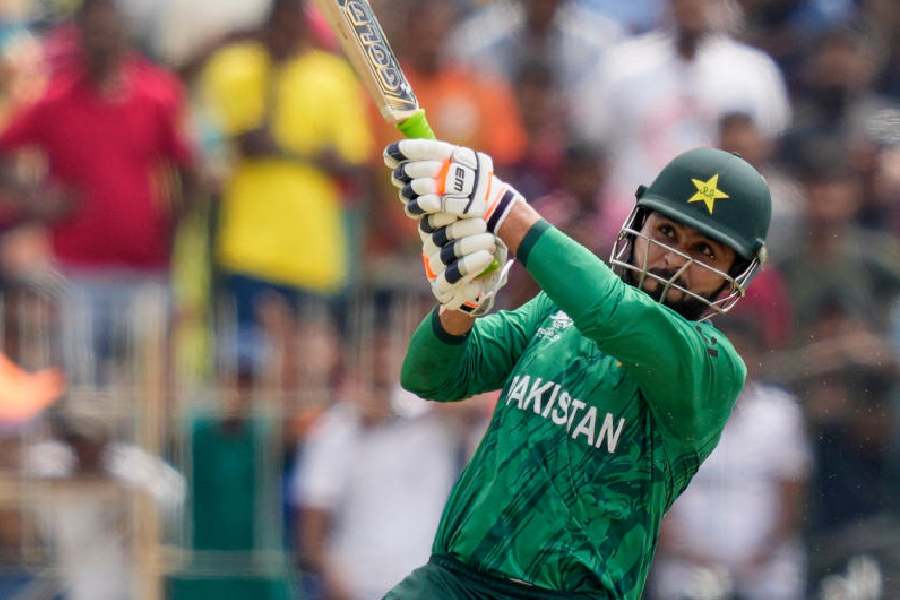
Faheem Ashraf walked in when Pakistan were staring at a loss they had largely scripted for themselves.
By the time he walked back, Pakistan had their first win of the T20 World Cup, scraped together with nerve, luck and a late burst that turned the opener on its head. Chasing 148, Pakistan were cruising at 90 for 2 at the halfway mark.
The Netherlands had been pushed back early and the chase looked routine. Then came the collapse. From 98 for 2 at the end of the 11th over, Pakistan slid to 100 for 5 in 12.4 overs, losing three wickets for two runs.
At 114 for 7 in 16.1 overs, they needed 34 runs, with the tail exposed. That was when Ashraf, batting at number eight, changed the script. Dropped on seven in the second ball of the 19th over by Max O’Dowd, Ashraf made the Dutch pay.
Needing 29 from the last two overs, he took on Logan van Beek, clearing the ropes three times and finding the boundary once.
He finished the chase with a four in the final over, ending unbeaten on 29 off 11 balls as Pakistan reached 148 for 7 with three balls to spare.
It was a finish that stood in contrast to Pakistan’s earlier control of the chase. Sahibzada Farhan had led the way with 47 off 31 balls, putting together a steady opening stand with Saim Ayub, who made 24 off 13.
The pair ensured Pakistan were well ahead of the asking rate. Farhan later added 45 runs with Babar Azam for the third wicket, the only partnership of note in the innings. But once Farhan fell in the 12th over to Paul van Meekeren, the chase lost shape.
Van Meekeren struck twice in that over, also removing Usman Khan for a duck, and returned to dismiss Azam in the next. Azam struggled for fluency, making 15 off 18 balls with just one boundary.
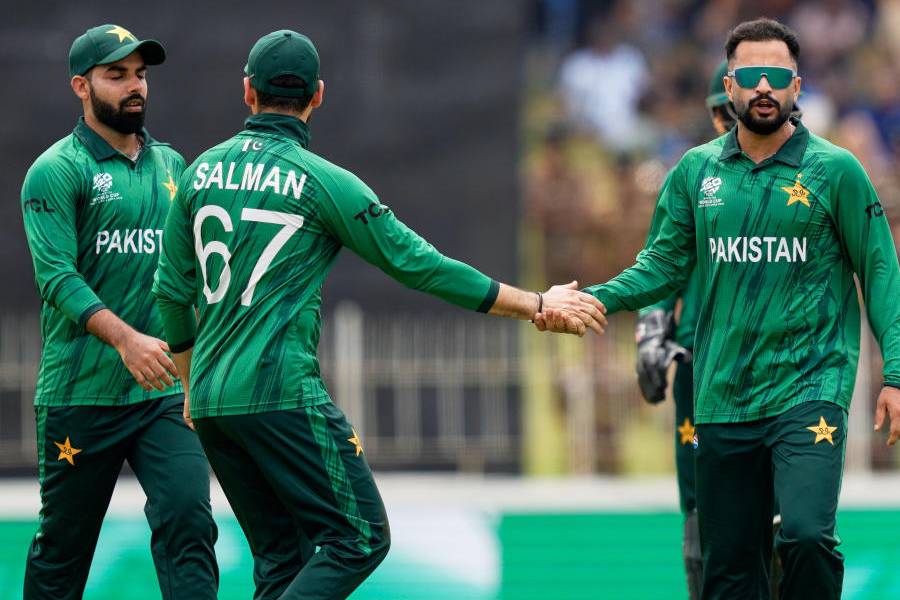
Captain Salman Agha’s stay was brief, and Mohammad Nawaz followed soon after. The pressure mounted further in the 16th over when Kyle Klein removed Nawaz, leaving Pakistan needing 34 from four overs.
Shadab Khan was dismissed soon after, with the third umpire ruling against him following a review. What looked manageable at the halfway stage had turned into a scramble.
Off the field, Pakistan’s build-up had been dominated by the Pakistan Cricket Board’s decision to boycott the February 15 match against India at the venue.
On the field, the champions of the 2009 edition were reduced to relying on a lower-order rescue act to get past a disciplined Netherlands side.
Earlier, sent in to bat at the Sinhalese Sports Club Ground, which hosted a T20I for the first time since 2010, the Netherlands posted 147 before being bowled out in 19.5 overs. Their innings followed a similar pattern of promise followed by a slide.
The Dutch reached 50 for 2 at the end of the powerplay, collecting 14 runs in the sixth over alone. At the halfway stage, they were 79 for 3, having struck 12 fours and a six.
Captain Scott Edwards and Bas de Leede added 40 runs for the fourth wicket, lifting hopes of a total beyond 150. De Leede made 30 off 25 balls, while Edwards scored 37 off 29.
They crossed 100 in 12.1 overs with seven wickets in hand, but the momentum did not last. Pakistan slowed the pace, took the ball off the seamers, and began to chip away. From 105 for 3 in 12.3 overs, the Netherlands slipped to 129 for 7 in 16.4 overs.
Mohammad Nawaz removed de Leede in the 13th over, and Abrar Ahmed dismissed Edwards in the 16th. Saim Ayub’s off-spin then broke the lower order, as he removed Logan van Beek and Zach Lion-Cachet in the same over.
Salman Mirza finished with 3 for 24, the best figures among the Pakistani bowlers. In the end, 147 proved just enough to stretch Pakistan, but not enough to beat them.
The Netherlands had Pakistan in trouble deep into the chase, only to let the match slip with one missed chance. Ashraf ensured it was remembered.