
The Hungry Empire is yet another addition to the sequence of Lizzie Collingham's books on the culinary dimension of history. After the acclaimed volumes, Curry: A Tale of Cooks and Conquerors and The Taste of War: World War II and the Battle for Food, the present volume is also structured on foodstuff and provides absorbing expositions on how food trade drove the British economic and commercial policies during the last three centuries, eventually culminating in the formation of the British Empire and, in the process, influencing food habits in the world.
There are two distinct but entwined narratives that run through the text. In the first narrative, Collingham shows how a food web created by British imperialism facilitated the exchange of crops and foodstuffs reshaping people's tastes, and the intricate interdependence formed thereby changed the eating habits within the vast British Empire. As new areas were brought under cultivation in new lands, not only were the landscapes refashioned, but the availability of new products also changed intake behaviours. Sugar from the Caribbean became a kitchen staple in English homes, followed by tea, which was imported from China. Spicy curry became popular but in attempts to make it an economical and convenient dish, the original Indian varieties were lost. At any rate, colonial imports became integral to the lives of the ordinary people in England.
On the other hand, European migrants and settlers often had to adapt themselves to local food crops and local dishes. However, for the Company officers, in their efforts to stick to what Collingham tags the "performance of Britishness", importing tinned food with an English flair and imitating British cuisine became important to "recreate home" in the colonies. Consequently, Western eating habits influenced the locals in distant lands. Culinary taste and knowledge also travelled from one colony to the other through the Empire's indentured labourers. As each chapter begins with a story of a meal that became customary at a particular point of time at a particular place, each story encapsulates a fragment of the lifestyles of the day. The description of cooking arrangements, culinary cultures and the instructions for preparing unique dishes prevalent at different places and at different points of time add to the charm of the book.
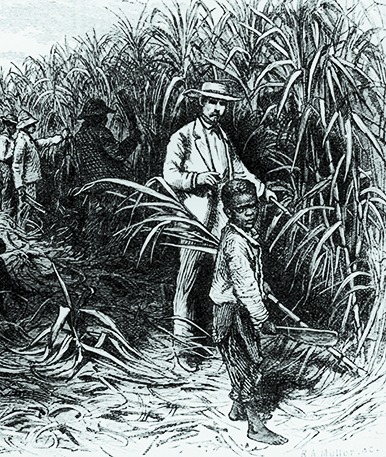
The second narrative underscores how the pursuit for food became the driving force for the British Empire. In the 16th century, catching and selling of cod fish in Newfoundland corrected trade imbalance and funded new trading ventures. With time, imports of foodstuff that surpassed the demands of the domestic market stimulated re-export. A strategy of settlement and plantation in distant foreign lands was followed that provided new commodities for export to England and a market for English manufactured goods. The colonies in America and the Caribbean expanded through plantation products and animal husbandry. Import of tobacco, wheat, sugar, tea or rum led to plantation agriculture, and the need for a steady supply of cheap labour facilitated the slave trade and, later on, the migration of indentured labourers. In the 18th century, colonial demands drove the growth of the provisions industry that played a role in the Industrial Revolution. Disputes and conflicts among the European powers over colonial commerce and overseas territories demanded that a strong navy be maintained partially by duties on imports. Collingham draws attention to the political dimensions of the intricate food web that thrived on the exploitative colonial agricultural system and fuelled the power struggle.
The book illuminates a crucial dimension of history that often remains ignored. It highlights viewpoints ordinarily overlooked, for example, how the events of the American Revolution were linked to taxes levied on foodstuff like molasses or tea, and it also suggests that the colonial manipulative system had in common unfair policies in all dimensions of life. In 1943, Churchill and his war cabinet chose to sacrifice the interest of a famine-struck India's population in order to replenish stocks of food in Britain; indeed, to satiate the hunger of a 'Hungry Empire'.