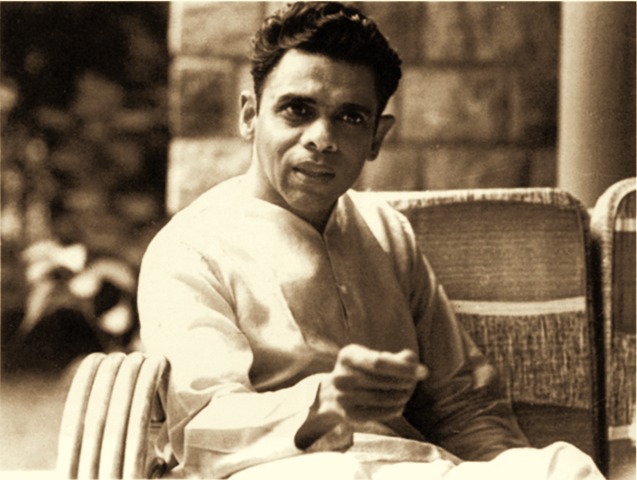

WHEN MIRRORS ARE WINDOWS: A VIEW OF A.K. RAMANUJAN'S POETICS By Guillermo Rodríguez,
Oxford, Rs 1,195
AK Ramanujan quotes a Chinese proverb in his preface to the Folktales from India that goes, "Birds do not sing because they have answers; birds sing because they have songs." Ramanujan's songs - whether his poetry or his essays - also resist being scanned for answers. To analyse them by using literary tropes and theories is to restrict them to a particular meaning or a set of meanings. Left alone, to be savoured by the individual reader, his words shoot up like impatient saplings as soon as they fall on the ground of the reader's mind. In no time, the sapling would flourish into a sprawling tree, with its branches carrying fruits of signification extending in every possible direction. Given this magical property of Ramanujan's writings (performing magic tricks was one of Ramanujan's favourite hobbies), a book such as Guillermo Rodríguez's, that tries to make sense of Ramanujan's poetics by tracing various strands - from life, literature, linguistics - which have created its weave, seems a little constrictive.
Yet an authoritative book on Ramanujan was asking to be written, since there is a dearth, nearly an absence, of scholarly writings on the works of AKR, as Ramanujan was usually called. In spite of being one of the finest writers, essayists, poets, translators and folklorists of the 21st century, AKR is known only in select circles in India. For those who are not well-acquainted with AKR's works, Rodríguez's book would serve as an excellent introduction. Rodríguez has done his PhD on Ramanujan. He had chanced upon AKR's unpublished papers while doing his research. These are cited and discussed here to bolster his thesis. Rodríguez seems confident of his book's place in history: "As a pioneering study, this monograph aims to fill a critical vacuum by offering a systematization of AKR's poetics and an overview of his life and work, with rare glimpses into the unpublished material from the Papers and other uncollected writings."
The "overview of his life", to begin with, offers some interesting anecdotes for those looking for biographical information on AKR. For instance, in spite of being born in an orthodox Tamil Brahmin family, AKR was sent to a Christian missionary school, where he received his education in English and modern Kannada. This man, whose exhilarating translation of the ancient Tamil Sangam poems would give the modern audience a taste of their infinite variety, acquired the knowledge of Tamil late, when he was in college.
Rodríguez fishes out from AKR's papers his comment on the effect that such an eclectic upbringing had on him. "When I was in India I studied English Literature and thought about Shakespeare and T.S. Eliot and quoted them. I still remember evenings when, two or three friends, we would walk around in the markets of a town in South India where the women from which we bought the bitter leaves, the mango or the bananas did not know even one word of English and we would go and buy all sorts of things in a totally Indian environment and talk of Proust, Plato and Shakespeare. So, it seems to me, the world in which we live is not one world only. Worlds are woven together and interpenetrate, creating the world we know. I cannot forget this, I can't forget the multiplicity of worlds we live in simultaneously, not alternately, and I think this is probably true for us all." (Enthusiasts of postcolonial studies, who go looking for signs of diasporic dilemmas in all modern works and dutifully insert these in their own books if they are writers, would probably seize upon this quote. But they would be disappointed to hear what AKR has to say on this topic in another place: "The words 'alien' or 'exile' seem to me to be sentimental ways of thinking about myself. The whole question of roots is not relevant to me.")
There cannot be a pithier explanation of the context, and, stemming from that, of the 'philosophy', of AKR's works than what is said in the first quoted text in the previous paragraph. Rodríguez's analysis of AKR's poetics is no doubt helpful. But AKR is the best guide to himself. The fact that he was a much-liked professor shows in his prose, where he seems to strike up a conversation with his reader, speaking in a language that is burdened neither with academic jargon nor with the weight of self-importance. He explains concepts, whether his own or those of others, with a clarity that is sometimes missing from Rodríguez's commentary.
The same simplicity can be found in AKR's poetry - Rodríguez writes about a notecard where AKR has copied from Eliot's "Little Gidding" the lines, "A condition of complete simplicity/ (Costing not less than everything)". Sanskrit aesthetics, medieval bhakti traditions, Eliot's theory of the objective correlative, Montaigne, Russell, even mescaline, may have left their mark on AKR's poetry - and Rodríguez talks of all this in detail - but to read the poems is to be stuck by their spine-tingling immediacy. One of AKR's oft-quoted poems, "Self-portrait", can serve as an example of this. "I resemble everyone/ but myself, and sometimes see/ in shop-windows/ despite the well-known laws/ of optics,/ the portrait of a stranger,/ date unknown,/ often signed in a corner/ by my father."
Here are all the elements of AKR's poetry that are discussed by Rodríguez. There is this dialogue between the "akam" (inner) and the "puram" (outer) - between 'my self' and the external world, denoted by "shop-windows" - that AKR borrowed from Tamil poetics. Another identifiable feature is the use of a scientific concept, a 'non-poetic' material, in the poem. And then there is this play on reflection that becomes self-reflection, which, in turn, brings about a re-cognition of the self as the 'other' - in this case, the "father". But such cogitations would come later. The poem works at a more visceral level - what strikes the reader urgently is the flitting movement between the familiar (the self) and the uncanny (the stranger) that comes to an abrupt halt when the eyes travel to the corner, inscribed with father's signature, which declares loudly that the self is the stranger is the self. The eyes merge with the 'I's for a moment. The poem is like a performance that enacts the process of thought, as the mirror of the shop-glass gets transformed into a window. Rodríguez mentions an early handwritten draft of the poem from the 1960s where the word, "mirror", has been crossed out in the third line and replaced with "shop-windows".
The gift of When Mirrors are Windows is in the hitherto unpublished papers of AKR that Rodríguez has accessed and shared with readers for the first time in this book. He also produces the facsimiles of some of AKR's notecards, typed letters, and unpublished diary entries and poems. They are a testimony to AKR's work in progress and enrich the understanding of the finished poems by presenting the deletions and replacements. The photographs are another treasure. There is one taken on AKR's honeymoon that shows him and his wife, Molly Daniels-Ramanujan, whom he had later divorced, remarried and divorced again, utterly lost in each other's eyes while the American writer and editor, Chard Powers Smith, looks at the camera for them. Rodríguez devotes quite a few pages to AKR's mescaline adventure of 1971, when he was going through one of the tempestuous patches of his relationship with his wife. In his notes from this period, Molly's absence and absent presence mix up with the potent effects of the hallucinogen to produce an anguished cry that rings out as sharply as Lear's howl on the heath: "O Molly, it's all a scream of longing for you!" Rodríguez notes that The Beatles played in the background while AKR performed his despair on the page.