All the same
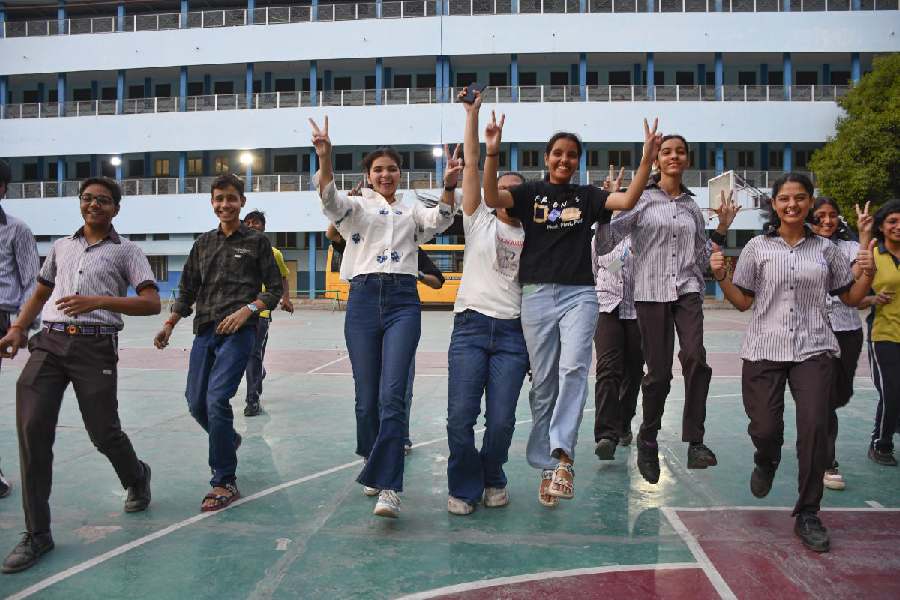
Sir — The Central Board of Secondary Education appears to have normalised inflated achievement to the point where distinction has lost meaning. When over two lakh students cross 90%, the system ceases to measure excellence and begins to manufacture it. Moderation policies and lenient marking may aim at fairness, but they risk distorting academic credibility. Internal assessments and flexible scoring further blur the line between effort and outcome. Universities are left to interpret marks that no longer differentiate ability. If evaluation loses rigour, trust in the system will steadily erode.
Smriti Basak,
Calcutta
Wrong focus
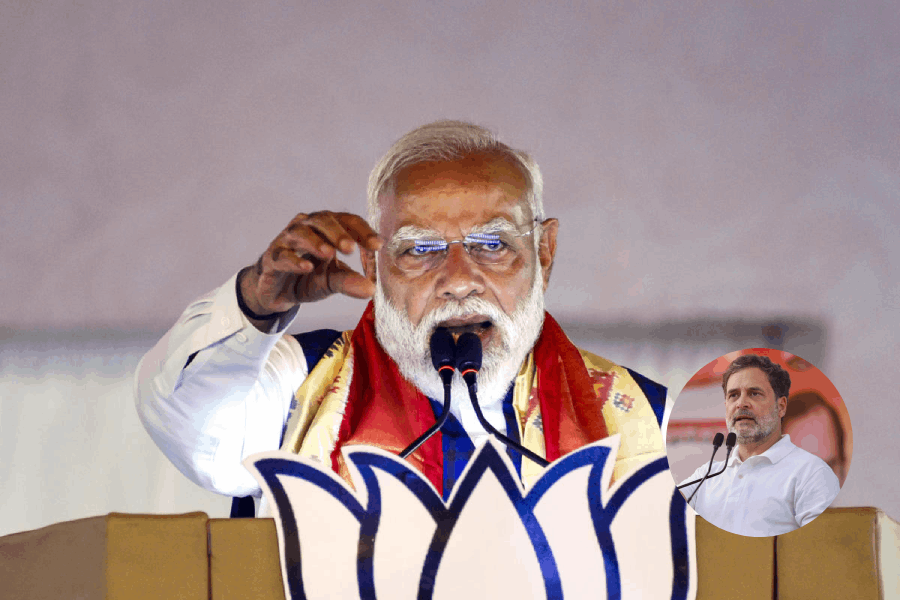
Sir — The new sociology curriculum at Maharaja Sayajirao University of Baroda — it is set to study Narendra Modi’s leadership as a concept, indigenous knowledge systems that are part of the Rashtriya Swayamsevak Sangh’s fieldwork, Hindu religion studies and nationalism in three major courses — raises important questions about academic priorities. Studying the prime minister, a current political figure, may blur the boundary between scholarship and endorsement. Sociology courses should maintain analytical distance from active leaders. A balanced curriculum would include multiple political perspectives rather than focusing heavily on one individual. Universities carry a duty to encourage critical thinking rather than shaping fixed viewpoints through structured teaching modules.
Anupam Neogi,
Calcutta
Sir — MSU has proposed a module to examine Narendra Modi’s leadership, policies, and public appeal through sociological theory. This cannot take away from the fact that in 2005 the United States of America revoked his visa over concerns regarding religious freedom. Today, Modi and his party appear inseparable, with constant public visibility but limited media engagement. Serious issues such as Manipur, crimes against women, and costly foreign visits remain unaddressed. Including a serving political leader in academic study raises concerns. Comparisons with Kim Jong-un highlight the risks of excessive personality focus.
Avinash Godboley,
Dewas, Madhya Pradesh
Sir — A module on Narendra Modi raises a simple question: will it examine failures as closely as successes? Sociology requires critical distance from living political figures. Teaching that centres on one leader risks narrowing debate. Students should encounter contrasting interpretations. A university course must encourage questioning rather than settle on a single narrative presented as established understanding.
Suchandra Ghosh,
Calcutta
Fear factor
Sir — In the context of Uddalak Mukherjee’s article, “Cape fear” (April 30), I wish to draw attention to the real “bhoy” that has shaped the current electoral atmosphere. The fear being eliminated from the electoral rolls after the Special Intensive Revision translated into a real apprehension of losing one’s voting rights. This sense of uncertainty has definitely influenced voter behaviour in a significant way.
Manas Mukhopadhyay,
Hooghly
Sir — The whole campaign of the Bharatiya Janata Party was based on stoking ‘bhoy’ against alleged Muslim infiltrators. The party thought it would not strike anyone that as the one in charge of the Central government, it is in fact the BJP that is responsible for checking infiltration. If anything, West Bengal is being infiltrated by saffronites. In contrast, the Trinamool Congress has only offered a stern warning to the electorate not to surrender to such bhoy by reminding people of the performance of ‘double-engine sarkaars’ elsewhere. While the BJP’s campaign was solely based on the invocation of bhoy, the TMC has done nothing but provide ‘bhorosa’.
Kajal Chatterjee,
Calcutta
Sir — Both the BJP and the TMC weaponised fear to win voters over. The TMC tried to instil the fear that the BJP is making inroads into Bengal’s cultural arena with its piercing puritanism. This was so effective that BJP leaders had to sample fish curry to convince the electorate. In the meantime, the BJP’s promise of bringing a Uniform Civil Code alarmed not only minorities but also the liberal Hindus Most frightening, of course, was the SIR.
Salil Karmakar,
Barrackpore
Uneven success
Sir — The long-term economic case for investment in early childhood is strong and widely accepted. India has created multiple schemes, yet outcomes such as stunting and anaemia persist. The issue lies in implementation gaps rather than policy absence. Coordination between health, nutrition and education systems remains weak. The concern also lies in uneven delivery of welfare across regions and sectors. National ambition must be matched by local execution. Clear guidelines, better coordination and accountability mechanisms are essential. Otherwise, schemes may not translate into meaningful improvements.
Ritika Talukdar,
Calcutta