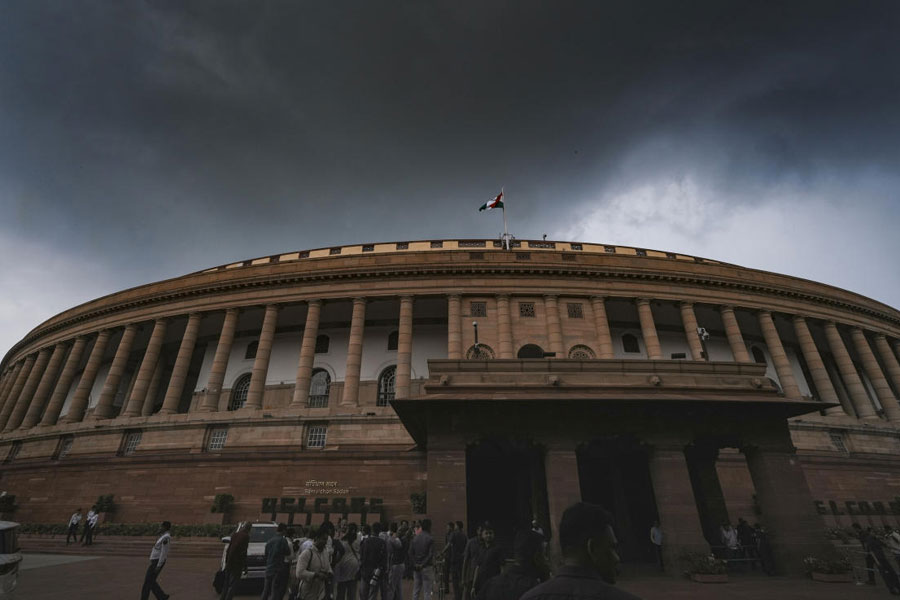
The life of a song can, at times, mirror the changes in the life of a republic. The discussion in Parliament on “Vande Mataram”, India’s national song now in its sesquicentennial year, bore evidence of these transitions that are not necessarily comforting in nature. The prime minister, Narendra Modi, opened the discussion by accusing — no surprises here — Jawaharlal Nehru and the Congress of being complicit in an act of minority appeasement that led to the excision of some stanzas from the song. The Opposition’s retort that Mr Modi was being economic with facts cannot be dismissed. An unbiased perusal of historical facts would reveal that Rabindranath Tagore’s advice of adopting the first two stanzas of “Vande Mataram” so as to rid it of its polarising sentiments had prevailed with not only the Congress Working Committee but also the members of the Constituent Assembly that included Syama Prasad Mookerjee. History is not the prime minister’s strength; its distortion for political gain is. And history’s penchant for repeating itself as tragedy is borne out by the fact that the song that united a persecuted country and its people as they fought for the nation’s liberation is being turned, decades after Independence, into a tool of division.
Not just historicity but the charge of appeasement in relation to the excision of some stanzas from “Vande Mataram”, too, must be met with a firm rebuttal on moral grounds. India’s freedom movement and the subsequent shaping of the republic’s foundational vision were based on the welcome principle of pluralism. Even though religious inclusivity had been fundamental to India’s anti-colonial uprising, it had met its most significant failure in the form of the nation’s Partition on religious lines. The republic’s commitment to pluralism after Independence ought to be read as a renewed — collective — pledge to not fall prey to the vector of sectarianism. The universal acceptance of “Vande Mataram” in its abridged form as the national song three years after Independence needs to be seen in this context. Tragically, New India and its architects appear to relish the republic’s majoritarian turn. Their stoking of a controversy on this subject, at a time when modern India and Parliament have to attend to pressing matters, is unwarranted.