Hungry hearts
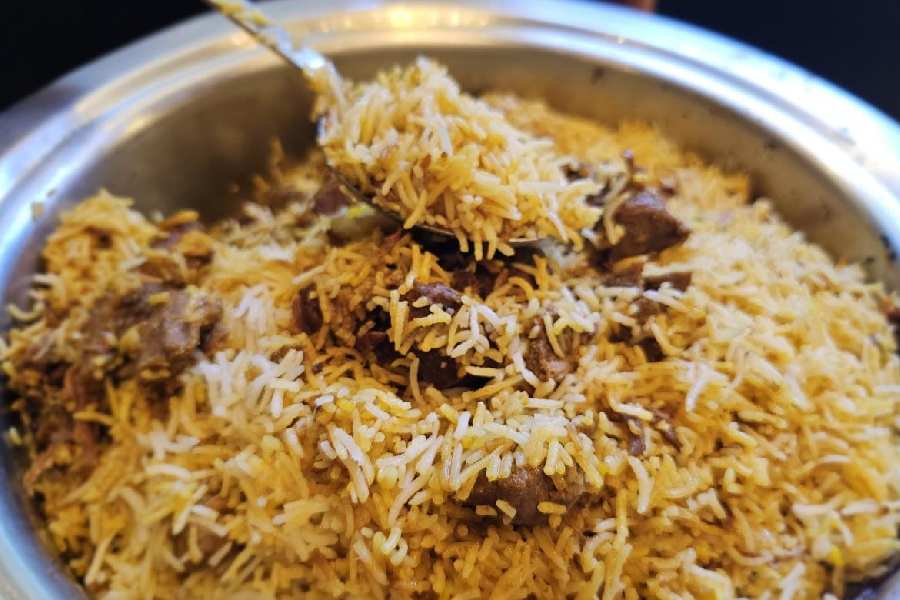
Sir — Literature may satiate the soul but the way to the heart still lies through the stomach. At the heart of Pakistan’s cultural capital, Lahore, attendees at a book fair showed more interest in gobbling shawarma and biryani than buying books. The city which has produced writers like Saadat Hasan Manto and Faiz Ahmed Faiz saw its citizens buy 1,200 plates of biryani and 800 shawarmas while only 35 books were sold at the book fair that aimed to celebrate Pakistan’s books, culture and intellectual heritage. While many were quick to claim that Pakistan does not have a reading culture, the numbers highlight a decline in reading habits globally. But Manto was right when he said, “Duniya mein jitni laantein hain, bhook unki maan hai.”
Ankita Jain,
Calcutta
Ticket to chaos
Sir — The ongoing chaos caused by IndiGo’s poor planning is not just an operational issue but a direct consequence of poor management. The airline’s inability to manage pilot rosters and crew schedules and a strained and small pilot pool reveal a startling absence of professional foresight. What is most alarming is the emergence of an apparent two-tier system in air travel as a result of these disruptions: passengers paying significantly higher fares seem to receive assured travel while regular ticket-holders face indefinite waits and last-minute cancellations.
Aloke Kumar Mookherjee,
North 24 Parganas
Sir — The IndiGo crisis clearly shows how a monopoly can affect the lives of thousands. It is high time that India revitalised its travel lifeline — the Indian railways. The ministry of railways should focus on decreasing the travel time rather than on introducing more luxurious trains.
Shayan Das,
North 24 Parganas
Sir — The current situation involving IndiGo airlines should serve as a lesson against promoting monopolies in any field. With a market share of 62% and operating about 2,200 flights daily before this incident, IndiGo had been enjoying a position where it could dictate terms in the airline industry. It thus did not pay heed to the new Flight Duty Time Limitations introduced in 2024 to improve pilots’ working hours, rest periods, and fatigue management even though this is crucial for passenger safety. IndiGo’s A320 fleet has now had to be exempted from
this rule.
A.G. Rajmohan,
Anantapur, Andhra Pradesh
Sir — The government should step in and help those who are being forced to miss important events because of IndiGo’s poor business practices. Introducing a few special trains for domestic travellers would ease the pressure on airlines.
A. Subhan Jogeshwary,
Mumbai
Sir — The IndiGo crisis has badly dented India’s global reputation as the world’s third-largest domestic aviation market (after the United States of America and China). The IndiGo CEO, Pieter Elbers, has said that “Step by step, we are getting back.” But the all-important question is: why was timely action not taken to prevent or minimise flight disruptions owing to the new rules?
Even as an inquiry is in progress, IndiGo has been told to submit fortnightly progress reports on crew utilisation, propose a concrete roadmap to plug staffing gaps, and generally rebuild its roster resilience. One hopes the airline complies at the earliest.
Khokan Das,
Calcutta
Sir — The IndiGo mess began after the new FDTL were fully implemented on November 1. The government had postponed this for over a year after the new regulations were rolled out to allow airlines to plan their crew schedules. However, the airlines, too, had warned of widespread flight cancellations upon the implementation of the FDTL. It must be noted that there has not been any new investment in the aviation sector for a long time. Therefore, the ministry of civil aviation also bears responsibility for this situation.
Jang Bahadur Singh,
Jamshedpur
Sir — Even though the government and airlines have assured passengers about the normalisation of operations, the ground situation is yet to improve. Other airline companies are charging hefty rates for flights. Normalcy should be restored soon and monopoly aviation should be discontinued and healthy competition ensured.
Sravana Ramachandran,
Chennai.
Sir — It takes years to build a reputation which can be tarnished overnight. It will not be an exaggeration to say that the ongoing crisis was engineered by IndiGo itself as it held flyers and the Directorate General of Civil Aviation at ransom by not taking steps to comply with the FDTL. IndiGo should not be allowed to get away easily. This year saw the Ahmedabad plane crash, a series of chopper accidents in Uttarakhand, and several other incidents. This crisis presents an opportunity for the civil aviation ministry to do a thorough review of all airlines.
Bal Govind,
Noida
Sir — Its shameful that the government has had to put the FDTL on hold for IndiGo’s A320 fleet. This is neither a long-term solution to the problem nor desirable. The passengers, in the meantime, keep losing money and time.
Sunil Pradhan,
Nuapada, Odisha
Sir — The aviation crisis in India is the result of privatisation. The government has a tendency of privatising core sectors without considering its ill-effects. Ultimately, the State had no choice but to bow down before Indigo.
M.N.Gupta,
Chinsura, Hooghly
Sir — The steps taken by the civil aviation ministry to stem the IndiGo crisis are not enough. Morever, though the ministry has capped airfares at Rs 18,000, this too is more than double the usual fares for some routes.
N.V. Krishnan,
Chennai
Sir — IndiGo has publicly acknowledged its shortcomings and is taking corrective steps to streamline schedules. Such transparency and proactive measures reflect the airline’s commitment to passenger safety, reliability, and a commitment to long-term service improvement.
Abdul Majid,
Delhi