Last month, the COP30 concluded without substantive progress. Since the first conference in 1995, the planet is warmer, agricultural yields are lower, and economic losses caused by climate disasters are higher. Yet, countries keep returning to the annual Conference of Parties despite mounting frustration as it is the only platform where all 198 parties come together face to face. Small island states and least developed countries have the minimal power to walk away or create alternative institutions while the wealthiest countries can continue with actions that harm the most vulnerable countries. For the later, the alternatives to this dysfunctional platform are worse. At least, the COP30 delivered the tripling of adaptation finance by 2035, recognition of indigenous land rights, and operationalisation of the Loss and Damage fund.
In fact, dysfunction at COP30 masquerades as diplomacy. The dysfunction creates the appearance of multilateral action without requiring transformative change. It allows governments to point to their participation as evidence of concern while continuing business-as-usual domestically. Crucially, it disperses responsibility. When 198 members must agree, no single actor can be held fully accountable for failure.
The real dysfunction is structural though. The consensus rule of the United Nations Framework Convention on Climate Change means any petro-state can veto meaningful action. Interestingly, the main deliberative, policymaking and representative organ of the UN, the General Assembly, decides on the basis of majority. Significant issues such as peace and security, admission of new members and budgetary matters require a two-thirds majority of the General Assembly, while other matters are decided by simple majority. The UN Convention on the Law of the Sea Assembly, analogous to the UNFCCC COP, as a general rule, decides by consensus but if the option is exhausted, decisions on questions of procedure are taken by a simple majority of members present and voting, while decisions on questions of substance are taken by a two-thirds majority of members present and voting.
To break the climate logjam, either a new convention should be conceived that is not hamstrung by the consensus rule or just one major member should take unilateral action to move away from fossil fuels with a hard deadline. Such action would fundamentally shift the global conversation. It would break the consensus trap, create market signals by accelerating clean technology investment and cost reductions, and establish proof of concept by demonstrating that a major economy can function without fossil fuels. Germany came closest with its Energiewende, but has struggled with the final phase-out due to energy security concerns, economic disruption, political backlash, and competitiveness issues.
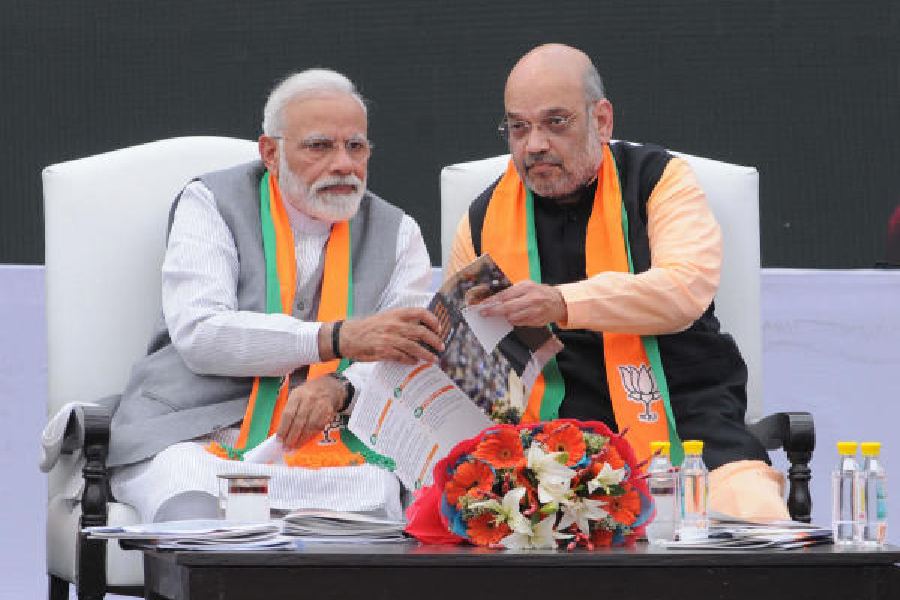
Is there a major economy politically positioned to take this step? A country whose energy-import dependence is massive, where every unit of money spent on fossil fuel imports is money leaving the economy, with a senior leader at the helm whose political capital is unmatched. A leader at a stage where historical legacy might outweigh electoral calculations for the next cycle. A dramatic pivot to domestic renewables could be framed as economic nationalism and energy sovereignty — powerful narratives for a leader’s political vocabulary. If a strong leader of a major economy were to frame this simultaneously as nationalism and development strategy, it could be transformative and remake the global order.
While the frustration with multilateralism is real because it creates paralysis, it must be asked if unilateralism can be justified by what action is taken and whose interests are served? A strong leader might use this logic to bypass multilateral institutions. The world might as well get down to reforming broken multilateral institutions to make these functional or discard them control and create new institutions.
Anamitra Danda is an environmentalist. Sampurna Sarkar is a Master’s student at the School of Global Studies, University of Gothenburg. Views are personal