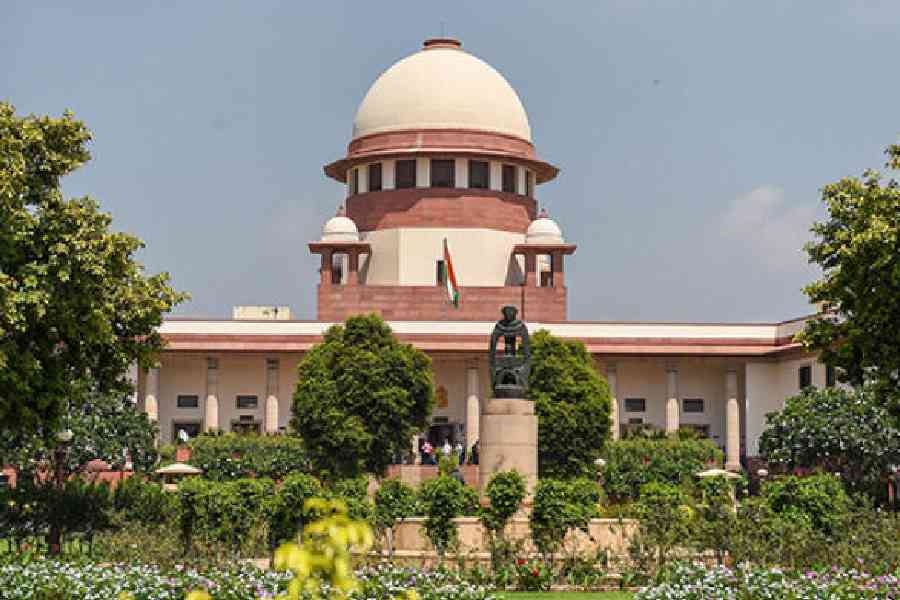
The Supreme Court’s recognition of the right to walk on demarcated footpaths as a fundamental right is a significant intervention in the politics of urban space. Walking remains the primary mode of mobility for millions of low-income workers, children, the elderly and persons with disabilities. Even bus or metro commuters are often pedestrians before and after the journey. The court is thus right to hold that the freedom to walk safely is integral to the constitutional guarantee of movement and dignity. For decades, public policy has privileged motor vehicles by funding wider roads, flyovers and expressways while relegating pedestrians to broken pavements, dangerous crossings and shrinking public spaces. No wonder then that pedestrians account for more than one-fifth of all road fatalities in India, with over 36,500 deaths recorded in 2024 alone. The judgment is equally important because the court allocates responsibility — municipal corporations, development authorities and panchayats have been identified as duty-bearers to improve pedestrian infrastructure.
The degradation of pedestrian space has many causes. Hawkers occupy pavements in some areas but they are hardly the only encroachers. Affluent residents extend private driveways onto public land, vehicles routinely commandeer footpaths for parking, commercial establishments spill onto walkways, and public agencies leave behind construction debris, utility trenches and broken surfaces. The health dimension is equally grave. Air pollution is responsible for more than two million deaths annually in India and studies have shown that a pedestrian breathes in up to 2.5 times the volume of fine particles compared to a person travelling inside a closed vehicle. The court’s verdict will matter only if it triggers a fundamental shift in urban governance and its imagination. Municipal bodies must treat footpaths as essential public infrastructure, with legally enforceable standards for width, continuity, accessibility and maintenance. Encroachments should be addressed through an approach that protects livelihoods while preserving public access. The next step must be legislative and administrative reform. Cities such as Copenhagen and Amsterdam have demonstrated that prioritising pedestrians and cyclists improves safety, mobility and public health. India requires enforceable design standards tailored to local conditions, dedicated funding, independent oversight and meaningful accountability for violations.