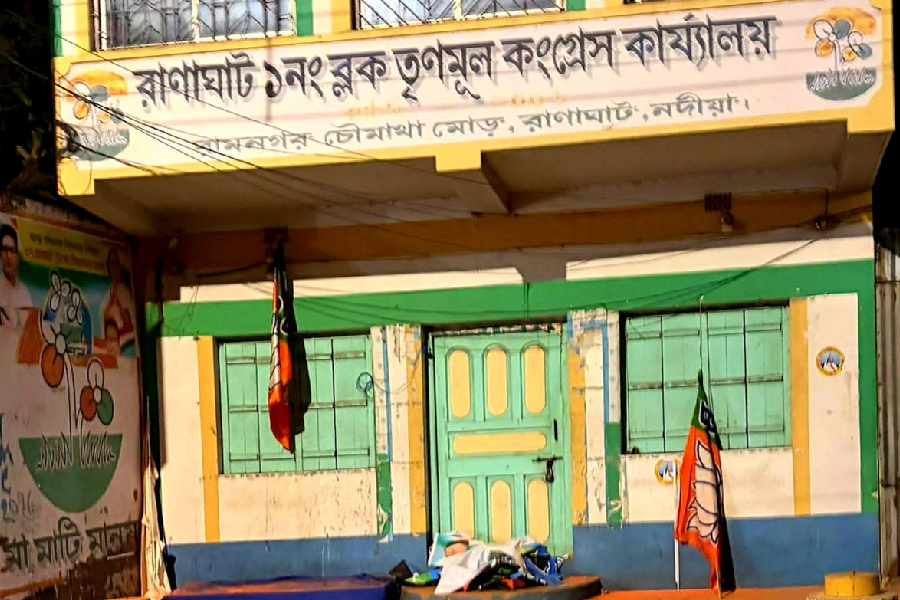
The emphatic victory of the Bharatiya Janata Party in West Bengal has turned the world of Indian politics upside down. After a gap of five decades, a state that had distinguished itself by its exceptionalism and contrarian voting behaviour rejoined the national mainstream — that, too, unambiguously. What triggered this political earthquake is likely to be the subject of punditry in the coming days. The performance of the state’s first BJP government and its political dexterity will also decide whether the 2026 verdict was a knee-jerk response to a regime that had lost its bearings or signalled something more profound.
As someone who experienced the election from the vantage position of a BJP candidate from a constituency in South Calcutta, the heartland of the Trinamool Congress, my experiences could help shed some light on the dramatic shift West Bengal has experienced.
To begin with, it is instructive to note that the quantum of political change in the state was unanticipated. When the BJP announced my candidature in mid-March, the conventional wisdom among analysts was that I was being offered as a sacrificial lamb by the BJP. The scepticism was compounded by past election data that clearly showed that the Rashbehari constituency — adjoining the now-former chief minister’s home turf of Bhowanipore — had not deviated from its commitment to the larger Congress ecosystem (that included the AITC) since 1982. The BJP, which had upstaged the Left as the main Opposition to the AITC after 2014, had a patchy presence in the constituency. It certainly lacked the organisational depth of a ruling party that had an oversupply of both money and muscle. On top of everything, there was an unspoken fear that made campaigning incredibly challenging.
The AITC’s organisational depth was, however, to use a quaint expression of northern England, a case of ‘all fur and no knickers’. It was soon clear that the middle classes were quietly fuming against an elaborate network of extortion that included having to pay local political functionaries a ‘tola’ or tax on every real estate transaction and building activity. There were accusations of exorbitant and unauthorised parking charges for cars and anger over the way in which public spaces had been contracted out to private players, not to mention politically endorsed encroachments on public land. My suggestion in the street corner meetings I addressed that the AITC had treated South Calcutta as its zamindari struck a chord because it was based on people’s everyday encounters with venality and arrogance.
To these very localised expressions of anger was added the larger concern of nearly every middle-class family — the growing fear of West Bengal’s irrelevance. The outward migration from Calcutta that began in the 1970s had now reached such stupendous heights that many middle-class neighbourhoods experienced a population loss. What greeted me during the door-to-door campaign was the profound sadness of elderly people who knew their children were unlikely to ever leave their settled careers in Bengaluru, Chennai, Pune, Noida or any of the other centres of economic growth in India and return home to Calcutta. They knew that they would never experience the delights of doting on their grandchildren, except through video calls.
The BJP addressed this profound sense of hopelessness that had overwhelmed West Bengal and offered an alternative vision of growth. Narendra Modi’s track record of heralding change and facilitating investment boosted our campaign immeasurably. It certainly had a greater resonance than identity issues centred on dietary habits of Bengalis, a theme that the AITC harped on quite needlessly.
The other media chestnut that was a non-issue for voters was the SIR controversy. Apart from a handful of voters who fumed over their names having been unfairly deleted during the SIR process, the so-called disenfranchisement that agitated the op-ed pundits was a relative non-starter, at least in the Rashbehari constituency.
The AITC campaign was based on many assumptions that proved to be erroneous.
First, it was assumed that there was a cultural disconnect between the BJP and Bengali asmita. This was an issue the state BJP addressed over the past five years, drawing on the lessons from the 2021 state election. Personally speaking, apart from the travelling circus of intellectuals that undertook a proxy campaign for the AITC and described me as a razakar, my Bengaliness was never called into question by voters. This election, the entire Bengali bhadralok community embraced the BJP uninhibitedly. More important, the voter turnout of the middle classes reached record levels. Anecdotal evidence suggests that large numbers of Bengalis working in other states, but registered as voters in Calcutta, came home to vote. I believe the middle classes were a decisive factor in my success in overturning a 17.2% deficit into a 15.1% majority.
Secondly, the AITC in South Calcutta operated on the assumption that while the middle classes tilted towards the BJP, the underprivileged voters in sprawling slum areas, such as those in Kalighat and Panchanantala in Ballygunge, would vote resoundingly for the incumbent. The faith in the welfare programmes was justified and yielded returns for the AITC but their impact was blunted by, first, the better alternative package offered by the BJP and, second, the high-handed behaviour of those who played the role of ‘dadas’ for AITC leaders. In the end, apart from Muslim areas where the support for the incumbent was total, the plurality of votes for the AITC in the slum areas of Rashbehari was far less than anticipated.
Was there a complete Hindu consolidation behind the BJP, as is being suggested? Yes, this seems to have been the case. However, the subliminal fear of West Bengal being transformed into an extension of an Islamist Bangladesh was complemented by other pressing concerns that centred on Mamata Banerjee’s whimsical record of governance and the high-handedness of her party functionaries who had lost the ability to fight a normal election minus intimidation and impersonation. It is to the credit of the Election Commission of India and the no-nonsense administration it put in place for the elections that people voted fearlessly and in such numbers.
It was a vote for reimagining West Bengal.