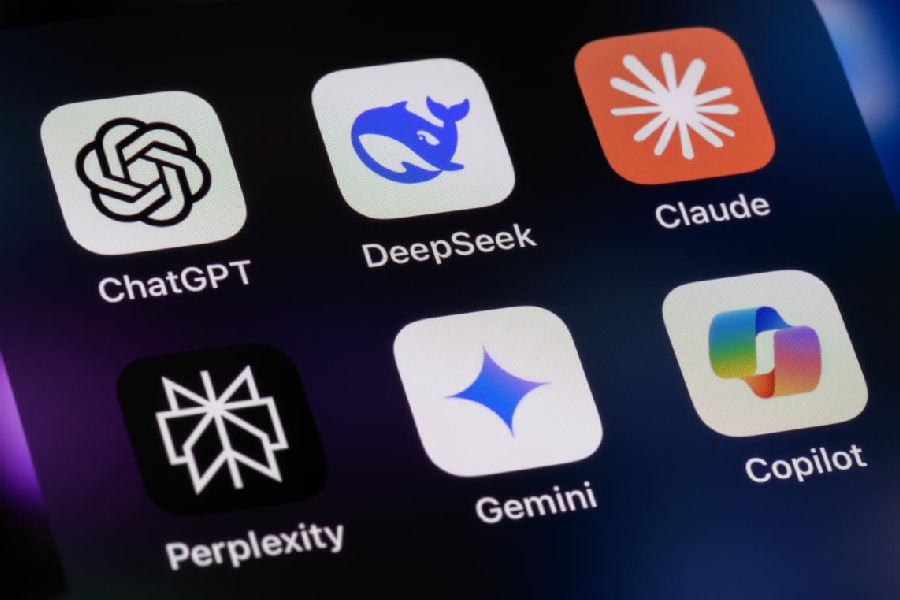
We are living through a moment of two simultaneous ruptures in the global order. The India AI Impact Summit underway in New Delhi encapsulates the first. Unlike other summits where attending heads of State are the main act, in the India AI Impact Summit, they are a sideshow. The centre stage belongs to global Artificial Intelligence corporations — Google, ChatGPT, Anthropic — and their vision for supercharging humankind with tools that enable us to focus on things that truly matter. It is imperative that we recognise these powerful corporations for what they have become — the new sovereigns of our AI Age.
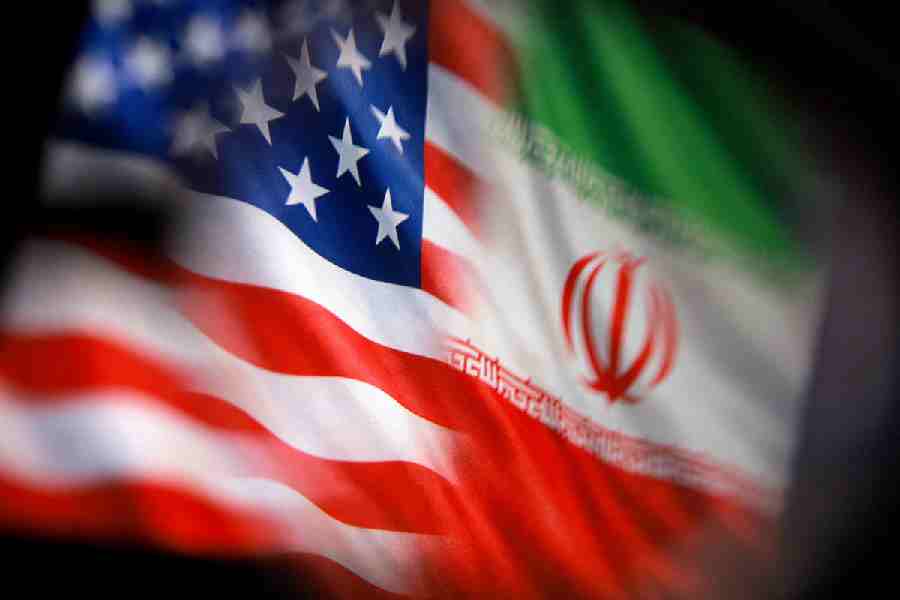
At the same time, the older sovereigns have found their otherwise reasonably settled world order undone by one of their own. The actions of the United States of America — in Venezuela and, then, in Greenland — are portents of the demise of liberal multilateralism and, ultimately, of the sovereign nation state itself. If the most powerful country in the world is now seemingly interested in becoming the world’s largest oil and gas company, we are moving from an age of ideology to an age of transaction.
How should India respond to these two developments? Both of them are an early test for India’s stated geopolitical doctrine of ‘strategic autonomy’. The foundation for this doctrine, as the term suggests, is the exercise of autonomy — being able to do as one pleases without constraints. India has shown that in action with its recent bilateral deals with New Zealand, Oman and the European Union as well as by deepening ties with countries in the Indian Ocean arc, such as Malaysia and Seychelles.
The insertion of the adjective, ‘strategic’, however, tends to suggest a certain circumspection, a recognition that India will carefully choose when to act and when to exercise self-restraint. The trade deal with the US is a reflection of such strategic behaviour — accepting a deal primarily with a view to bring back relations from the brink. This has been complemented by a careful rebalancing of Sino-Indian relations while continuing to treat Russia as an ‘all-weather friend’. Early signs indicate that India has quickly adjusted to this age of transaction without any signs of wistfulness for the liberal multilateralism that it has always championed.
But India’s niche in this changing world lies not only in its strategic nous, which every other country will also claim to have, but also being able to combine it with its civilisational conscience. Conscience is not abstract ideology; it is about lived values. This is why, for India’s strategic autonomy to be truly strategic, it must be underpinned by a value-based core.
Take, for example, the US’s statements on Greenland. India’s caution in not taking clear sides by maintaining a studied silence is wise. But its silence has the potential of becoming weightier if articulated differently. Greenland is a country colonised by Denmark over which the US has now expressed its designs. It is a case of competing colonialisms — a rising imperial overlord battling an established one. Both are well-intentioned — guaranteeing the safety and the security of the locals while ensuring favourable economic terms for themselves. While choosing to be non-partisan, India can bring its own experience of colonisation to the fore. If decolonisation is to be a meaningful mantra for the Government of India, it should apply equally in the case of other colonised countries elsewhere in the world, from Greenland to the Falkland Islands. Strategic autonomy would gain more heft if it is grounded in the language of decolonisation.
The history of colonisation in India is not only a lens to view the present but also a lesson to not repeat the mistakes of the past. This is because the AI Age has already shown remarkable parallels with the times that we have lived in previously. The former Greek finance minister, Yanis Varoufakis, in his book, Technofeudalism, sees this age as a return to feudalism — rent extraction by overlords. In his portrayal, AI companies are the new extractors and ordinary citizens have to pay their dues to be able to go about their lives. He also points to the fact that most of these companies are based in the US and China and many have deep links to the State apparatus.
Whether Varoufakis is correct or not is a different matter. It is imperative, however, for India and countries in the Global South to learn from the past and frame the issue right this time around. Major AI corporations, like the European trading companies of yore, may be service providers today but contain the seeds of a new kind of sovereign entity. Those companies came to India as traders, became rent-seekers, and ultimately paved the way for their own governments to arrive with their military might. History may repeat itself in the AI age as well. Or it may not — powerful AI corporations like Anthropic, whose products were used by the Pentagon in the attack on Venezuela, have shown a modicum of distance from the American State as well as the independence to ask some difficult questions. But others like Palantir and OpenAI have not. The same goes for the Chinese behemoth, Alibaba, with its on-again, off-again relations with the Chinese Communist Party unlike its steady ally, DeepSeek. It remains to be seen whether relationships between Big Tech and the deep State in the US and China evolve or disintegrate.
But irrespective of where we land on this question, history indicates that India must learn from its own history and deal with these large corporations as budding sovereigns in their own right even if this may seem far-fetched on occasion. This means it must welcome these corporations while closely guarding its own critical assets, court them while periodically reviewing their conditions for market access in India, keep them close all the while building its own sovereign AI stacks. The AI Summit marks India’s global embrace of this new AI age. It is the new Delhi durbar.
Nandini Das has written a fascinating account about an older durbar, when the first English ambassador to the Mughal court, Sir Thomas Roe, presented himself to Jahangir. Roe was paid by the East India Company but served the monarch, James I. A thoughtful young man with fine taste, he was an early sign of how the British empire would inveigle its way into power in India. In some ways, the world is different today. India isn’t as prosperous (compared to the rest of the world) as it was in Mughal times but has aspirations of getting there; the empire seeking favours isn’t British, and the prize is no longer the physical bounty of spices and cotton, but rather data and market access.
Yet, in many ways, it is just the same. There are many youthful Thomas Roes in their jeans and jackets in New Delhi this week appearing to do right by India. Like the Mughal emperor, Jahangir, it is wise to keep them at an arm’s length. Unlike him, it is best to take them seriously because there is more to them than what meets the eye.
Arghya Sengupta is Research Director, Vidhi Centre for Legal Policy. Views are personal