Poor influence
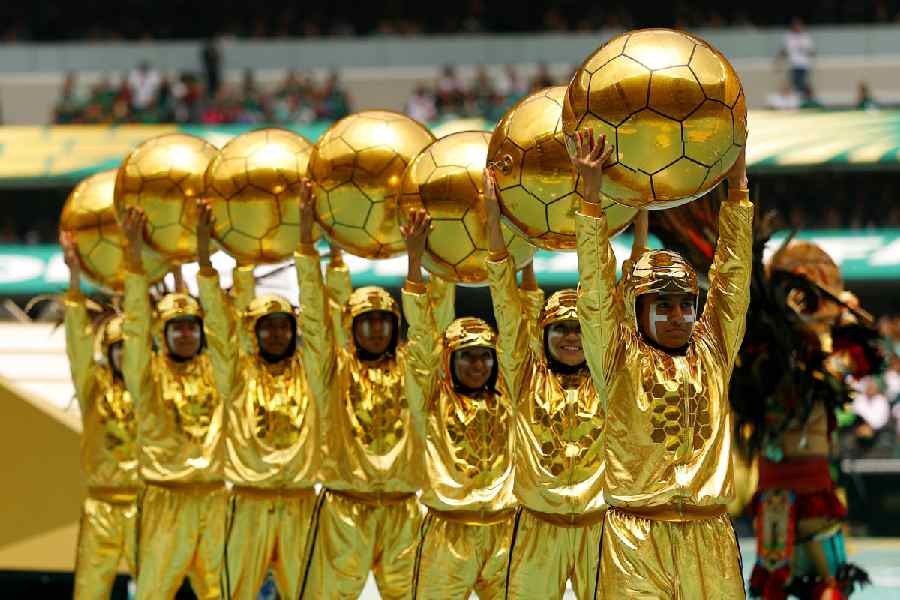
Sir — The World Cup was once a competition where supporters debated tactics, refereeing decisions and memorable goals. Today, the greatest interest appears to be making a viral video. Owing to the league of influencers, football increasingly serves as the background to an endless search for online fame. Perhaps the next tournament should replace the Golden Ball with the Golden Reel and allow supporters
to qualify through social media engagement rather than football knowledge.
At this rate, the player scoring the winning goal may still struggle to trend if somebody nearby discovers a new trend.
Aditya Mukherjee,
Calcutta
Seismic shock
Sir — The earthquakes in Venezuela shows how quickly a natural disaster can overwhelm any country. Nearly a thousand deaths have been confirmed and more are suspected, countless have been injured, and many families are still waiting for news of missing relatives. Search and rescue operations deserve every possible international support. India has acted responsibly by sending rescue teams, medical staff and relief supplies. Humanitarian assistance should rise above politics because saving lives is the immediate priority during disasters of this scale.
Subhojyoti Bhowmick,
Calcutta
Sir — Earthquakes cannot be prevented but their impact can be reduced through better planning. Reports from Venezuela show that many buildings collapsed within seconds, leaving little chance for escape. Safe construction standards must become a national priority in countries facing seismic risks. Governments should invest in stronger public buildings, safer housing and regular emergency drills.
Shreya Basu,
Nainital
Sir — The suffering in Venezuela carries an important lesson for India. Experts have repeatedly warned that large parts of this country face serious earthquake risks. Building rules must reflect the latest scientific evidence rather than outdated assumptions. Many families live in small houses that receive little engineering oversight. Public safety depends on honest assessments of risk and strict enforcement of construction standards across cities and villages.
Alok Kumar,
Gaya
Sir — International cooperation has become essential in responding to major disasters. Rescue specialists, doctors and relief workers from several countries are helping Venezuela search for survivors and care for the injured. Such cooperation strengthens humanitarian efforts when local resources are stretched beyond capacity. Every hour matters after an earthquake. Countries should continue sharing expertise, equipment and medical support whenever lives depend on rapid action.
G. David Milton,
Maruthancode, Tamil Nadu
Sir — The stories emerging from Venezuela remind us that disaster statistics represent real families. Parents are searching for children, relatives are waiting outside collapsed buildings, and hospitals are struggling to cope with the injured. Attention should remain focused on relief work even after the headlines fade. Recovery continues long after rescue operations end. Housing, healthcare and emotional support will remain essential for thousands of survivors in the months ahead.
Khokan Das,
Calcutta
Sir — Scientists have explained that Venezuela’s twin earthquakes resulted from a rare geological event involving two powerful tremors in quick succession. Natural hazards cannot always be predicted with precision, yet scientific research remains vital for public safety. Governments should support independent studies of seismic risks and use the findings to guide planning decisions. Ignoring evidence can leave communities exposed to preventable losses.
Sanjukta Bardhan,
Calcutta