Among the raft of bilateral agreements signed during the four-day China tour of Bangladesh Prime Minister Tarique Rahman, the Teesta River Comprehensive Management and Restoration Project emerged as the centrepiece.
Beijing’s public pledge to assist the mega-project to the best of its ability signals that a long-delayed project has been elevated into a major symbol of Sino-Bangladeshi strategic cooperation. For Dhaka, this pivot, of course, is driven by acute structural impatience.
After waiting nearly 15 years for a transboundary water-sharing treaty with India that repeatedly dissolved in the crosscurrents of Indian federal politics, Bangladesh has signalled that it will no longer postpone the economic survival of its arid northern districts.
Yet beneath the formidable political momentum and the promises of the Chinese engineering capital lies a stubborn, uncomfortable hydrological reality — can a mega-project on a heavily dammed international river ever succeed without the formal cooperation of the upstream neighbour?
To understand the sheer scale of the gamble Dhaka is making, one must look at the geography of the river itself. The Teesta originates high in the Himalayas, slicing through Sikkim and the plains of Bengal before crossing the border into Bangladesh.
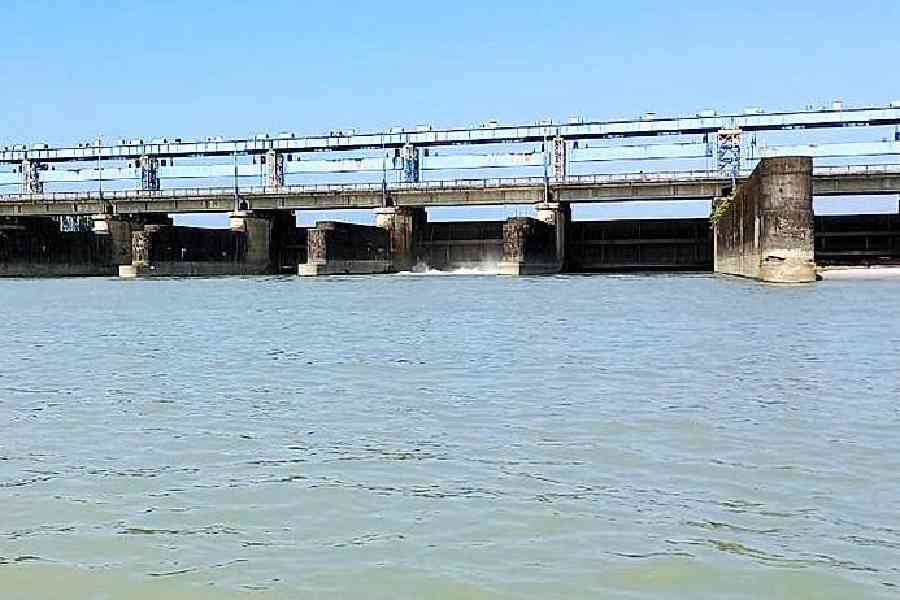
For decades, India’s Gajaldoba Barrage and an array of upstream hydroelectric infrastructure have strictly regulated the river’s volume. The consequences for downstream Bangladesh are dual, interlocking ecological crises.
During the dry winter season, critically low flows leave the riverbed exposed, destroying irrigation systems, lowering water tables, and devastating agriculture across the entire Rangpur division.
Conversely, during the summer monsoon, sudden and uncoordinated upstream releases from full Indian reservoirs transform the river into a source of destructive flooding, erasing villages and causing millions of dollars in crop damage.
The Chinese-backed management blueprint aims to mitigate these brutal seasonal extremes through heavy engineering interventions. The multi-billion-dollar plan includes extensive river dredging of more than 100km, constructing massive flood-control embankments, building a network of internal reservoirs to capture seasonal overflows, and installing modernised irrigation canals.
From a technical perspective, these interventions would undoubtedly optimise whatever volume of water actually enters Bangladeshi territory. However, engineering efficiency cannot generate physical mass.
If upstream withdrawals by India continue to increase, or even if they simply remain at current restricted levels during the winter months, the ultimate utility of downstream reservoirs and canals will rapidly diminish.
Reservoirs cannot store absent flows, and sophisticated engineering cannot bypass hydrological realities determined entirely beyond domestic borders.
This fundamental paradox has raised concerns within Dhaka’s own policy circles.
During the interim government’s period, its planning adviser, Wahiduddin Mahmud, noted that Bangladesh lacks a clear, scientifically backed assessment of future transboundary water volumes, questioning how a mega-project can be structurally designed when future flows remain completely unpredictable.
Crucially, a comprehensive feasibility study has yet to be finalised despite years of political declarations and grand promises of funding. Without dependable, long-term data on transboundary flows, determining the physical specifications of the project — such as reservoir depth, embankment height, and potential irrigation yields — remains an exercise in expensive guesswork.
Furthermore, this vulnerability is not unique to the Teesta basin. The ambitious Padma Barrage project in the southwest faces identical structural constraints. Water experts have frequently noted that building a barrage without a legally binding upstream flow guarantees risks creating another dry, exposed riverbed because a barrage cannot
create water out of thin air.
With the landmark India-Bangladesh Ganges Water Treaty nearing its formal expiration, Bangladesh’s broader national water security is increasingly clouded by cumulative legal uncertainty, making a reliance on unilateral domestic infrastructure look precarious.
Because all proposed construction for the Teesta project lies strictly within Bangladeshi territory, Dhaka and Beijing have carefully framed the initiative as a sovereign, humanitarian climate-adaptation programme. This rhetorical insulation leaves New Delhi in a tricky position.
Publicly opposing a massive civil engineering project designed to alleviate rural poverty, secure food production, and prevent catastrophic riverbank erosion for millions of Bangladeshi farmers carries high international reputational costs.
However, Indian defence planners remain deeply uncomfortable with the prospect of Chinese state engineering firms operating indefinitely near the Siliguri Corridor — the narrow strip of land, colloquially known as the “Chicken’s Neck” — that connects mainland India with its volatile northeastern states.
For Beijing, the Teesta project represents a high-reward opportunity to cement its status as South Asia’s indispensable development partner, extending its Belt and Road footprint directly into a region historically viewed as an exclusive Indian sphere of influence.
For India, the very threat of Chinese boots on the downstream riverbank may provide the ultimate incentive to revive stalled water-sharing negotiations or offer competitive, alternative infrastructure financing.
Ultimately, Dhaka’s downstream dependency is structural and geographical. Nearly every major river sustaining the country’s intensive agriculture, vital fisheries, riverine navigation and fragile deltaic ecology originates outside its sovereign borders.
While the political momentum generated in Beijing is substantial and the promise of Chinese engineering prowess is real, concrete and capital can only treat the symptoms of the Teesta’s decline, never the root cause. Bangladesh cannot build its way out of a transboundary water shortage.
The long-term viability of northern Bangladesh’s infrastructure will depend on combining bold engineering with robust, unyielding hydro-diplomacy. The sustainable water security of the nation will always depend on securing predictable upstream flows that no amount of internal infrastructure can replace.