What not to eat
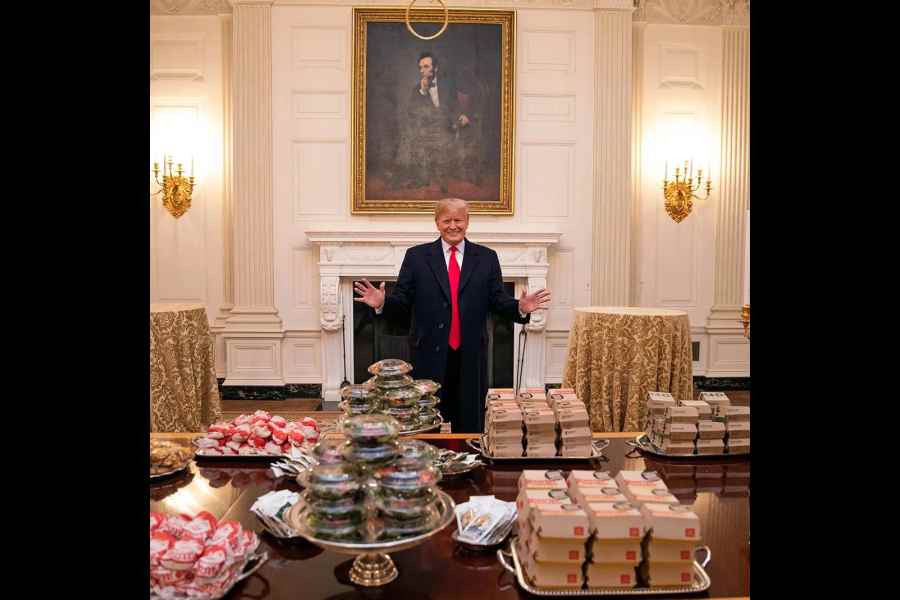
Sir — The government of the United States of America has issued an advisory asking citizens to eat “real food” and avoid a highly-processed, junk diet. The irony is inescapable when the president of the country is better known for treating Diet Coke and McDonalds burgers as his staples. Advising Americans to avoid highly processed foods and celebrating protein-heavy diets sounds sensible on paper. But it also sounds hollow when national leadership, including the health secretary, is often seen feasting on fast food. Credibility matters most when public health is at stake.
Yash Gupta,
Calcutta
Trust eroding
Sir — Recent events in Calcutta raise serious questions about the limits of political authority (“ED raids, CM raids”, Jan 9). A chief minister entering a premise undergoing an Enforcement Directorate search and removing documents creates confusion about legal boundaries. Law enforcement agencies exist to investigate allegations, not to be confronted by elected leaders during active operations. Courts exist to decide disputes about legality and motive. Allowing political intervention during raids weakens public confidence in investigations and governance. Clear separation between executive power and investigative agencies protects democracy and ordinary citizens alike.
N. Sadhasiva Reddy,
Chennai
Sir — The dispute between the ED and the West Bengal government highlights a worrying institutional conflict. Investigations into alleged money laundering should proceed through courts and statutory procedures. Allegations of election interference levelled by the Trinamool Congress also deserve judicial scrutiny. Street protests and public accusations do not resolve questions of law. When investigative agencies and elected governments clash openly, ordinary citizens struggle to understand whom to trust. Calm adherence to legal process offers the only credible way to protect elections, investigations, and constitutional order even in the face of eroded trust in the ED.
M.C. Vijay Shankar,
Chennai
Sir — Many people may feel confused by claims and counterclaims surrounding the raids on I-PAC. The core issue is simple. Investigators say evidence was obstructed. The state leadership says election material required protection. These positions cannot be settled through speeches or marches. Independent courts exist for this purpose. Allowing any authority to decide its own innocence sets a dangerous precedent. Accountability through transparent hearings remains essential for fairness and democratic stability.
Md. Asad,
Mumbai
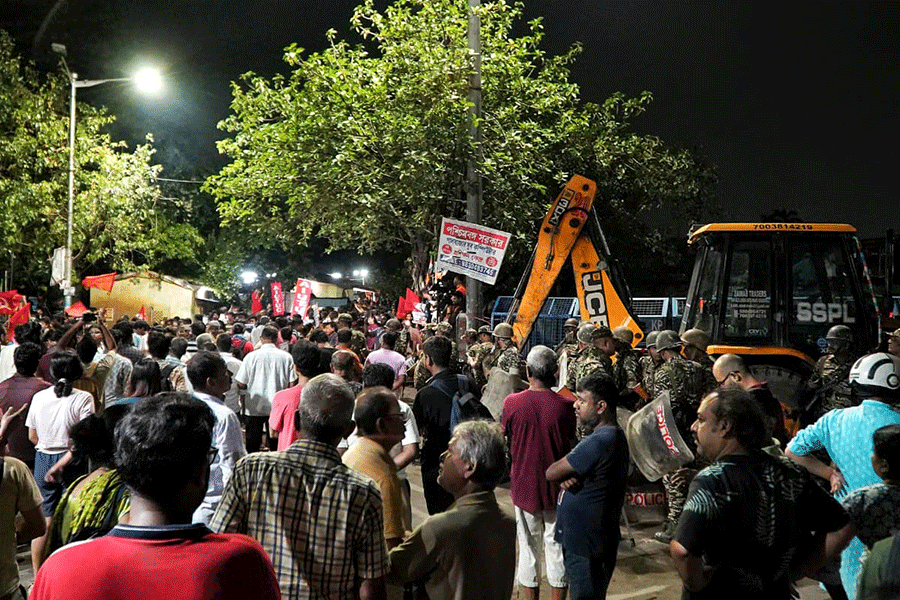
Sir — What stands out in the clash between the ED and the TMC is the visible politicisation of enforcement actions. Central agencies insist their probe concerns an old coal scam. The ruling party views the timing as electoral intimidation. Such is the state in the country that neither charge can be entirely dismissed. Public faith erodes when investigations coincide with elections and escalate into street confrontations. Agencies must act with restraint and clarity. Governments, too, must respond through legal remedies alone. Mutual escalation benefits no voter and distracts from governance responsibilities.
C.M. Nandi,
Calcutta
Sir — The sight of senior police officers accompanying political leaders during an ongoing raid deserves careful attention. Police forces are expected to maintain neutrality and protect lawful procedure. Their presence in politically-charged interventions risks blurring institutional roles. If officers appear aligned with political interests, public trust in the entire force suffers. Strong democracies depend on visible independence of police and investigators. Restoring that confidence requires strict adherence to procedures.
Ireima Imsong,
Imphal
Sir — The I-PAC controversy underlines the fragility of the electoral process in India. Election strategy firms operate in a grey zone between politics and private enterprise. Investigations into such entities must be precise and transparent. At the same time, political parties cannot claim immunity for associated organisations. Clear rules governing data, finances, and investigations would reduce conflict.
Mohammad Arif,
Mumbai
Be clear
Sir — Reports of the president of the United States of America, Donald Trump, threatening Cuba deserve careful scrutiny. Public warnings about cutting oil and money affect ordinary citizens before governments. Cuba relies heavily on Venezuelan oil for electricity, transport, and food distribution. Abrupt disruption risks worsening shortages already visible on the island. Diplomatic pressure may be a policy choice, but humanitarian consequences should be openly acknowledged. International relations work best through dialogue. Sudden policy shifts communicated through personal platforms undermine trust. Citizens across the region deserve clarity.
Sourav Ash,
Calcutta