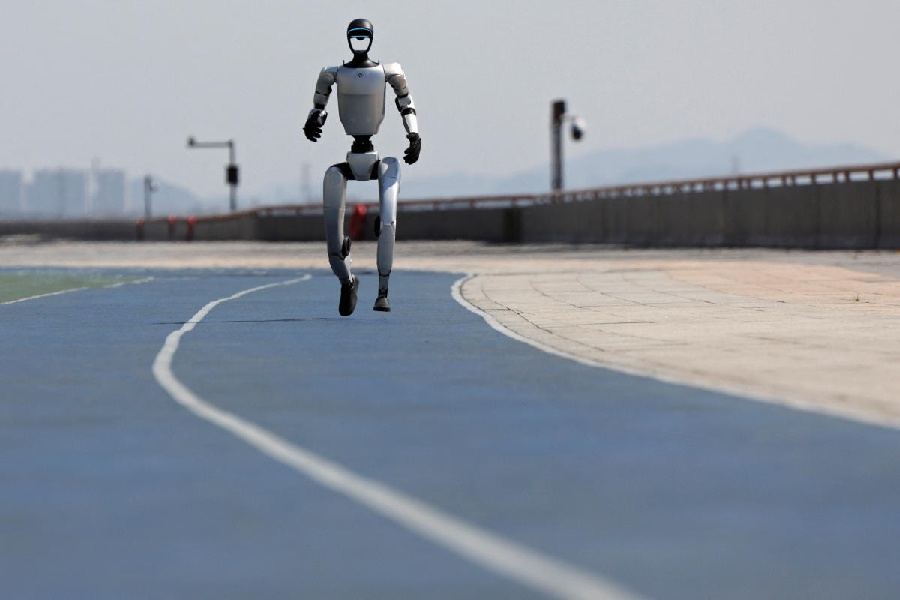
Robotic illusion
Sir — The ordination of a robot monk in South Korea raises an uncomfortable question: has spirituality entered its tech phase? Buddhism teaches detachment from worldly illusions. Yet now believers may soon seek enlightenment from what is essentially an illusion — a machine pretending to have cognition. A robot can chant scriptures, fold its hands and probably never miss meditation at 5 am, but it cannot experience suffering, self-doubt or inner peace. If faith eventually depends on Wi-Fi signals and charging cables, humanity may need salvation from technology rather than guidance through it.
A.K. Sen,
Calcutta
Leader for all
Sir — Suvendu Adhikari is the new chief minister of West Bengal. His rise reflects how quickly loyalties can change in Indian politics. He once played a central role in Mamata Banerjee’s rise and later became her strongest opponent. Many citizens may admire his organisational skills and electoral success but strong leadership also requires accountability and moderation. Public speeches that divide communities along religious lines create long-term social damage. Bengal already faces enough economic and administrative challenges. The chief minister now carries responsibility for governing the entire state, including people who never voted for the Bharatiya Janata Party.
Hemanta Sasmal,
Howrah
Sir — The new government in West Bengal has already raised serious questions about representation and public trust. A cabinet without a single Muslim minister — the BJP did not nominate any Muslims in the first place — sends a political message that many citizens will find difficult to ignore. Governance in a diverse state demands visible inclusion. The early debate over women students wearing burqas has added to concerns about personal freedoms. Many voters supported change because they wanted better administration and less violence. The government should now focus on public services, law and order, and equal treatment for every community.
Shakti Pramanick,
Calcutta
Sir — The idea of a ‘double engine’ government sounds attractive during election campaigns because voters expect quicker cooperation between the Centre and the state. However, smooth coordination alone does not guarantee better governance. West Bengal’s citizens need practical improvements in hospitals, schools, roads, employment, and policing. Political slogans cannot replace administrative performance. The BJP has secured a historic victory after decades outside power in the state. That victory brings high expectations and intense scrutiny. Suvendu Adhikari should therefore avoid unnecessary ideological conflicts and concentrate on daily issues affecting ordinary families.
Monidipa Mitra,
Calcutta
Sir — The new West Bengal government appears carefully designed to balance caste, gender, and regional interests. Leaders from tribal and Matua communities have received important positions, which clearly reflects electoral calculations. Political representation matters in a democracy because communities want visibility in government. Yet representation should extend across all sections of society. The absence of Muslim ministers in a state with a large Muslim population weakens the claim of balanced governance. A stable administration requires confidence from all communities, especially during a tense political transition.
Kaushik Chowdhury,
Calcutta
Sir — The public image of Suvendu Adhikari as a tough political fighter helped the BJP secure power in West Bengal. Campaign rhetoric about infiltration, law and order, and identity politics clearly influenced many voters.
Chaitali Ghosh,
Calcutta