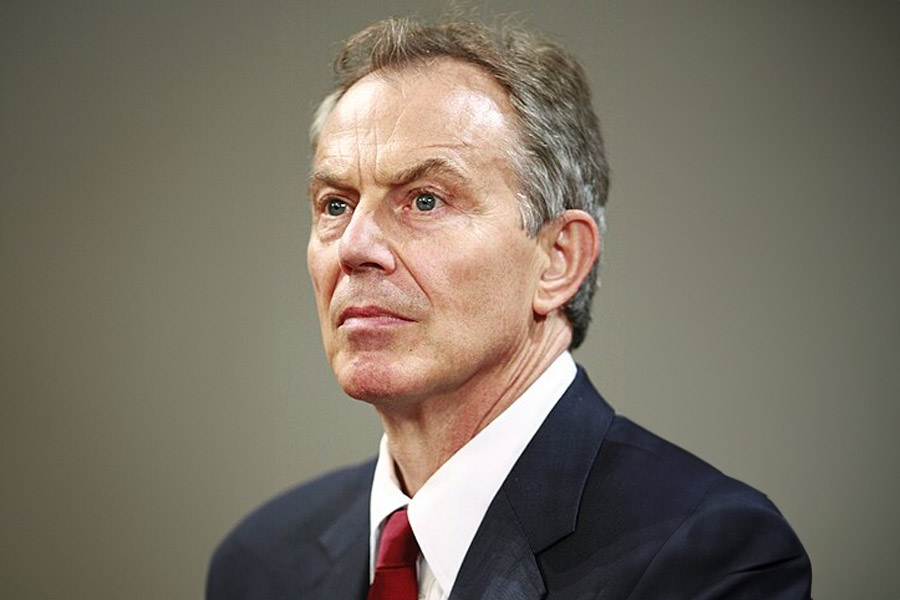
As if the Labour Party’s troubles in Britain were not enough, Tony Blair, the former prime minister and the architect of New Labour, has now deepened its blushes. In a critical essay, Mr Blair has advised Keir Starmer’s government to crack down on welfare spending, jettison restrictions on oil and gas, and repair ties with Donald Trump. He was especially critical of such policies as raising minimum wages and insurance, the employment rights bill and the net zero drive. Mr Blair’s criticism of some of the approaches undertaken by Mr Starmer notwithstanding, such as his negotiations with the European Union, he has not joined the chorus to remove the present prime minister.
Mr Blair’s suggestions are unlikely to cut much ice within Labour. They not only go against Labour’s core social democratic principles but also reveal his ignorance of Britain’s contemporary political realities. The recent local polls revealed that Labour lost four times as many votes to the Greens than it did to Nigel Farage’s Reform UK.
Mr Blair’s advocacy for Labour to recover its Centrist moorings does not make sense in this context: the challenge, evidently, is to recover the ground that it has lost to the Greens that led to the fracturing of the Left-leaning vote. Moreover, across Europe, Centrism’s capitulation to the resurgent far-Right reveals the limitations of Mr Blair’s prescription. Mr Blair’s template for Labour may lack credibility but it does signify the state of siege that Labour finds itself in. In the regional and local elections that were seen to be a referendum on Mr Starmer’s leadership, Labour’s fortunes dipped alarmingly, energising those within the party who believe that Labour should head to the polls under a new leader. But a careful perusal of the polls would reveal public discontentment with Britain’s established political formations — Labour and Conservative — with the gains going chiefly to the Right and the Left. This calls for a twin approach for Mr Starmer and his government. Labour must find a way to mitigate the crises affecting modern Britain — ranging from economic challenges to public welfare. Simultaneously, it must come up with a fresh, imaginative charter for itself. This has to be New Labour 2.0, vastly different from Mr Blair’s version, one that is able to meet the growing disaffections among voters, new and old.