
THE CALLING OF HISTORY: SIR JADUNATH SARKAR AND HIS EMPIRE OF TRUTH By Dipesh Chakrabarty, Permanent Black, Rs 795
This is an extraordinary book written with great empathy. The subject at the most simple level is the work of an outstanding historian of the early 20th century whose books fell into neglect towards the end of the century. Dipesh Chakrabarty's project is one of retrieval and restoration. At another and more nuanced level this is a book also about how to read history and the oeuvre of a historian - the many strands, the influences and the philosophy of history that fashioned what he wrote and how he wrote. Chakrabarty opens up a new way of looking at historiography even though his focus is on one historian, albeit an important one.
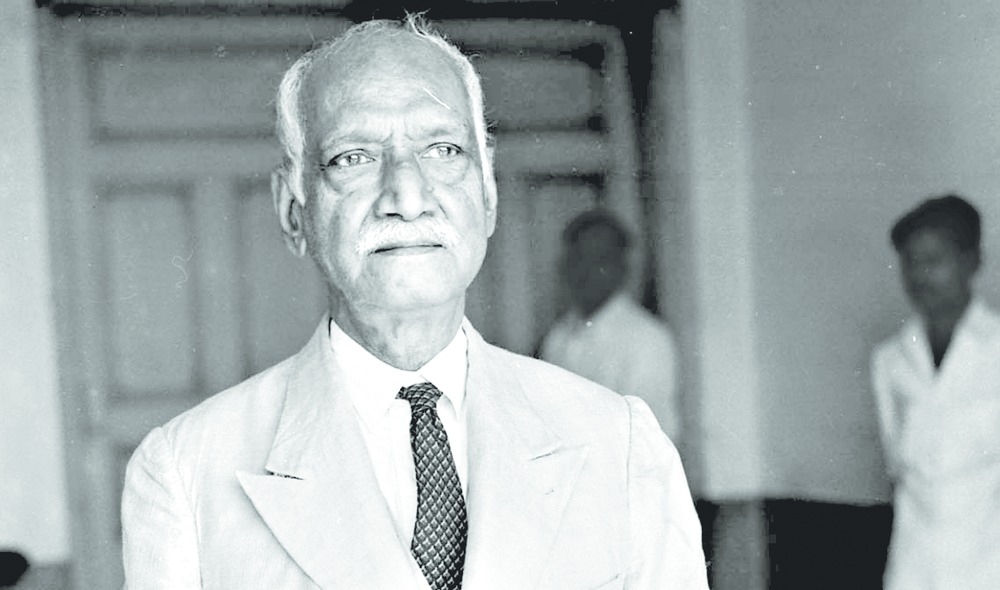
Jadunath Sarkar took a BA degree in History from Presidency College and went on to do an MA in English. He taught both subjects but his claim to fame rests on his writings on the declining Mughal Empire, especially on two multi-volume works - one on the history of Aurangzeb and the other on the fall of the Mughal Empire. He taught himself Persian and Marathi (he also wrote a book on Shivaji) and was meticulous in his research and documentation. As Chakrabarty shows, he was also ceaseless in his efforts to locate and preserve documents relevant to the study of the Mughal Empire and the history of the Marathas. He played a pioneering role in the creation of archives and the preservation of historical records.
Chakrabarty's entry point into the career and work of Sarkar is a treasure trove that he discovered through a stroke of what he calls "librarial luck''. This is the correspondence between Sarkar and G.S. Sardesai, a historian of the Marathas. The latter became a close friend and co-worker of Sarkar. They wrote to each other over decades and this correspondence reveals to Chakrabarty (and through his reading to the readers of this book) how history was Sarkar's calling. This calling was informed by two other related commitments: one was a devotion to facts and the other was the firm belief that through the facts it was possible to arrive at the Truth about the past. For Sarkar, facts were the bedrock of history, everything else was secondary or followed from the facts. Hence, the significance of the subtitle of Chakrabarty's book.
There was another important element that Sarkar brought to bear on his writing of history. Chakrabarty calls this "the aesthetics of his historical prose''. For Sarkar, as Chakrabarty demonstrates, the writing of history was most emphatically a literary enterprise. This was not only because he was a student and a teacher of literature whose prose almost inevitably carried references to and allusions from literature. But also because - and this is one of Chakrabarty's central concerns - narrative, plot, character and the genre of tragedy were crucial for the kind of history Sarkar wrote and the kind of perspective he provided.
Character, according to Chakrabarty, was "a keystone concept in the architecture of Sarkar's political thought.'' In the philosophy of Sarkar, only through "character'' could the greater purpose of human history be fulfilled - "it determined a country or kingdom's success or failure at embracing the modern world... ''. Thus it is not surprising that the question of character came to dominate Sarkar's account of the decline of the Mughals. The moral decay of the emperors became an explanation for the fall of the Mughals.
The central place that Sarkar gave to the presence or the absence of character meant that he chose to write about individuals - Aurangzeb, Shivaji, the later Mughals, the latter all "weaklings and imbeciles''. History, Chakrabarty writes to cogently explicate Sarkar's philosophy of history, "was definitely not about the clash of impersonal forces - of the market or of class structure or of other abstract institutions. The drama of characters was also the moral drama of politics.'' Yet in the opening of the fifth and final volume of his history of Aurangzeb, Sarkar wrote (and Chakrabarty quotes him), "The life of Aurangzeb was one long tragedy, - a story of a man battling in vain an invisible and inexorable fate, a tale of how the strongest human endeavour was baffled by the forces of the age.''
It would appear from this quotation that Aurangzeb did not lack character, he possessed the will and the ability to rule and lead but he failed because "the forces of the age'' were against him. What were these forces? If they transcended the individual's character and will, then they were impersonal. If such forces were to be described as Destiny or Providence (as Sarkar and following him Chakrabarty is prone to do) then character is made devoid of agency. How significant is character if it is bereft of agency? This is an issue that Sarkar did not quite address for his readers. Neither does Chakrabarty, perhaps because he remains too close to his historian.
On the theme of character there is one other important and unanswered question. Why did Sarkar choose to write about Aurangzeb? With his mastery of the Persian documents he could just have easily written on Akbar, who in Sarkar's own words had successfully converted "a military monarchy into a national state'', an achievement made possible through a pursuit of a "national and rational policy''. Aurangzeb, Sarkar believed, undid this project. Why did Sarkar choose to write about a decline rather than of a success? If the answer lies in Sarkar's preference for a tragic theme then one has to ask why he chose to write on Shivaji who he saw as "not only the maker of the Maratha nation but also the greatest constructive genius of medieval India''. Thus Sarkar placed Shivaji above Akbar and was not averse to the theme of success. Only when it came to writing about the Mughals, the theme of decline and bigotry seemed to attract him more than the successful initiator of "national and rational policy''. There is a puzzle here that requires probing.
Chakrabarty, with every good reason, describes Sir Jadunath Sarkar as a "child of the Empire'' (and underlines the point by using the title "Sir'' in the subtitle). For Sarkar, as Chakrabarty notes, in the writing of history "European scholarship set the standards.'' When Sarkar wrote the last section of the second and concluding volume of the History of Bengal (from Dacca University in 1948, a volume that he edited) he described the coming of British rule as "the beginning... of a glorious dawn, the like of which the history of the world has not seen elsewhere." British rule, Sarkar wrote, engendered a Renaissance "wider, deeper, and more revolutionary than that of Europe after the fall of Constantinople." It would appear from this encomium that Sarkar's loyalty to the Empire that made him its knight prevailed over his commitment to uphold the standards of European scholarship.
Chakrabarty has written an admirable and an admiring book but some unresolved and controversial questions still hover over the work of Jadunath Sarkar and his calling of history.