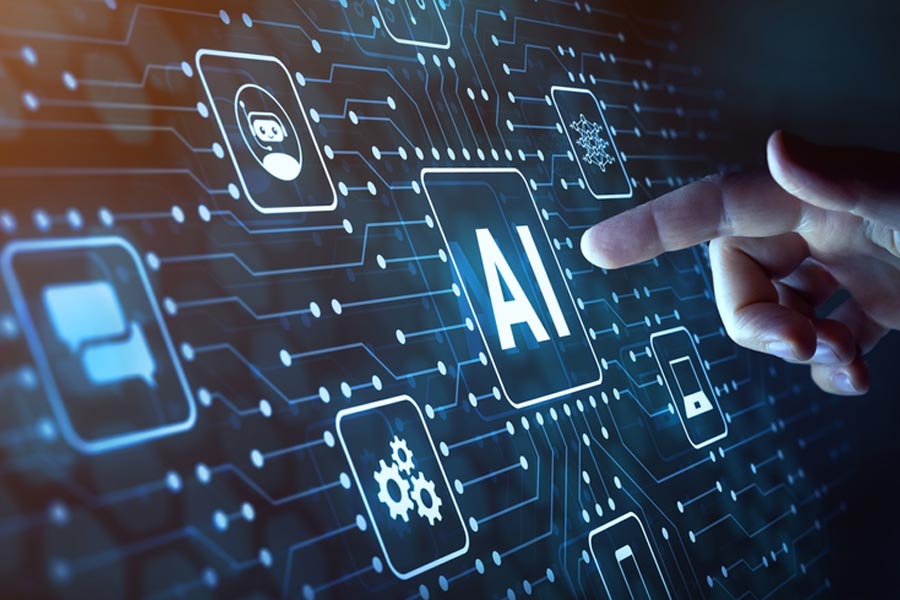
Artificial Intelligence is now increasingly entrenched in economies, workplaces and education systems across the globe. As such, indices that measure a country’s preparedness for and adaptability to an AI-driven future can be a valuable policy tool to identify nation-specific weaknesses and strengths and design interventions. The World Future Skills Index 2027, unveiled by QS Quacquarelli Symonds, a global analyst of education, offers revealing insights into the world’s readiness for AI. India is ranked 13th among 89 economies; it also ranks fifth globally in the Future of Work category, reflecting the growing demand for AI, digital and green-intensive skills and the economy’s ability to adapt to rapid technological change. The report makes a distinction between AI augmentation and AI automation. The highest-ranked economies — the United States of America, Germany, Australia and the United Kingdom — have labour markets dominated by augmentation-aligned roles where AI is used to enhance human judgement, creativity and complex decision-making rather than replacing workers. India’s has a large young population, a thriving digital ecosystem, expanding internet access, a globally recognised IT industry and one of the world’s largest pools of STEM graduates. Initiatives promoting digital payments, digital public infrastructure and AI innovation have helped create an ecosystem receptive to technological transformation. These make India one of the more adaptable economies in the age of AI.
While India scores highly on future workforce readiness, it performs less impressively on skills alignment, suggesting a deep chasm between the skills graduates are acquiring through higher education and the changing demands of the labour market. The education system continues to produce graduates geared towards legacy sectors even as industry demand shifts to AI, advanced manufacturing and renewable energy. Challenges thus lie at the intersection of education, labour and economy. Governments cannot simply celebrate AI readiness while ignoring the social costs of technological disruption. Rehabilitation through large-scale reskilling, continuous learning and digital protection must be integral to economic policy. Digital and AI literacy must extend beyond the urban middle class. India’s AI-related investments reached about $90 billion in February 2026. The challenge is to channel this funding towards long-term goals. India’s demographic dividend can be mined only if its workforce is able to adapt to change.